This text has been translated by AI and may contain errors.
Skip to Content

Research & Commentary Results

Filter by
1800 Results
Israel: Preoccupied by indecision
Israeli Prime Minister Benjamin Netanyahu (C) arrives at the weekly cabinet meeting in Jerusalem December 8, 2019.
  • Commentary
  • Israel: Preoccupied by indecision

    The main — perhaps only — issue in Israeli politics now is the future of Netanyahu.

    December 16, 2019

    Georgia through a Middle East lens
    This aerial photograph taken on September 22, 2018, shows The River Kura (Mtkvari) in the Georgian capital Tbilisi.
  • Analysis
  • Georgia through a Middle East lens

    Given their territorial proximity, the regional actors of the Middle East have always had an interest in Georgia and the South Caucasus as a window to Europe. The collapse of the Soviet Union brought an end to Georgia’s isolation, and in the years since the country has gradually started reclaiming its historical role as a cultural and economic crossroads between Asia, the Middle East, and Europe.

    December 16, 2019

    Azerbaijani gas is now ready to flow all the way to Europe
    Turkish President Recep Tayyip Erdogan (3rd L) and Azerbaijani President Ilham Aliyev (2nd L) attend the opening ceremony of the TANAP-Europe connection in Ipsala district of Edirne, Turkey on November 30, 2019.
  • Analysis
  • Azerbaijani gas is now ready to flow all the way to Europe

    Turkey has completed the next-to-last piece of the 2,000-mile Southern Gas Corridor, a three-pipeline network that will send gas from Azerbaijan’s huge Shah Deniz field via Georgia and Turkey to Western Europe.

    It was such a big deal that Turkish President Recep Tayyip Erdogan, Azerbaijani President Ilham Aliyev, and Georgian Prime Minister Giorgi Gakharia presided at the ribbon-cutting on Nov. 30. They were celebrating the completion of the pipeline that is the middle link in the Southern Gas Corridor: the Trans-Anatolian Natural Gas Pipeline (TANAP), which traverses Turkey.

    December 11, 2019

    Turkey doubles down on Libya
    President of Turkey, Recep Tayyip Erdogan (R) meets chairman of the Presidential Council of Libya, Fayez Al-Sarraj (L) at Dolmabahce Office in Istanbul, Turkey on November 27, 2019.
  • Analysis
  • Turkey doubles down on Libya

    On Nov. 27 the GNA signed an MoU with Turkey seeking to create a shared maritime boundary in the Mediterranean Sea between southwestern Turkey and northeastern Libya. In an overt quid pro quo, this maritime agreement was signed along with a separate MoU to expand security and military cooperation. Thus, it seems clear that Turkey was only able to persuade the GNA to agree to the maritime deal in exchange for increased security support for the GNA-aligned forces fighting the self-styled LNA in Tripoli.

    December 10, 2019

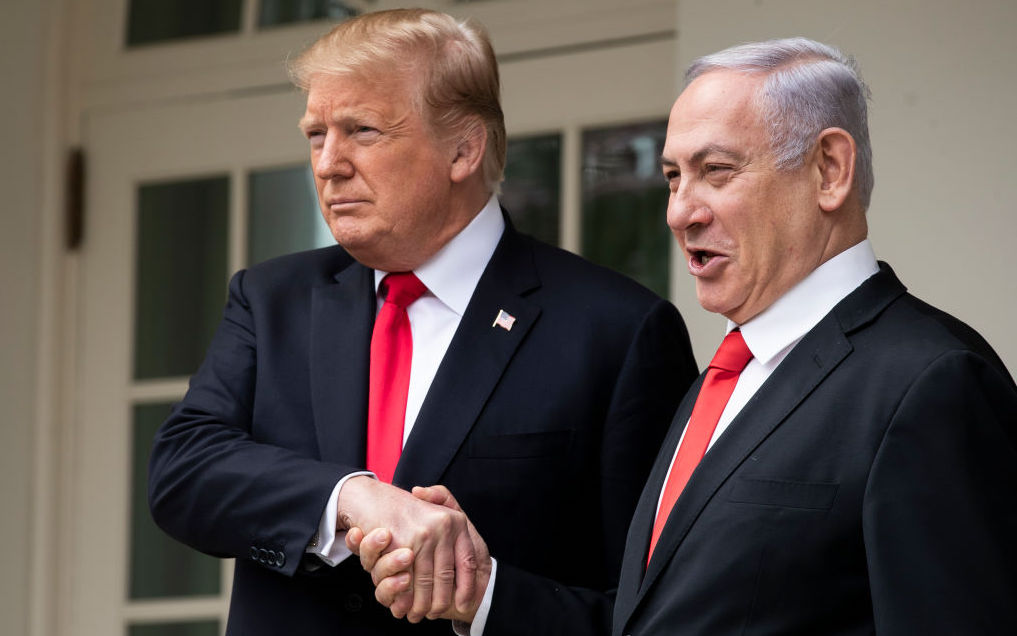
    An Israel-US defense treaty will ruin relations with Arab states
    Israeli Prime Minister Benjamin Netanyahu (R) shakes the hand of US Secretary of State Mike Pompeo following their meeting in Jerusalem on October 18, 2019.
  • Analysis
  • An Israel-US defense treaty will ruin relations with Arab states

    Attempts by the indicted Israeli leader to railroad through a joint U.S.-Israel defense treaty in opposition to the Palestinians and other Arabs will be disastrous for America’s national interest.

    December 9, 2019

    Turkey’s collision course with NATO
    President of Turkey, Recep Tayyip Erdogan (R) receives North Atlantic Treaty Organization (NATO) Secretary General, Jens Stoltenberg (L) in Istanbul, Turkey on October 11, 2019.
  • Commentary
  • Turkey’s collision course with NATO

    NATO leaders will celebrate the 70th anniversary of their alliance in London on Dec. 3 and 4. Despite soft words from NATO Secretary-General Jens Stoltenberg, however, the alliance and Turkey are on a collision course.

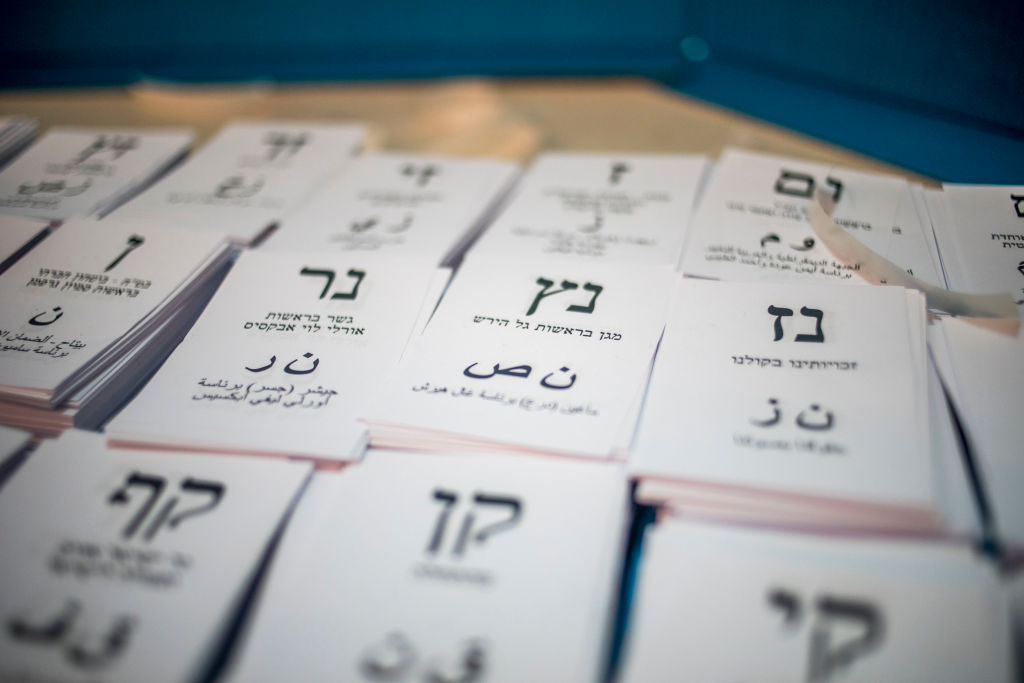
    Will Israeli politicians prove their responsibility and flexibility?
    A picture taken on October 3, 2019 shows a general view of the plenum during the swearing-in ceremony at the Knesset in Jerusalem. - Israel's parliament was sworn in today without a new government formed as a deadlocked general election left Netanyahu scrambling to find a path to extend his long tenure in power.
  • Commentary
  • Will Israeli politicians prove their responsibility and flexibility?

    It is clear that the Israeli political system has reached a peak in terms of the challenges it faces: two elections campaigns to date this year have not led to conclusive results and a third round may be right around the corner.

    November 25, 2019

    Pompeo’s audience: The Trumpian base
    U.S. Secretary of State Mike Pompeo speaks during a press conference at the U.S. Department of State on November 18, 2019 in Washington, DC
  • Analysis
  • Pompeo’s audience: The Trumpian base

    It is not always recognized that Secretary of State Mike Pompeo’s Nov. 18 declaration that Israeli “settlements are not inconsistent with international law” was primarily political, not diplomatic, designed for domestic American consumption as part of the president’s reelection campaign. Secondarily, it was intended to strengthen Israeli Prime Minister Benjamin Netanyahu’s hand in the current coalition negotiations and/or the likely upcoming Knesset election, if coalition negotiations fail. Third on the list, almost an afterthought, is the effect on the Palestinians, whose future state’s boundaries it purports to impact.

    November 21, 2019

    Setting the Middle Corridor on track
    China Railway Express crosses Istanbul's sub-sea tunnel, Marmaray (the railway system linking the eastern and western sides of Istanbul from under the Marmara Sea) in Istanbul, Turkey on November 7, 2019. The first freight train from China crossed to Europe using Marmaray.
  • Analysis
  • Setting the Middle Corridor on track

    China’s Belt and Road Initiative (BRI) has been a powerful driver of the development of existing and new Eurasian rail routes. A web of competing and complementary rail lines has begun to form across the Eurasian landmass. Railway cargo service between China and Europe has fast become a compelling “middle option” — cheaper than air and faster than sea.

    Escalation in Gaza tests Israel-Hamas détente
    Palestinian Islamic Jihad militants attend the funeral of a comrade in Khan Yunis in the southern Gaza Strip November 14, 2019.
  • Commentary
  • Escalation in Gaza tests Israel-Hamas détente

    A Nov. 12 Israeli airstrike on the Gaza Strip killed Baha Abu al-Ata, a commander with the Palestinian Islamic Jihad (PIJ) militant group. Over the ensuring 48 hours, the PIJ launched some 450 rockets from Gaza into southern and central Israel. Hamas, the Palestinian political party/militant group that acts as the de facto government of Gaza, stayed out of the fighting — despite relatively high civilian casualties and the killing of one of its fighters.

    November 18, 2019

    Punching above their weight: Cyber lessons for small states
    The NATO Cooperative Cyber Defence Centre of Excellence (CoE) in Tallinn, Estonia, 14 April 2015.
  • Analysis
  • Punching above their weight: Cyber lessons for small states

    The role of cybersecurity in the future of geopolitics in the Middle East and the surrounding regions will have much to do with individual state and enterprise preparedness. With cyber threats a growing source of interstate tension, governments must take measures to increase national cyber preparedness that are tailored to their vulnerabilities and cyber ecosystems. Israel and Estonia are examples of states that prove this rule. Despite their relatively small size, both have demonstrated an exceptional capacity to deter or defend against cyber aggression from their much larger, more aggressive neighbors.

    November 18, 2019

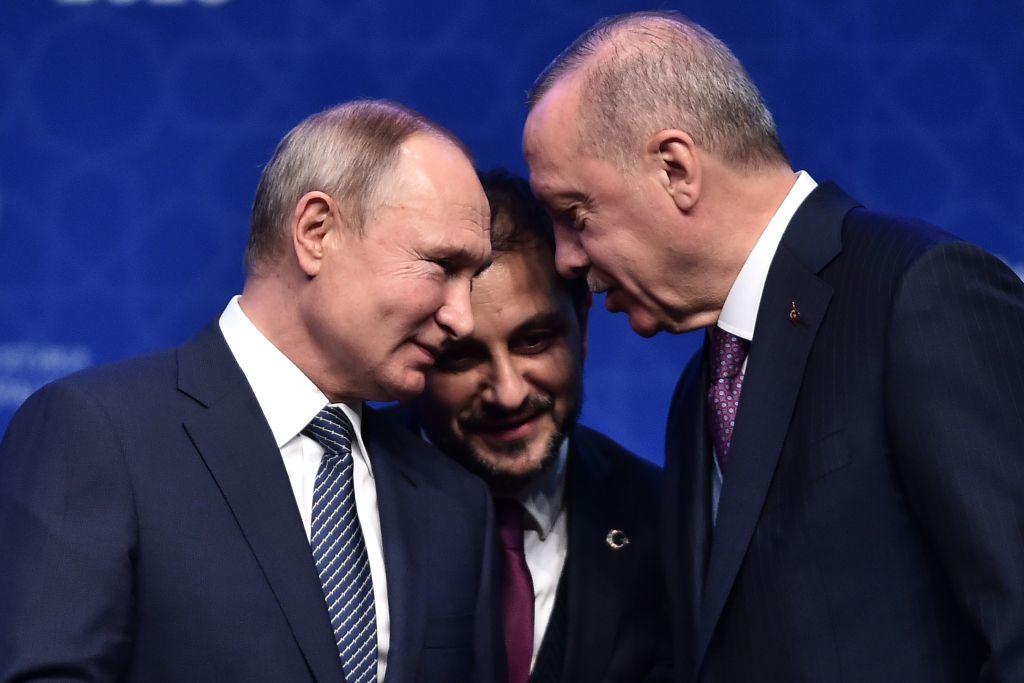
    Balance in the Black Sea: The complex dynamic between Turkey, Russia, and NATO
    Russian Tapir class landing warship BSF Nikolay Filchenkov 152 passes the Bosphorus Strait off Istanbul on October 18, 2016.
  • Analysis
  • Balance in the Black Sea: The complex dynamic between Turkey, Russia, and NATO

    Turkey’s relations with its Western allies are at an all-time low while its partnership with Russia is flourishing. Since Russia began delivery of its S-400 advanced aerial defense system in July, questions have abounded about Turkey’s future in the NATO alliance. Such concerns are not baseless. Turkey-Russia ties have never been closer. The two countries cooperate closely not only on energy and trade but also in the defense sector. But fears of a Turkish withdrawal from the alliance overlook the continued tension between Ankara and Moscow, which makes NATO an indispensable partner for Turkey.

    Syria tops the agenda as Erdogan heads to Washington
    US President Donald Trump shakes hands with Turkish President Recep Tayyip Erdogan as he arrives for meetings at the White House in Washington, DC, May 16, 2017.
  • Commentary
  • Syria tops the agenda as Erdogan heads to Washington

    Turkish President Recep Tayyip Erdogan is set to meet with his U.S. counterpart, Donald Trump, in Washington on Wednesday. While there are doubtless other items for discussion on the agenda, at the top of the list is, at least on Turkey’s side, Syria — or more specifically, what U.S. policy is and should be in Syria.

    November 11, 2019

    Is the Turkey-Qatar alliance really under threat?
    Turkish President Recep Tayyip Erdogan (R) shakes hands with Qatari Prime Minister Sheikh Abdullah bin Nasser bin Khalifa Al Thani (L) following their meeting at the Presidential Complex in Ankara, Turkey on October 30, 2019.
  • Analysis
  • Is the Turkey-Qatar alliance really under threat?

    On Nov. 4 Daily Sabah, a strongly pro-government English-language daily in Turkey, published a scathing editorial with a title that says it all: “Al Jazeera English: A threat against the Turkey-Qatar alliance.” According to the editorial, Al Jazeera English slandered Turkey over its recent military incursion into northern Syria, and thus jeopardized the future of the Turkey-Qatar alliance. Given the close relationship between the Turkish government and Daily Sabah — and indeed the broader media environment in Turkey — it is highly unlikely that such a fiery editorial, which directly threatens Qatar, would have been published without a green light from “the palace.”

    November 6, 2019