Democracy, Inclusion and Political Moderation: Lessons from Religious Movements in the Middle East and Indonesia
There is a longstanding argument that inclusion in the political process can moderate Islamist groups. Looking at the evolution of Islamic movements in Egypt and in Indonesia, this essay suggests that patterns of informal inclusion, the nature of regime repression and the role of state ideology can all have significant impacts on the diversity of religious life and mass appeal of reformist voices.
The Multiple Sorrows of Trump’s Jerusalem Announcement | Monday Briefing
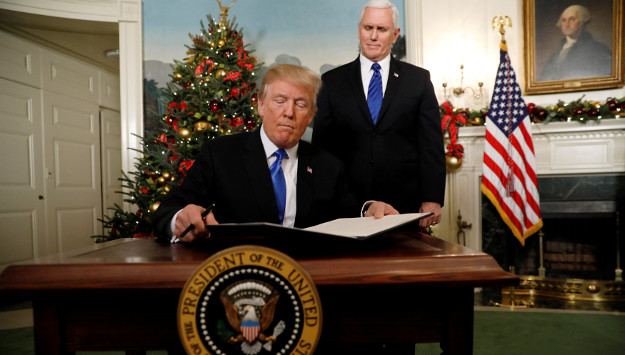
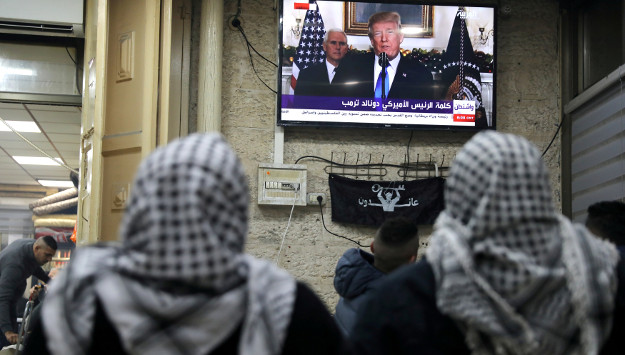
In this week’s Monday Briefing, MEI experts Paul Salem, Charles Lister, and Gonul Tol provide analysis on the international fallout from President Trump’s Jerusalem announcement and Russian President Vladimir Putin’s visit to Syria and then to Turkey to discuss Syria, Jerusalem, and energy matters.
The commander of Iran’s elite Quds Force today called leaders of Palestinian “resistance groups” to pledge Iran’s “all-out support” for them in their armed struggle against Israel,
After the 2014 Israel-Gaza war, I tried and failed to convince Hamas to hand over a key border crossing between Gaza and Israel to the control of the Palestinian Authority (P.A.).
Recognizing Jerusalem as Israel's Capital Carries Enormous Risk
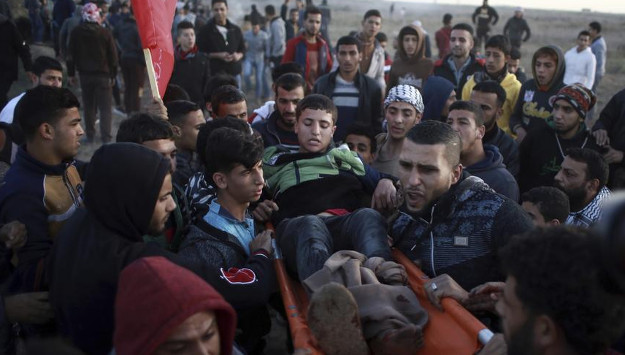
President Donald Trump’s decision to recognize Jerusalem as the capital of Israel is a major policy shift that carries enormous risk. Warnings from Arab and European allies of the “explosive” consequences of the move aptly reflect the fragile dynamics in the region and the sensitivity of the question of Jerusalem to millions worldwide.
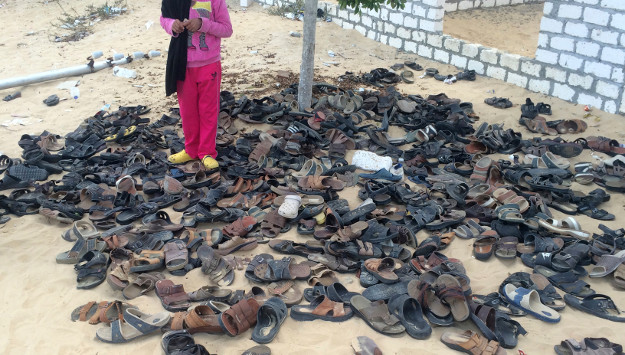
In this week’s Monday Briefing, MEI experts Charles Lister, Randa Slim, and Alex Vatanka provide analysis on recent and upcoming events including Egypt’s ongoing struggle with terrorism following the recent attack in Rawda mosque, the next round of intra-Syrian Geneva negotiations, and Iran’s anxiety over Russia’s plans in Syria.
After ISIS, Fatemiyoun Vows to Fight with “Axis of Resistance” to Destroy Israel
With ISIS militarily defeated in Syria and Iraq, the Fatemiyoun Division, an all-Afghan Afghan Shiite militia group fighting in Syria, says its fighters will join the Lebanese Hezbollah and Iranian-sponsored Iraqi militia groups to fight Israel next.
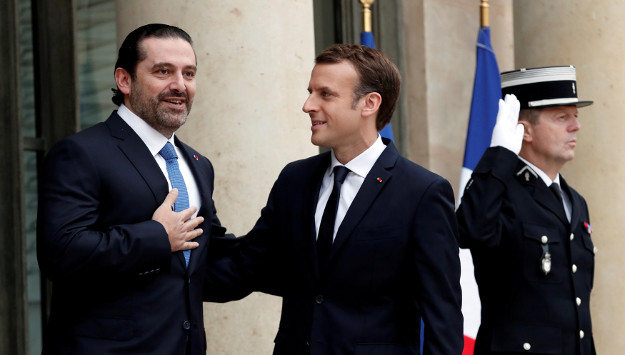
France and Egypt Try to Moderate Saudi-Iran Escalation | Monday Briefing
In this week’s Monday Briefing, MEI experts Paul Salem, Alex Vatanka, Randa Slim, Marvin G. Weinbaum, and Eran Etzion provide analysis on recent and upcoming events including the Arab League meeting in Cairo to moderate the Saudi-Iran escalation, Iran’s view of the Sochi Summit as a turning point, Putin’s effort to reach an agreement on Syria before presidential elections, Afghanistan’s response to the increase of US troops on their ground, and the political upheaval in Israel as Netanyahu’s corruption case continues.
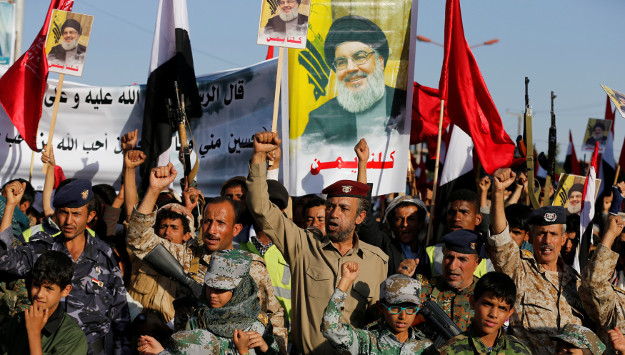
The Lebanon Crisis Pivots on Hezbollah’s Presence in Yemen | Monday Briefing
In this week’s Monday Briefing, contributors Paul Salem, Eran Etzion, Alex Vatanka, and Bilal Saab provide analysis on recent and upcoming events including the rising tension between Saudi Arabia and Lebanon over Hezbollah’s presence in Yemen, rumors that an Israeli attack on Lebanon is imminent, the Saudis’ latest attempt to round up collective action against Iran, and the new phase in the Saudi-Iran proxy war following the recent explosion of a pipeline in Bahrain.
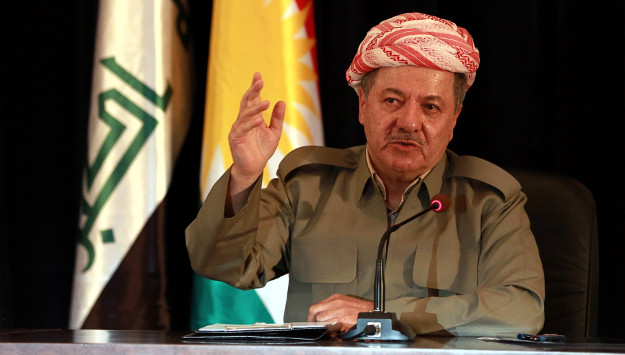
Barzani Stands Down as K.R.G. President | Monday Briefing
In this week’s Monday Briefing, MEI experts Randa Slim, Yousef Munayyer, Charles Lister, Charles Schmitz, and Alex Vatanka provide analysis on recent and upcoming events including President Barzani’s decision to step down from the KRG, the Trump administation’s silent response to Israeli settlement expansion in Jerusalem , the Armed Syrian Opposition’s attendance of the seventh round of Astana Talks, Saudi foreign minister blaming Iran for lack of progress in peace talks in Yemen, and President Rouhani’s failure to advance the reform cause in Iran.
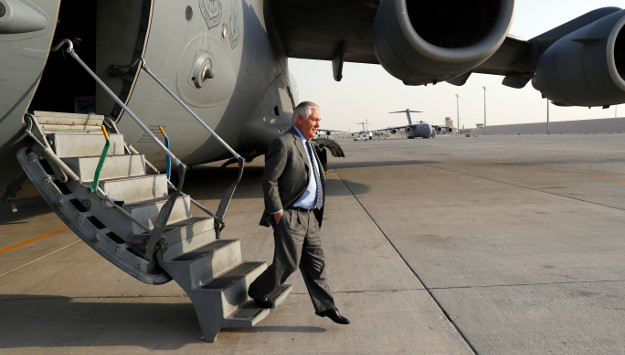
Tillerson Promotes Stronger Saudi-Iraq Ties | Monday Briefing
In this week’s Monday Briefing, MEI experts Gerald Feierstein, Marvin G. Weinbaum, Randa Slim, Paul Salem, and Gonul Tol provide analysis on recent and upcoming events including Secretary Tillerson’s visit to Riyadh and Doha as well as his visit to India and Pakistan, Abadi’s regional tour to promote positive relations with neighbors, Sisi’s visit to Paris to boost Egypt-France relations , and German Chancellor Merkel’s threat to cut European Union funding to Turkey due to its crackdown on democratic institutions.
Millions of Rural Working Women in Egypt at Risk from Climate Change
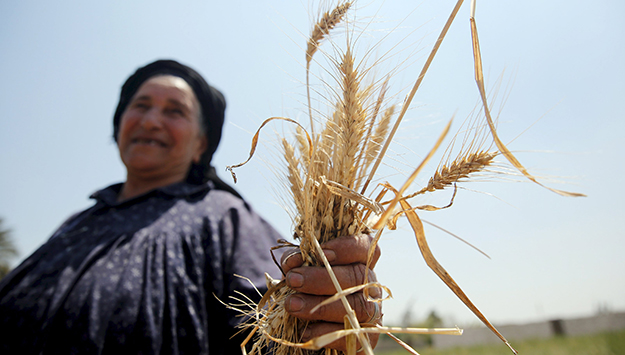
The impacts of climate change on Egypt’s agriculture are likely to be substantial, and will affect the millions of Egyptian women reliant on this economic activity for their livelihoods. The agricultural sector employs a large percentage of Egypt’s working women, a sector known for its low and unstable earnings. Millions of rural Egyptian women working in agriculture already suffer from poverty, and climate change will make matters worse.
Iran Sees Iraqi Kurdistan’s Push for Independence as “Israeli Project”
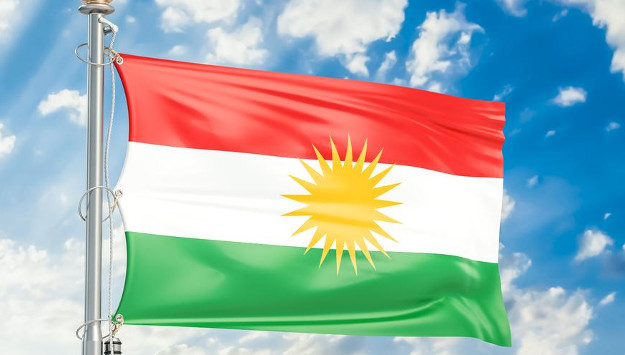
Iranian officials and state-run media outlets continue to label the recent Iraqi Kurdish leaders’ push for independence as an “Israeli project” aimed at countering Iran’s influence in the region. Grand Ayatollah Hossein Nuri Hamedani, a senior Iranian cleric, said this week that Tehran would not “allow a new Israel to take shape in the region.” An article in Fars News Agency, which is affiliated with the Islamic Revolution Guards Corps (I.R.G.C.), echoed a similar view.
The view from El Gouna, the luxury Red Sea resort constructed in the late 1980s by Egyptian business tycoon Samih Sawiris, can be misleading. The plush yachts, pricey food menus and grand parties present an alternative reality to the financially-strapped, religiously conservative one of the capital. In other words, El Gouna is not Egypt. The industry’s muted, skeptic reaction to the establishment of an international film festival in Hurghada’s most affluent town this year was thus quite expected.
Erdogan Visits Iran as Tension Rises over Kurdish Vote | Monday Briefing
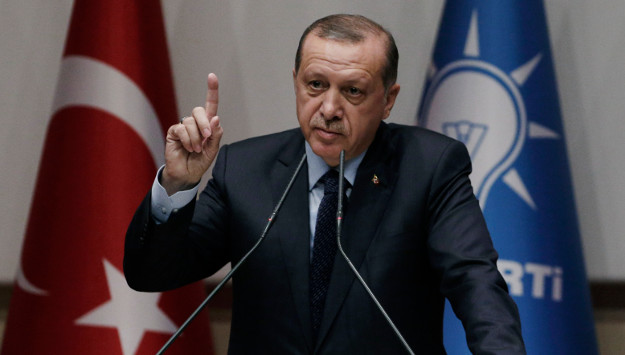
In this week’s Monday Briefing, MEI experts Alex Vatanka, Randa Slim, Marvin G. Weinbaum, Yousef Munayyer, and Gerald Feierstein provide analysis on recent and upcoming events including Turkish President Erdogan’s visit to Iran, Ayatollah Ali al-Sistani’s efforts to push for dialogue after the Kurdish independence referendum, the pending indictment of Nawaz Sharif in Pakistan, signs of progress in the reconcilliation attempt between Hamas and Fatah, and the Saudi king’s visit to Moscow.