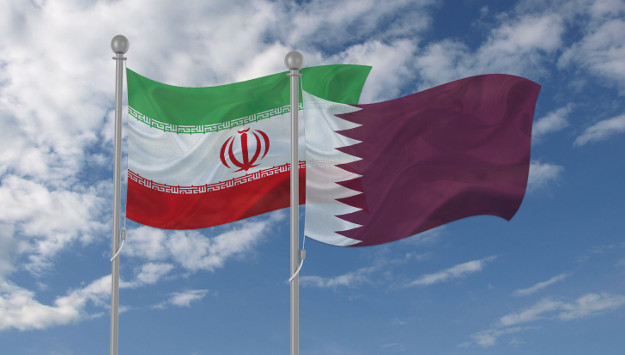
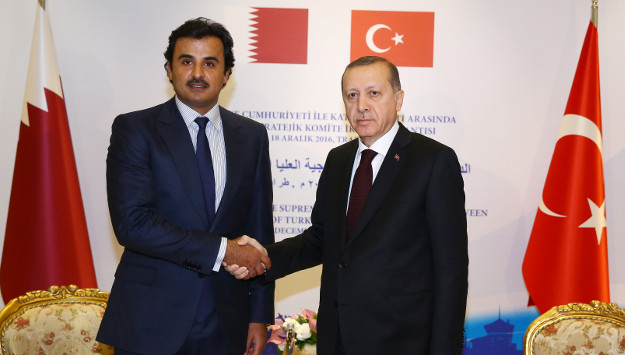
Astana Experts Meet in Tehran and Turkey Holds Naval Exercises with Qatar | Monday Briefing
In this week’s Monday Briefing, MEI experts Randa Slim, Gerald Feierstein, Gonul Tol, and Jean-François Seznec provide analysis on recent and upcoming events including next steps in the Syrian conflict de-escalation process, General Zinni’s mission to the Gulf, Qatari-Turkish relations, and crude oil informal cooperation.
U.S. Absent as Israel-Palestine Violence Escalates | Monday Briefing
In this week’s Monday Briefing, MEI experts Eran Etzion, W. Robert Pearson, Charles Lister, Alex Vatanka, and Randa Slim weigh in on the implications of Israel-Palestinian violence for U.S. foreign policy, Turkish involvement in the Gulf crisis, al-Qaeda’s response to the U.S. decision to terminate support for a program arming anti-Assad Syrian rebels, confrontational U.S. policy towards the Iran nuclear deal, and a former Iraqi Prime Minister’s power play.
Geopolitical maneuvering, political disunity, endemic corruption, rudderless security apparatus and, most importantly, a confident Taliban movement supported by the Pakistani “deep state” make Afghanistan the most persistent trouble spot. Recent events in the country are dominated by increasing terrorist attacks against security forces and hapless citizens.
Head of I.R.G.C.’s Khatam al-Anbia Blasts Rouhani’s Economic Policies, Deal with Total
The commander of Khatam al-Anbia Construction Headquarters, a conglomerate of the Islamic Revolution Guards Corps (I.R.G.C.), blasted President Hassan Rouhani’s economic policies and said he “harbors a serious grievance against the Rouhani government.” In an interview with Iran’s state-run television, Gene
Protestors in Southern Afghanistan Chant Anti-Iran Slogans after Rouhani’s Water Remarks
Earlier today, hundreds of people marched the streets of Lashkargah, the capital of Afghanistan’s volatile Helmand Province, to protest Iranian President Hassan Rouhani’s latest remarks on water dispute with Afghanistan, the Afghan media reported. Speaking at an international conference on tackling dust storm, Rouhani had criticized the Afghan government and its international allies for constructing dams and preventing the flow of sufficient water into Iran.
Iran Steps up Efforts to Oust U.S. Military from Middle East
With the Islamic State collapsing in Iraq and losing ground in Syria, Iran and its regional proxies see the United States as the primary threat to their influence and ambitions and have stepped up efforts to oust the U.S. military from the region. Through diplomatic outreach – and at times veiled threats – Iranian leaders have been urging the Afghan and Iraqi governments to expel American forces from their countries. Tehran has also deepened its ties with the Taliban and has reportedly teamed up with Moscow to undermine U.S.-led stabilization efforts in war-torn Afghanistan.
The Durand Line: A British Legacy Plaguing Afghan-Pakistani Relations
The Durand Line issue has continued to complicate the unpredictable nature of the Afghan-Pakistani relationship since the birth of Pakistan. Constant tension haunts their neighborly relations, as apprehensions and suspicions co-exist with some affable gestures. No Afghan government, including the present one headed by President Ashraf Ghani, has ever recognized the legitimacy of the Durand Line, which runs through mountainous terrain and remains largely unpoliced.
Monday Briefing: ISIS losing territory, President Erdogan visits Sudan
In this week’s Monday Briefing, MEI experts Charles Lister, W. Robert Pearson, and Yousef Munayyer provide analysis on ISIS’ continued threat to security despite losing territory, President Erdogan’s upcoming visit to Sudan as a political calculation, and Mohammed Dahlan’s effort to return to Palestinian politics.
Since the outbreak of the Syrian war, Turkey has become a critical conduit for international humanitarian operations and life-saving economic support to approximately three million Syrian refugees. Turkey’s decision to restrict various international NGOs from operating within its territory is now disrupting crucial provisions to those in both northern Syria, and inside its own borders.
Iranian Media Weighs Pros and Cons of Tehran’s Role in Gulf Crisis
After President Donald Trump’s visit to Riyadh last month, Iranian leaders were worried about the creation of a U.S.-supported alliance of regional Arab states led by Saudi Arabia to counter Irani
G.C.C. Conflict Could Further Complicate U.S.-Turkey Relations | MEI Flash
A fierce spat between Qatar and leading Arab nations could add another complication to the already strained relationship between the United States and Turkey. Ankara wants to calm the tension, and Turkish President Recep Tayyip Erdogan has spoken by phone with the leaders of Qatar, Russia, Kuwait, and Saudi Arabia to reduce tensions. He has also expedited legislation to deploy troops to Qatar as part of a military agreement signed in 2014. President Donald Trump, however, supports, and even takes credit for, the Saudi move to isolate its smaller neighbor.
June 1, 2017 – Sinan Ulgen, visiting scholar at Carnegie Europe in Brussels, joins host Gonul Tol for a discussion of the tensions in Turkey’s relations with Europe in the wake of the Turkish referendum and a recent meeting between President Erdogan and E.U. leaders.
Iran Blames U.S. Policies for Kabul Attack and Extremism in Afghanistan
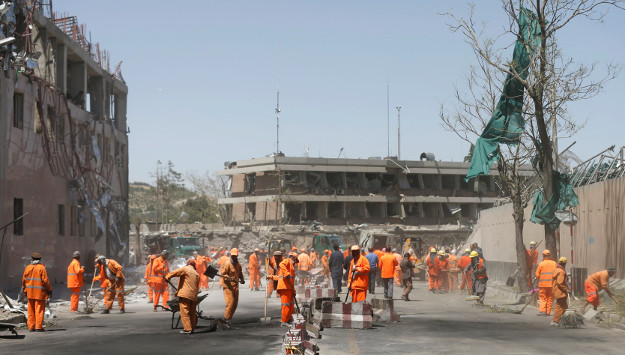
Reacting to today’s deadly bombing in Kabul, Iranian leaders and media outlets blamed U.S. policies and military presence in Afghanistan for growing extremism and instability in the war-ravaged country. Iran’s Foreign Minister Javad Zarif said the Kabul attack shows “Takfiri terrorism recognizes no boundaries” and called on regional countries to act in unison to fight terrorism instead of seeking help from outsiders – an apparent reference to the United States, which has more than 8,000 troops in Afghanistan training and assisting the country’s security forces.