This text has been translated by AI and may contain errors.
Skip to Content

Research & Commentary Results

Filter by
1208 Results
The End of Saudi-Style Stability
  • Analysis
  • The End of Saudi-Style Stability

    Read the full op-ed on The New York Times.

    For decades, Saudi Arabia was a stable and reliable economic and strategic partner of the United States. That country no longer exists.

    November 9, 2017

    Yemen’s Humanitarian Disaster: Halting the Famine Threat
  • Analysis
  • Yemen’s Humanitarian Disaster: Halting the Famine Threat

    Summary

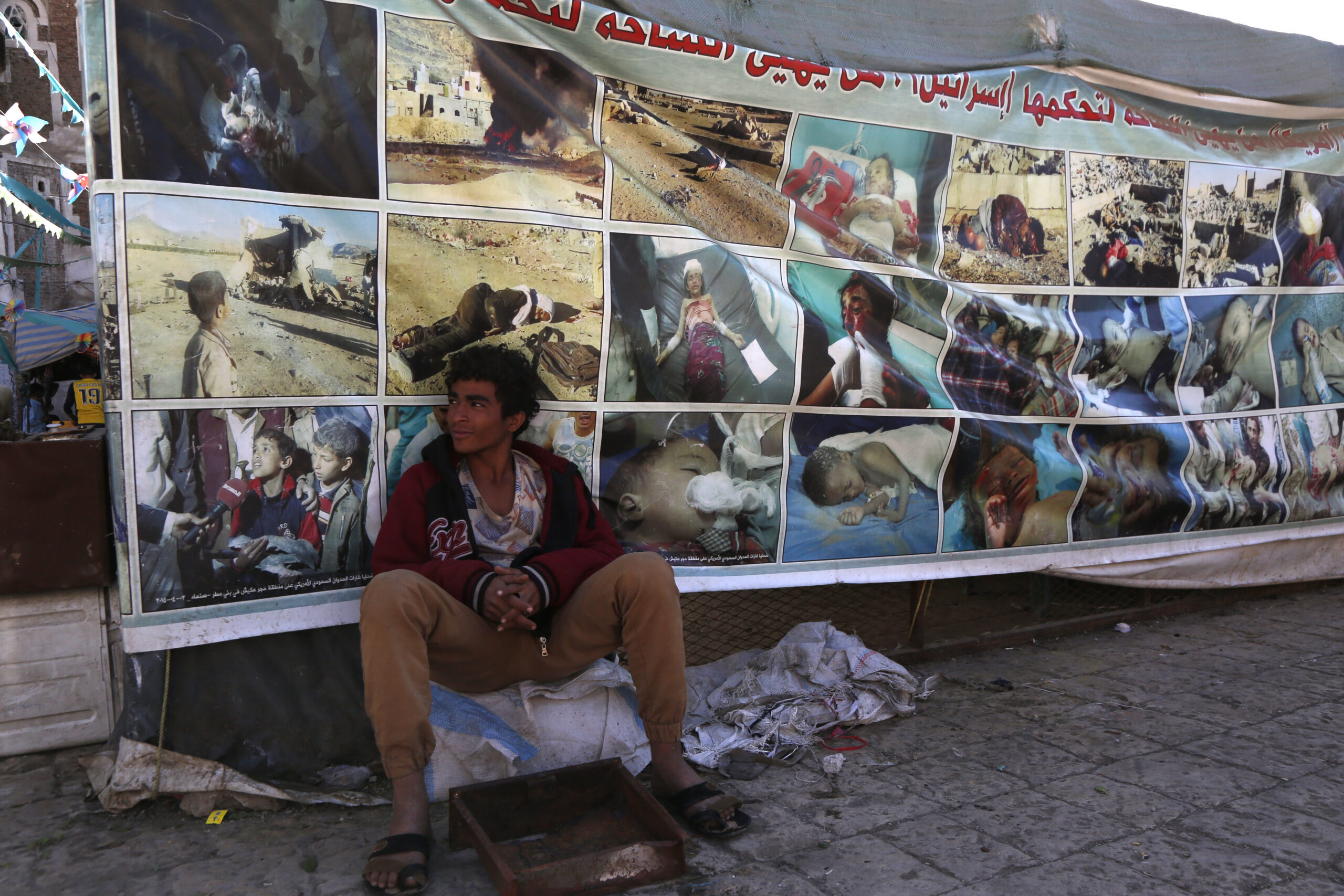
    Only several months after the Saudi-led military coalition waged its ongoing campaign against the Iranian-backed Houthi rebels in March 2015, the United Nations began issuing warnings about famine. Today, millions of Yemenis are on the brink of famine, with about half a million suffering from a cholera outbreak. This paper analyzes the causes of Yemen’s humanitarian catastrophe and offers the Trump administration recommendations for helping the impoverished Arab state avoid a famine.

    October 25, 2017

    The G.C.C. Countries and China’s Belt and Road Initiative (BRI): Curbing Their Enthusiasm?
    Middle East Institute
  • Analysis
  • The G.C.C. Countries and China’s Belt and Road Initiative (BRI): Curbing Their Enthusiasm?

    Chinese leaders emphasize that the Belt and Road Initiative (BRI) is focused on developing connectivity through inclusive cooperation. Yet, certain BRI projects have potential strategic outcomes that can affect regional power dynamics. Thus, States that might otherwise be inclined to cooperate with China on the BRI could perceive elements of the initiative to run counter to their interests. This essay shows that, in considering the BRI, the leaders of the Gulf Arab countries have to balance their increasingly important relationship with China against the ways this initiative empowers rivals or threatens their relations with important external powers.

    October 17, 2017

    Trump Administration Lifts Most Sudan Sanctions
  • Analysis
  • Trump Administration Lifts Most Sudan Sanctions

    The Trump administration has decided to lift most sanctions on Sudan, according to a report in the Washington Post, October 6. The move reflects a range of administration priorities, including a desire to isolate North Korea further as well as to use sanctions relief rather than the sanctions themselves to leverage additional Sudanese reforms.

    October 6, 2017

    Think West to Go West: Origins and Implications of India’s West Asia Policy Under Modi (Part I)
    Middle East Institute
  • Analysis
  • Think West to Go West: Origins and Implications of India’s West Asia Policy Under Modi (Part I)

    Prime Minister Modi’s 2015 visit to the U.A.E. and subsequent events have seen India’s view of the region undergo a fundamental shift. This essay, the first of two parts, shows how New Delhi has come to regard the Gulf more as a source of investment and less as a source of energy and visas; and has begun to take a more strategic and military view of the region.

    September 26, 2017

    A Return to Ambiguity in U.S.-Egyptian Relations | Monday Briefing
  • Analysis
  • A Return to Ambiguity in U.S.-Egyptian Relations | Monday Briefing

    In this week’s Monday Briefing, MEI experts Paul Salem, Gerald Feierstein, Randa Slim, Bilal Y. Saab, and Jean-François Seznec provide analysis on recent and upcoming events including tensions between Washington and Cairo over Egypt’s excessive authoritarian crackdown, Russia’s attempt to help mediate the G.C.C. crisis, the likely postponement of the Kurdish independence referendum, the performance of the Lebanese Army in anti-ISIS operations, and the Iraqi oil minister’s trip to Moscow to discuss oil production cuts.

    August 28, 2017

    Online and Traditional Forms of Protest Mobilization: Morocco’s Rif Protests and Beyond
    Middle East Institute
  • Analysis
  • Online and Traditional Forms of Protest Mobilization: Morocco’s Rif Protests and Beyond

    When investigating the relative role that social media and other factors can play in the mobilization of popular demonstrations, the recent Rif protests, which some have perceived as having the potential to spark a “second Arab Spring” in Morocco, are interesting to look at. These protests suggest that large-scale popular demonstrations might often result from a combination of both online mobilization and much more traditional mobilization strategies employed by charismatic movement leaders. In this sense, the Rif protests also contradict assumptions about the presumed role of “diffuse leadership,” which emerged in the context of the Arab Spring.

    August 22, 2017

    Monday Briefing | Is the Middle East Tilting toward De-Escalation?
  • Analysis
  • Monday Briefing | Is the Middle East Tilting toward De-Escalation?

    In this week’s Monday Briefing, MEI experts Paul Salem, Gonul Tol, Alex Vatanka, and Jonathan M. Winer provide analysis on recent and upcoming events including Saudi Arabia’s diplomatic engagements in the region, Turkey’s consideration of military operations in northern Syria, Iranian President Rouhani’s centrist cabinet nominations, and Libyan leaders’ decision between greater cooperation or renewed confrontation.

    A Band of (Muslim) Brothers? Exploring Bahrain’s Role in the Qatar Crisis
    Middle East Institute
  • Analysis
  • A Band of (Muslim) Brothers? Exploring Bahrain’s Role in the Qatar Crisis

    The crisis which has engulfed the Gulf Cooperation Council (G.C.C.) states since June 5, 2017, leading to an unprecedented diplomatic and economic blockade of Qatar, has effectively split the Gulf into three camps, fracturing the uneasy yet much-lauded unity of an alliance which has long prided itself on stability and security. This essay offers a possible explanation for Bahrain’s contradictory position regarding the crisis, and considers whether Manama can maintain it.

    August 3, 2017

    Europe Seeks Peaceful End to Gulf Crisis
  • Analysis
  • Europe Seeks Peaceful End to Gulf Crisis

    The ongoing Saudi-led blockade of Qatar came as a surprise to the international community, including the European Union. When Saudi Arabia, the U.A.E., Egypt, and Bahrain cut ties with the Qatari monarchy, the E.U. found itself in a new and complex political reality. Though the intra-Gulf crisis had been simmering for quite a long time, it seems that the Europeans were not prepared for such a scenario. Ultimately, Europe must consider the severity of the current crisis’ potential diplomatic and economic consequences.

    June 28, 2017

    The Influence of North African Militaries in Foreign Policy-Making
    Middle East Institute
  • Analysis
  • The Influence of North African Militaries in Foreign Policy-Making

    This essay looks at five North African states, arguing that the armed forces — for a variety of often case-specific reasons — are actually not as politically powerful and thus influential in foreign policy-making as one might expect. It first discusses the political strength of the military establishments of five North African states — Morocco, Algeria, Tunisia, Libya, and Egypt — and then investigates the difference, if any, that the recent Arab upheavals have made in their involvement in foreign policy-making.

    June 28, 2017

    Kuwait, Oman, and the Qatar Crisis
  • Analysis
  • Kuwait, Oman, and the Qatar Crisis

    The ongoing Qatar crisis poses a major dilemma for Kuwait and Oman. Consistent with their “neutral” foreign policies, these two Arab Gulf states have maintained ties with Doha and seek to resolve the gravest internal Gulf Cooperation Council (G.C.C.) row since the organization’s establishment in 1981. Officials in Kuwait City and Muscat fear that failure to settle the Qatar crisis will break up the council, which would directly undermine vital Kuwaiti and Omani national interests given the potential for such a scenario to dramatically exacerbate regional geopolitical instability.

    June 22, 2017

    Can the Trump Admin get its Act Together on G.C.C. Crisis? | Monday Briefing
  • Analysis
  • Can the Trump Admin get its Act Together on G.C.C. Crisis? | Monday Briefing

    In this week’s Monday Briefing, MEI experts Gerald Feierstein, Robert S. Ford, Alex Vatanka, and Ruba Husari provide analysis on  the Trump administration’s handling of the G.C.C. crisis, how Iran and energy markets have responded to it, and the escalating conflict in eastern Syria.