The election of Emmanuel Macron is certainly bad news for terrorist organizations in the Middle East. At the same time, it is unlikely that France will modify its attitude in regards to larger regional challenges, for instance, the ongoing Syrian civil war, the Israeli-Palestinian conflict, or the cold war between Iran and Saudi Arabia.
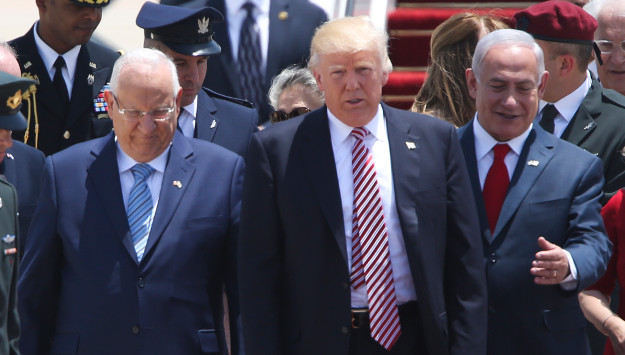
Monday Briefing: Chances for MidEast Peace Remote under Trump
In this week’s Monday Briefing, MEI experts Yousef Munayyer, Alex Vatanka, Jonathan M. Winer, and Marvin G. Weinbaum provide analysis on recent and upcoming events including President Trump’s trip to Israel and the prospects for a peace process, the reelection of Iranian President Hassan Rouhani, Russia’s planned naval drill off the coast of Libya this week, and the Afghan Taliban’s decision to reject peace talks.
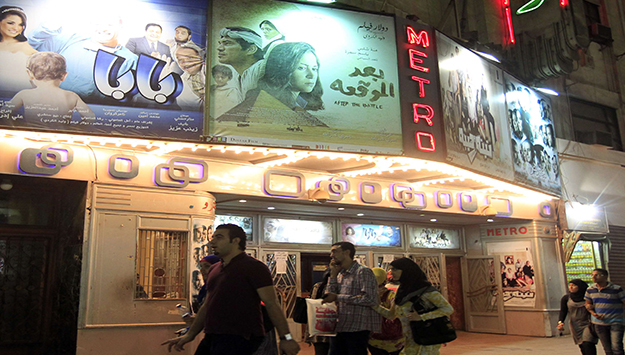
The cinema has long been a contested space in Egypt. Following its nationalization in 1966, a formerly flourishing film industry ran steadily downhill and movie theater operators were subjected to censors’ increasingly puerile whims. The only independent company allowed to operate was Misr International Films—founded in 1972 by Egyptian director Youssef Chahine (1926-2008)—to produce, distribute, and exhibit films while coincidentally enabling the state to posit itself as an indulgent patron of cinematic art. The annual state-run Cairo International Film Festival (CIFF, est.
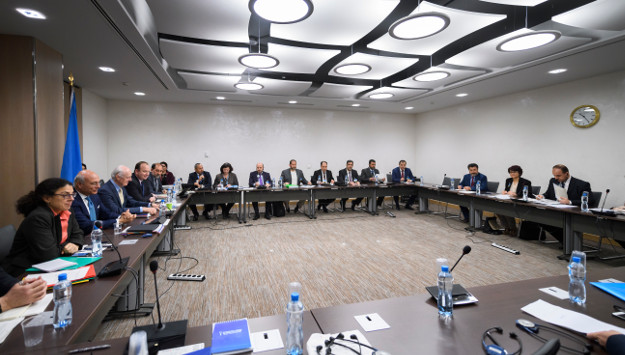
Syria Talks Resume in Geneva; Saudis to Give Warm Welcome to Trump; Qalibaf Withdraws from Iran Presidential Race
In this week’s Monday Briefing, MEI experts Charles Lister, Gerald Feierstein, Eran Etzion, and Alex Vatanka provide analysis on recent and upcoming events including the resumption of Syria talks in Geneva, President Trump’s upcoming visit to Saudi Arabia and Israel, and the latest developments in the home stretch of Iran’s presidential election.
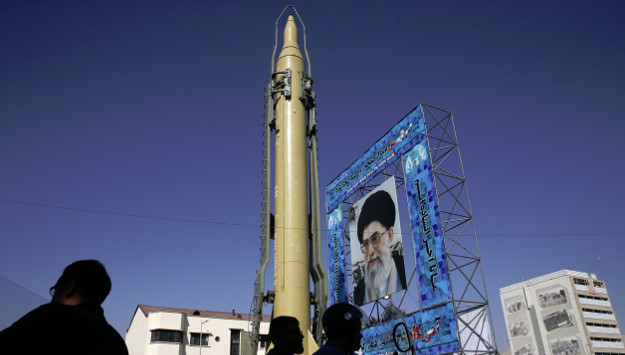
Rouhani’s Missile Remark Raises Ire of Iran’s Military Leaders
Iran’s President Hassan Rouhani’s latest remark on the country’s missile program has aroused the ire of the military establishment. In the second presidential debate aired on Iran’s state-run TV, Rouhani, who is seeking a second term in May 19 elections, accused the powerful Islamic Revolution Guards Corps (I.R.G.C.) of trying to sabotage the Joint Comprehensive Plan of Action – the nuclear deal Iran signed with world powers in July 2015. “What did they do in order to undermine the J.C.P.O.A.?” Rouhani asked, referring to the I.R.G.C.
Iran Reportedly Offers to Deploy Ground Forces to Syria to Counter Potential U.S.-led Intervention
The latest air strikes on an airport near Damascus purportedly by Israel and increased U.S. military activities on Jordan’s northern border have triggered a concern in Tehran about the possibility of a broader U.S.-led military campaign in Syria.
Pope’s Egypt Visit to Reassure MidEast Christians | Monday Briefing
In this week’s Monday Briefing, MEI experts Paul Salem, Alex Vatanka, Eran Etzion, and Gerald Feierstein provide analysis on recent and upcoming events including the Pope’s upcoming visit to Egypt, Ahmadinejad’s public feud with Ayatollah Khamenei, Israeli efforts to draw Russian support away from Iran, and the appointment of Prince Khalid bin Salman as Saudi Ambassador to the U.S.
Turkey's Erdogan Gets His Presidential Wish | Monday Briefing
In this week’s Monday Briefing, MEI experts Gonul Tol, Gerald Feierstein, Alex Vatanka, and Marvin G. Weinbaum provide analysis on recent and upcoming events including the victory of Turkish President Erdogan’s “Yes” constitutional referendum campaign to increase his powers, Secretary of Defense Mattis’ trip to the Middle East, the entry of 1,600 candidates for the upcoming Iranian presidential elections, and the alarming violence in Pakistan against accused “blasphemers”.
India has become Israel’s largest arms export market in the world over the last decade (replacing China); and Israel has become one of India’s largest arms supplier. Why did India develop a strong military partnership with a country it had ignored for 42 years? What can explain the development of defense ties in spite of limited political leadership involvement over the past decade? Finally, what are the prospects for defense relations as India grows to become one of the world’s largest defense importer? This essay answers these questions by providing an account of the evolution of Indo-Israeli defense cooperation over the past 25 years.
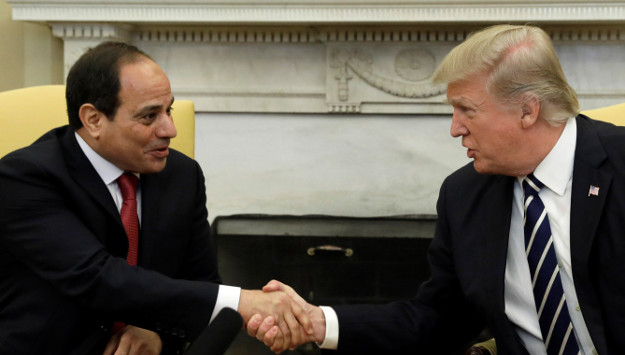
In this week’s Monday Briefing, MEI experts Paul Salem, Yousef Munayyer, and Randa Slim provide analysis on recent and upcoming events including the meeting between Egyptian President Sisi and President Trump, the upcoming meeting between President Trump and Jordan’s King Abdullah, and the Trump administration’s adoption of Obama-era policies in Syria.
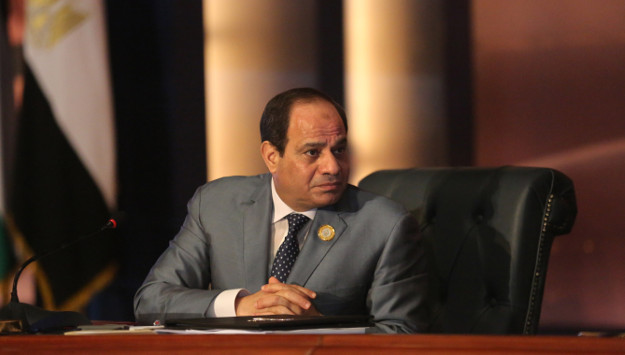
Egyptian president Abdel Fattah el-Sisi’s visit to President Trump signals the restoration of the close U.S.-Egyptian relations that have been a key pillar of U.S. policy toward the Middle East for four and half decades. The United States has an abiding interest in a stable, prosperous and well-governed Egypt, and Egyptians have an interest in close relations with the United States’ government, economy and society.
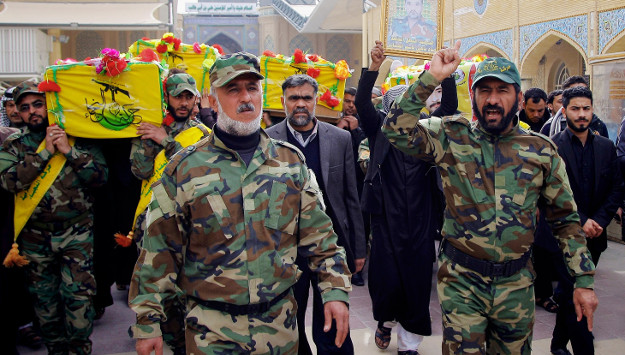
Iran-Backed Militia Group Calls for Collective Action to Reclaim Golan Heights, Destroy Israel
Over the past six years, Iran has played a key role in propping up the embattled regime of Bashar al-Assad in Syria, by sending Islamic Revolution Guards Corps (I.R.G.C.) military personnel as well as recruiting, funding, training and leading an extensive network of Iraqi, Lebanese, Pakistani and Afghan Shiite militia forces.
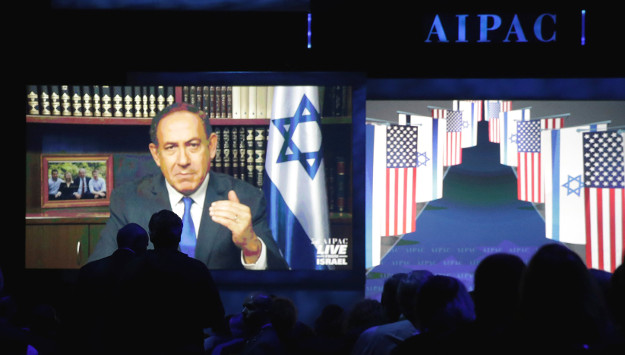
In this week’s Monday Briefing, MEI experts Yousef Munayyer, Eran Etzion, and Alex Vatanka provide analysis on recent and upcoming events including the evident partisan divide at this year’s AIPAC Conference, the surprise that the Trump administration’s lack of support for settlement building has caused for Israel’s right wing, and Iranian President Rouhani’s trip to Moscow.
India and Egypt: Economic Reconstruction and Stabilization
Six years after the fossilized authoritarian regime of Hosni Mubarak was swept from power by a tide of popular discontent, Egypt continues to face a multitude of economic and other challenges. This essay discusses the role that India has played, and could play in helping set Egypt’s economy on a more stable footing while broadening and deepening the bilateral relationship.
In this week’s Monday Briefing, MEI experts Charles Lister, Randa Slim, Paul Salem, and Eran Etzion provide analysis on recent and upcoming events including the meeting of the anti-ISIS coalition in D.C., the Iraqi Prime Minister’s visit to the U.S., the upcoming Arab League summit, and Israeli Prime Minister Netanyahu’s visit to China.