While there have been studies on the development of Islamic philanthropic organizations in fostering social welfare in Southeast Asian countries such as Indonesia and Malaysia, the role of international Islamic aid agencies, including those from Gulf countries, in their dealings with Southeast Asian domestic welfare issues remains unexplored. This essay discusses the growth of Gulf charitable organizations operating in Southeast Asia, particularly the reasons for this phenomenon and the types of activities in which these organizations are engaged, and then takes an in-depth look at two Gulf charities that are active in Indonesia, namely the United Arab Emirates’ (UAE) Asian Muslim Charity Foundation (AMCF) and Qatar Charity.
Taiwan’s Relations with Saudi Arabia: An Interview with Ibrahim Chao
Over the past half century, Saudi Arabia has been the most important country for Taiwan’s Middle East diplomacy. The following interview with HE Dr. Ibrahim Chao (Hsi-lin Chao), Taiwan’s representative to the Kingdom from 2009 to 2012, sheds light on the contours of and recent developments in the bilateral relationship. Prior to joining the Ministry of Foreign Affairs of the Republic of China, or Taiwan, Ibrahim Chao earned an M.A. and a Ph.D. in Shariah (Islamic Law) from the Umm al-Qura University in Mecca, Saudi Arabia. Since retiring from the diplomatic service, he has served as an advisor to the Chinese Muslim Association in Taipei.
Obama’s Legacy in the Gulf: Despite Disgruntlement, U.S. Remains Indispensable
This paper is part of an MEI scholar series, titled “Obama’s Legacy in the Middle East: Passing the Baton in 2017.” Click here to view the full project, or navigate using the table of contents to the right.
Thanks to unprecedented current account surpluses, the Gulf Cooperation Council (GCC) countries are investing billions abroad and looking more toward the East. The GCC’s growing trade ties with China have been accompanied by encouraging development in investment relations. For these countries, investment projects in China promise access not only to large and rapidly growing energy markets, but also to other booming sectors.
Gulf Investment in China: Beyond the Petroleum Sector
This essay explores recent GCC investment in sectors of the Chinese economy other than the petrochemicals industry and examines the challenges confronted by Gulf investors.
The rise of China and India, coupled with major changes in the global energy market such as the US shale revolution have shifted the Gulf countries’ economic focus towards the Asian continent. East Asia has already emerged as the GCC’s most important trade partner, accounting for over 57% of its external trade.
One way to grasp the immense difficulty facing President Obama as he tries to forge an effective international coalition to oppose the Islamic State is to examine the difference between this effort and the last time the United States led a diverse group of countries to take on a conflict in the Middle East: Operation Desert Storm, in 1991.
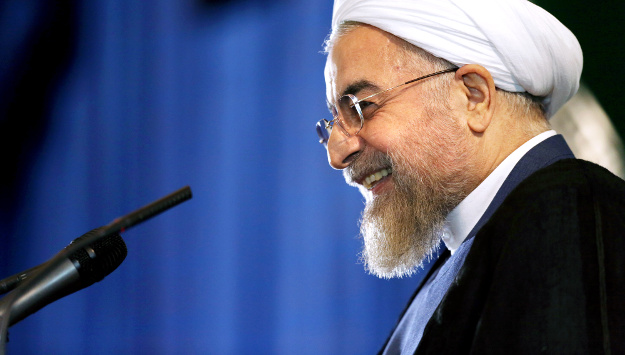
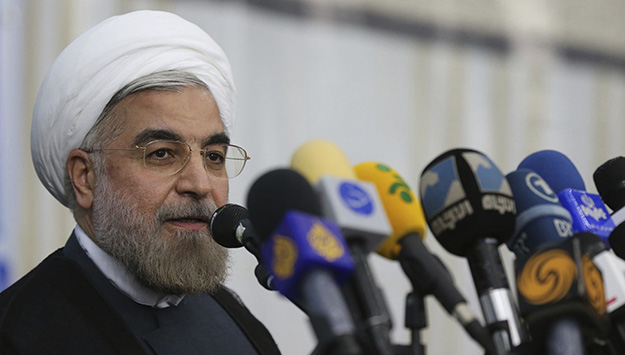
After a year of hesitation, Iranian president Hassan Rouhani is signaling his readiness to reach out to Tehran’s chief regional rival—Saudi Arabia. Last week, a top official was sent to Riyadh; he was the most senior Iranian visitor to the country since Rouhani’s election in June 2013.
Korea and the GCC: Reaching a Sustainable Economic Partnership
Over the past four decades, economic relations between the Republic of Korea (hereafter Korea) and the Gulf Cooperation Council (GCC) countries have been focused on two sectors. Given the lack of energy resources in Korea, the GCC countries have provided oil and gas for Korean manufacturing, electricity, transport, and related activities. These countries have also provided Korea with business opportunities in the construction sector, including the building of expressways, seaports, and industrial plants.
This week’s visit to Tehran by the Kuwaiti emir, Sheik Sabah al-Ahmad al-Sabah, is about more than Iranian-Kuwaiti relations. It might even be a pivotal moment in the shaping of Iran’s ties with the Arab countries across the Gulf. Kuwait, which currently holds the rotating presidency of the Gulf Cooperation Council (GCC), is acting as a conduit for the collective unease that the GCC’s six member states, particularly Saudi Arabia, have about Iran’s regional policies.
Geography alone should make the Arab world Iran’s key foreign policy focus. Of Iran’s 13 immediate neighbors, seven are Arab countries.[1] But Tehran’s approach to the Arab world, with its 22 states extending from North Africa to the Arabian Peninsula, varies widely in intensity, and Iran’s objectives are equally varied depending on the country in question.
In terms of its capacity, potential and aspirations, Korea attained the status of a “middle power” more than a decade ago. Membership in the OECD’s Development Assistance Committee and G20 signifies the completion of Korea’s transition from an evolving to advanced economy. Korea has emerged as an important player in Asian and international affairs. Its presence and influence have expanded in trade, investment, overseas development assistance (ODA) and humanitarian aid, and culture.