The Middle East in China’s Silk Road Visions: Business as Usual?
Chinese President Xi Jinping’s 2013 proclamation of the Silk Road Economic Belt (“One Belt, One Road”) and Twenty-First Century Maritime Silk Road initiatives provided an overarching framework for understanding China’s strategic priorities over the coming decade. The land-based and sea-based Silk Roads will link Asia and Europe via the Middle East and Central Asia through a series of transcontinental railroads, pipelines, ports, airports, and other infrastructure projects.
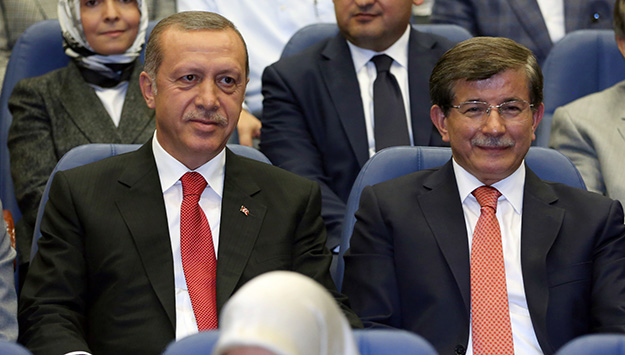
The recent public row between Deputy Prime Minister Bulent Arinc and Ankara Mayor Melih Gokcek marked the latest fallout from a widening rift between the country’s president, Recep Tayyip Erdogan, and his handpicked prime minister, Ahmet Davutoglu. If the crack continues to widen, it will not only deal a blow to Erdogan’s presidential dream but also to the future of the ruling party.
Collection Spotlight: In the Name of Oil: Anglo-American Relations in the Middle East, 1950-1958
Ivan L. G. Pearson’s In the Name of Oil: Anglo-American Relations in the Middle East, 1950-1958 provides a comprehensive analysis of the extent to which British interests in the Middle East influenced or were furthered by the United States between 1950 and 1958.
Frustrated Turkey Turns to Onetime Ally Saudi Arabia
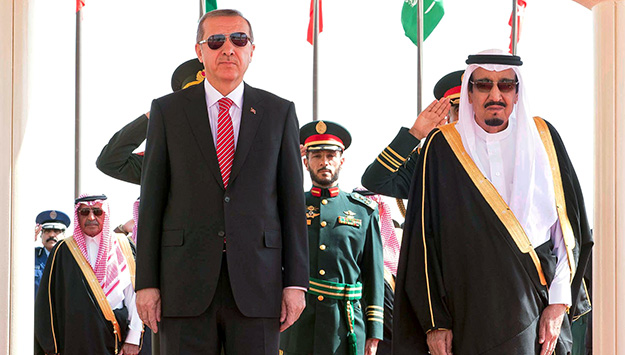
Frustrated by the United States’ failure to heed its advice on Syria and Iraq, and by Iran’s growing clout in these countries, Turkey seems to have decided to mend its frosty relationship with Saudi Arabia. When King Abdullah died earlier this year, Turkish President Recep Tayyip Erdogan immediately cut short an African tour and flew to Riyadh to offer his condolences. He declared a period of mourning in Turkey and ordered the Turkish flag to be flown at half-mast.
Could Kurds Be the Liberal Alternative Turks Have Been Looking For?
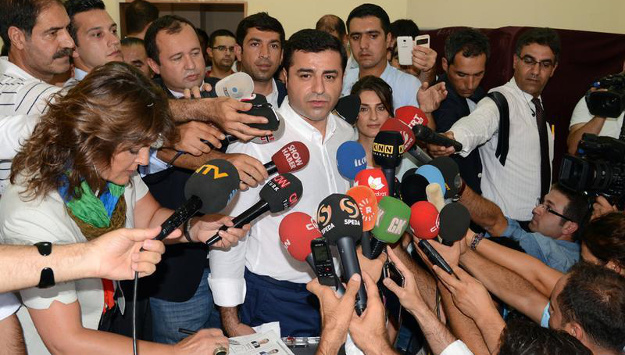
Turkey’s first tangible democratic push came from the Islamist camp in 2002 when the Islamist-rooted Justice and Development Party (AKP) came to power. The second could come from an unlikely source: the Kurds.
Turkey is in an unprecedented state of political tumult. Since the ascent of Recep Tayyip Erdogan’s Justice and Development Party (AKP) to power in 2002, all Turks have struggled to support, defeat, or accommodate this party that rose suddenly in free elections to national power. Now, that contest has entered a new and more dangerous phase.
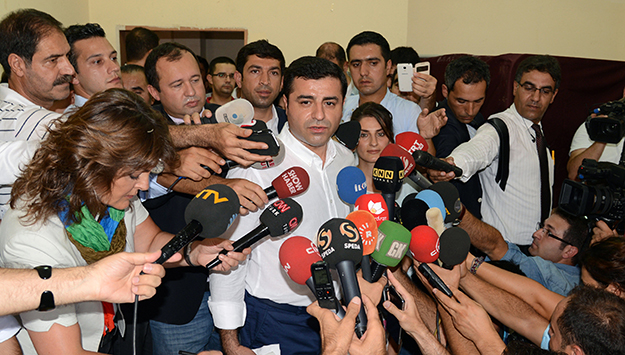
Turkey’s Kurds are playing a risky game. If they succeed, they can boost the country’s troubled democracy. If they fail, a further drift toward authoritarianism will follow.
This article, co-written by James P. Farwell, was first published byThe National Interest.
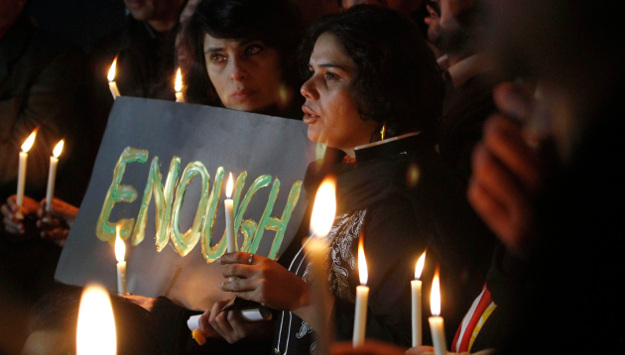
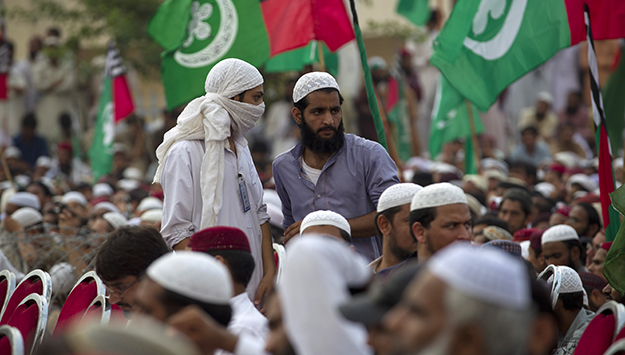
Shot in both legs, Shahruh Khan survived the Taliban attack on the Army Public School in Peshawar, Pakistan. “The man with big boots,” Al Jazeera quoted Khan as saying, “kept on looking for students and pumping bullets into their bodies.”
Vulnerabilities and Resistance to Islamist Radicalization in India
India has long remained an enigma within the discourse on the Islamist extremism and terrorism that have afflicted widening areas of the world. The emergence of the Islamic State (ISIS) and its appeal to significant numbers of radicalized Muslims have highlighted ambiguities surrounding the role of these ideologies in India. Fighters from at least 82 countries are said to have joined ISIS. Western countries with tiny Muslim populations and long-standing programs intended to counter the trends toward radicalization of Muslims have found that scores—even hundreds—of their citizens are involved in the fighting in Iraq and Syria. By comparison, India, with a Muslim population of about 176 million (well over twice the total population of Europe), has seen an estimated 18 radicalized Muslims join ISIS in Iraq-Syria.
Report: Sunni Deobandi-Shi'i Sectarian Violence in Pakistan
In both general and more informed discussions in Pakistan and beyond, sectarian violence in Pakistan between Sunni and Shi‘i groups is almost without exception referred to simply as Sunni-Shi‘i violence. But such a characterization is a misnomer. Two of Pakistan’s three major Sunni subsects, the Ahl-e-Hadis, and to a lesser extent, the Barelvis, may have antipathy toward the Shi‘a, but rarely express such sentiments through violent activity.
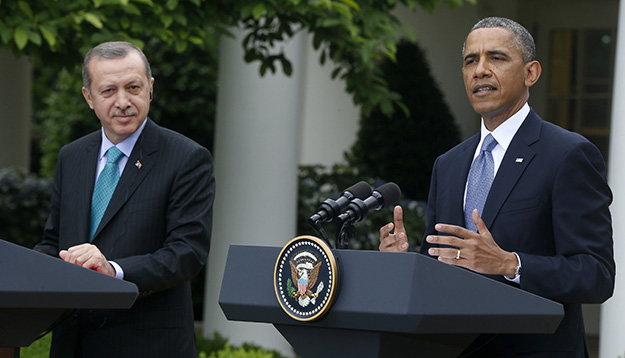
Washington-Ankara Tensions Will Shape Obama’s Legacy in Turkey
This paper is part of an MEI scholar series, titled “Obama’s Legacy in the Middle East: Passing the Baton in 2017.” Click here to view the full project, or navigate using the table of contents to the right.
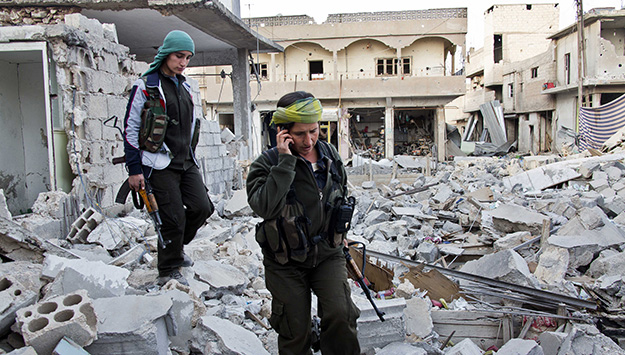
In the ongoing fighting in and around Kobani in northern Syria, it appears likely that the defending Kurdish forces will ultimately prevail and be able to expel the Islamic State (ISIS). However, in order to enable refugees to return, substantial aid and reconstruction efforts will be needed, and more benign Turkish border policies are essential in the meantime.

 Ivan L. G. Pearson’s In the Name of Oil: Anglo-American Relations in the Middle East, 1950-1958 provides a comprehensive analysis of the extent to which British interests in the Middle East influenced or were furthered by the United States between 1950 and 1958.