Geopolitical maneuvering, political disunity, endemic corruption, rudderless security apparatus and, most importantly, a confident Taliban movement supported by the Pakistani “deep state” make Afghanistan the most persistent trouble spot. Recent events in the country are dominated by increasing terrorist attacks against security forces and hapless citizens.
Trump-Putin Meeting a Potential Game Changer for Syria
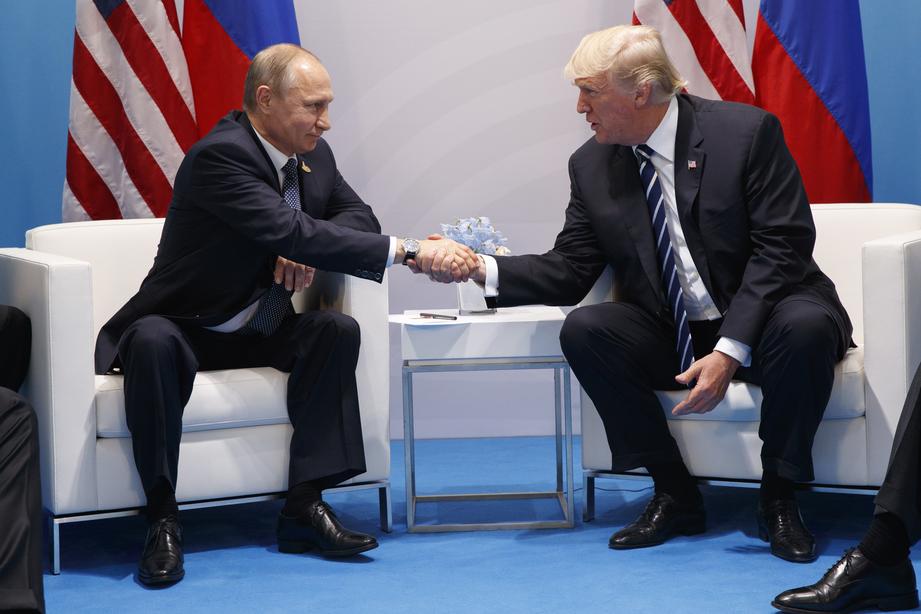
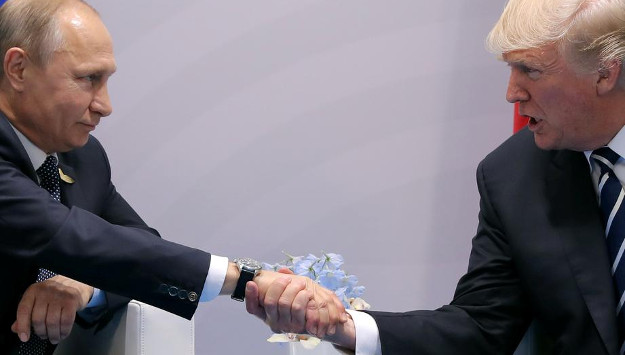
The long-awaited meeting of Presidents Vladimir Putin and Donald Trump finally took place on the sidelines of the G-20 summit in Hamburg, which came at a time of cool relations between Washington and Moscow.
Despite ongoing tensions, the two powers appeared to embrace a constructive approach to their first meeting, focusing on issues where progress is possible, such as Syria.
Syrian Peace Negotiations at a Standstill | Monday Briefing
In this week’s Monday Briefing, MEI experts Randa Slim, Charles Lister, and Mabrouka M’Barek provide analysis on the progress of ongoing negotiations over peace in Syria, rising tensions in Idlib province between Hay’at Tahrir al-Sham and Ahrar al-Sham, and Tunisia’s lobbying efforts to ensure continued U.S. aid.
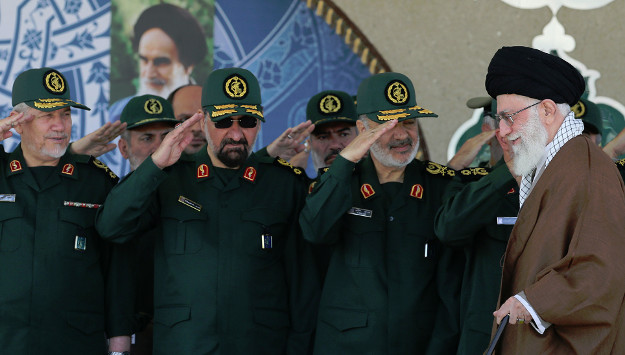
Head of I.R.G.C.’s Khatam al-Anbia Blasts Rouhani’s Economic Policies, Deal with Total
The commander of Khatam al-Anbia Construction Headquarters, a conglomerate of the Islamic Revolution Guards Corps (I.R.G.C.), blasted President Hassan Rouhani’s economic policies and said he “harbors a serious grievance against the Rouhani government.” In an interview with Iran’s state-run television, Gene
Protestors in Southern Afghanistan Chant Anti-Iran Slogans after Rouhani’s Water Remarks
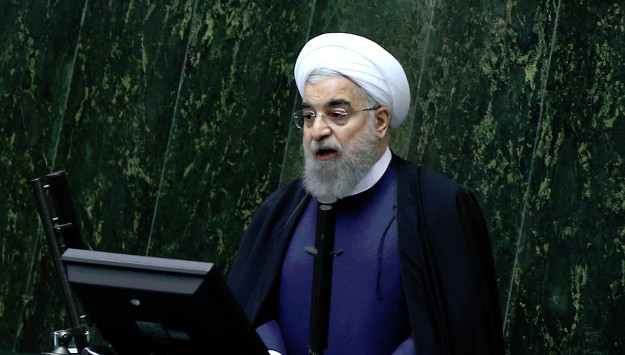
Earlier today, hundreds of people marched the streets of Lashkargah, the capital of Afghanistan’s volatile Helmand Province, to protest Iranian President Hassan Rouhani’s latest remarks on water dispute with Afghanistan, the Afghan media reported. Speaking at an international conference on tackling dust storm, Rouhani had criticized the Afghan government and its international allies for constructing dams and preventing the flow of sufficient water into Iran.
Al-Qaeda Affiliate and Ahrar al-Sham Compete for Control in Idlib
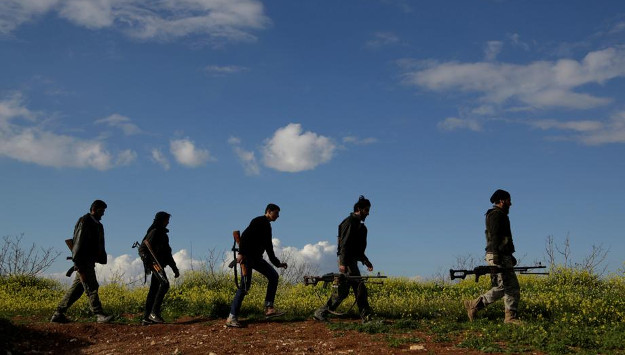
Idlib is currently the site of increasing competition between the two most dominant armed coalitions, the al-Qaeda-linked Hay’at Tahrir al-Sham (H.T.S.) and Ahrar al-Sham. The province has witnessed limited airstrikes since a de-escalation agreement, which came into effect on May 5, was brokered by Russia, Turkey, and Iran at the Astana talks. Idlib was one of four areas labeled as a de-escalation zone.
Iran Steps up Efforts to Oust U.S. Military from Middle East
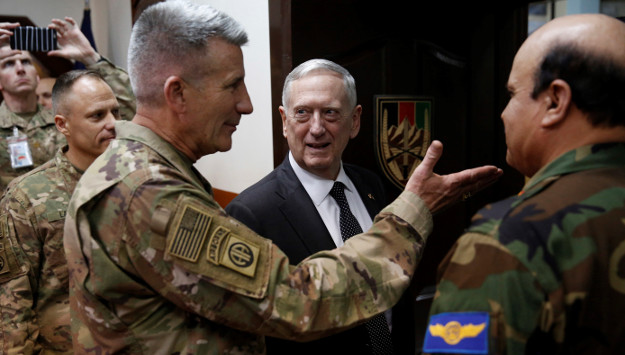
With the Islamic State collapsing in Iraq and losing ground in Syria, Iran and its regional proxies see the United States as the primary threat to their influence and ambitions and have stepped up efforts to oust the U.S. military from the region. Through diplomatic outreach – and at times veiled threats – Iranian leaders have been urging the Afghan and Iraqi governments to expel American forces from their countries. Tehran has also deepened its ties with the Taliban and has reportedly teamed up with Moscow to undermine U.S.-led stabilization efforts in war-torn Afghanistan.
The Durand Line: A British Legacy Plaguing Afghan-Pakistani Relations
The Durand Line issue has continued to complicate the unpredictable nature of the Afghan-Pakistani relationship since the birth of Pakistan. Constant tension haunts their neighborly relations, as apprehensions and suspicions co-exist with some affable gestures. No Afghan government, including the present one headed by President Ashraf Ghani, has ever recognized the legitimacy of the Durand Line, which runs through mountainous terrain and remains largely unpoliced.
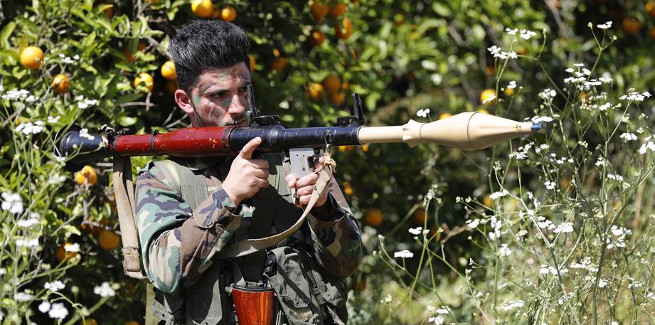
Israel and Hezbollah have recently raised the profile of their long quiescent front across the Blue Line border. Warnings have increased that a conflict will soon engulf Lebanon, and perhaps even draw in the United States. Hezbollah’s leader Hassan Nasrallah has threatened to attack Israel’s nuclear reactor at Dimona and Israeli chemical installations in Haifa.
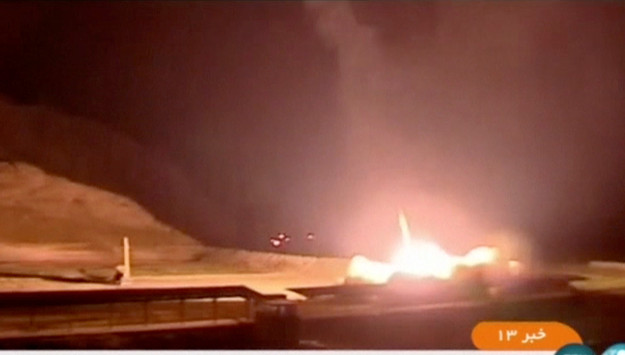
Iran: Missile Strikes in Syria Carry Wider Warning to Regional States and U.S.
On Sunday, the Iranian military said it had launched six missiles at Islamic State positions in Syria in retaliation for the June 7 attacks in Tehran claimed by the terrorist group. A statement by the Islamic Revolution Guards Corps (I.R.G.C.) confirmed that it fired medium-range missiles from bases in the western Iranian provinces of Kermanshah and Kurdistan and killed a “large number” of Islamic State terrorists in Syria’s Deir Az Zour province.
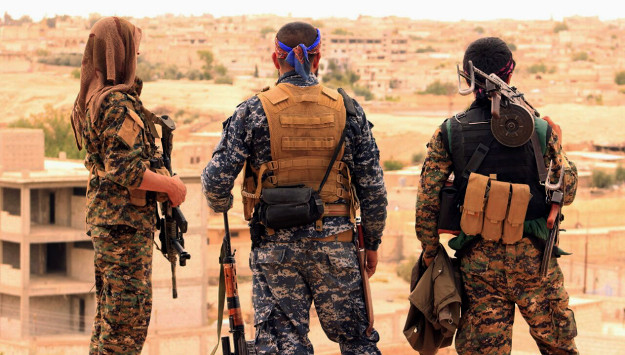
Monday Briefing: Eastern Syria a Hotbed of Geopolitical Interests
In this week’s Monday Briefing, MEI experts Charles Lister, Alex Vatanka, Marvin G. Weinbaum, and Gerald Feierstein provide analysis on eastern Syria as a new hotbed of geopolitical competition, Iranian responses to the Islamic State attack, additional U.S. troops in Afghanistan, and renewed Saudi succession speculation.
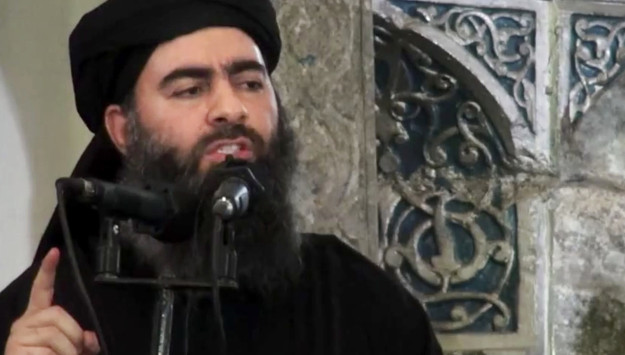
Russia’s claim to have killed ISIS leader Abu Bakr al-Baghdadi in an airstrike in Raqqa on May 28 should be taken with a heavy grain of salt. At the time in question, the U.S.-led Syrian Democratic Forces (S.D.F.) were only days away from launching their final assault on the city and there’s no logical reason imaginable why Baghdadi would have risked staying in a surrounded, sitting target. Notwithstanding justified doubts surrounding Baghdadi’s then presence in Raqqa, Russia’s statement also says its strike killed another 330 ISIS fighters – which is almost certainly an absurd claim.