The Israeli-Palestinian Conflict and Obama’s Legacy
This paper is part of an MEI scholar series, titled “Obama’s Legacy in the Middle East: Passing the Baton in 2017.” Click here to view the full project, or navigate using the table of contents to the right.
The Israeli-Palestinian conflict has gone through a number of different phases in its long history. It is possible—though only time will tell—that a new phase is beginning now, but not a particularly hopeful one.[1]
Soft Islam: Indonesia’s Interfaith Mission for Peace in the Middle East
Historians and anthropologists have focused on Muslim networks of scholars, merchants, and pilgrims that connect the Middle East with Southeast Asia. Especially with respect to the study of Islam in Indonesia, where political scientists and anthropologists approach Islam largely in terms of national politics and local cultures, this burgeoning body of literature on global Muslim networks offers both ethnographic insights into actual practices and an historical appreciation for the longue durée. The importance of this scholarship notwithstanding, much of this work focuses on formal networks of migration, trade, learning, and pilgrimage. In this respect, the cultural and political work of Islam has been largely confined to the study of either Muslim scholars or lay Muslims who participate in trade, travel, study, and migration. Here I shift the focus to a religious diplomacy tour that connected Muslims with states, citizen-believers, and global politics.
Egypt’s War on Terror: ISIS, President Sisi, and the U.S.-led Coalition
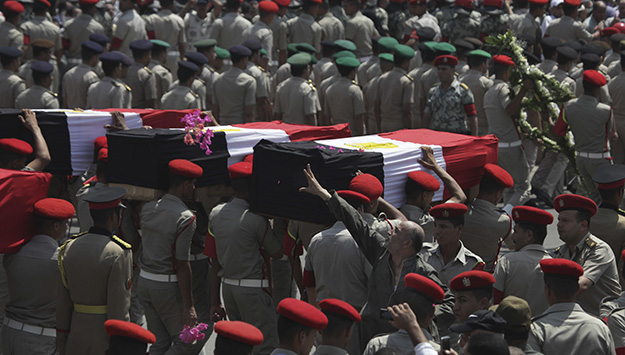
As the war against ISIS rages in Syria and Iraq, Egypt is fighting its own war on terror. On October 24, the Sinai Peninsula witnessed the deadliest attack on Egypt’s military in years. Twenty-eight soldiers were killed and another 30 injured when a car bomb exploded at the Karm al-Qawadis security checkpoint in Sheikh Zuweid in North Sinai.
Gaza’s Economic Revival to be Addressed at Cairo Conference
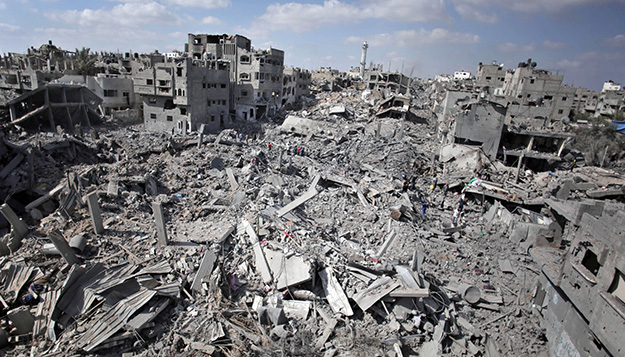
This summer’s war between Israel and Hamas, like the previous rounds — Operation Cast Lead in 2008-2009 and Operation Pillar of Cloud in 2012 — exacted a terrible cost not only in human lives (more than 2,100 Palestinians and 73 Israelis[1]) but also in the wholesale destruction of Gaza’s infrastructure. The Palestinian Authority estimates reconstruction and rehabilitation costs of the recent conflict to exceed $4 billion, more than two times Gaza’s GNP.[2]
Q&A with Hala Shukrallah, President of Egypt's Al-Dostour Party
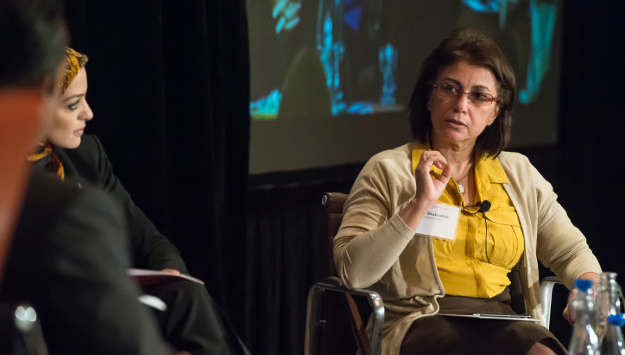
Hala Shukrallah, president of Egypt’s Al Dostour (Constitution) Party, spoke with MEI about the party’s preparations for upcoming parliamentary elections, its legislative agenda, and the challenges it will face in Parliament.See more of her comments at this year’s Egypt Conference.
Q: How has the Dostour party been preparing for the upcoming parliamentary elections?
The forces of globalization have not erased national boundaries. Nor have they shortened the physical distances between countries. Tel Aviv and Tokyo still lie more than 9,000 kilometers apart. The direct flight time between Ben Gurion Airport and Beijing Capital Airport remains just over nine hours.
Israel and Indonesia are two nations whose relations―due to political circumstances―have yet to fulfill their enormous potential. Were there to be progress in peace negotiations between Israelis and Palestinians, a window of opportunity could open for Indonesia’s new president to take practical steps that would begin to unlock this potential.
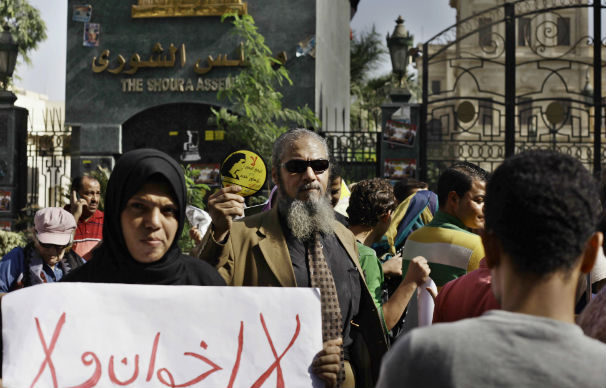
Most of Egypt’s newly created secular political parties have complained bitterly about the Parliament Election Law, which former Interim President Adly Mansour rushed to approve in his last day in office, before handing over power to newly-elected President Abdel Fattah el-Sissi.
Egyptian Economic Challenges and Policy Exigencies
In the last three years, Egypt’s economic position has deteriorated dramatically. Domestic and external deficits have increased, causing public debt to grow sharply, external reserves to fall, investment to shrink, and inflation to increase. In the process, growth decelerated, unemployment rose, income distribution worsened, and the medium term economic outlook became clouded.
Although power cuts are hardly new in Egypt, no Egyptian government has tackled the problem seriously and transparently. After the January 25, 2011 uprising, Egyptians had less patience with the failures of state services and demanded change.
Egypt’s Muslim Brotherhood: Politically Down and Out?
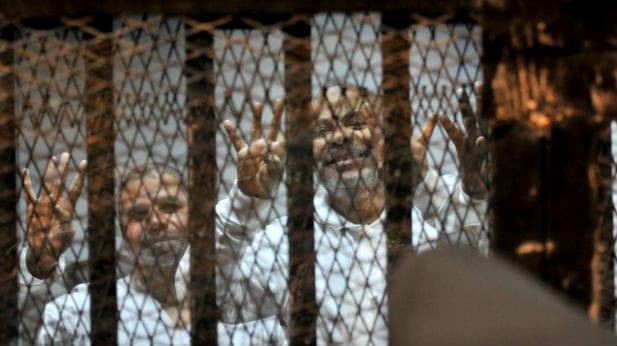
On August 9, 2014, the Muslim Brotherhood in Egypt began another chapter in its besieged political life. The highest administrative court in Egypt, the Supreme Administrative Court, dissolved the Freedom and Justice Party (FJP), the political arm of the Muslim Brotherhood. The Court also liquidated all of the FJP’s assets in an effort to quash any further political ambitions and activities that the Brotherhood might have in Egypt. The ruling—a calculated move conducted prior to upcoming parliamentary elections, scheduled for later this year—was an attempt
Within four months of the military’s ouster of Mohamed Morsi, one of the icons of liberalism serving in the new cabinet, Ziad Bahaa-Eldin, admitted to CNN that those who called for political reconciliation, like himself, were alienated by the political mood, where the very concept of reconciliation has become “a dirty word” in Egypt.
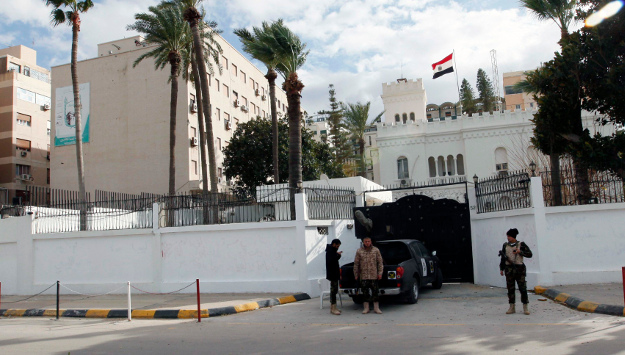
Several weeks ago an Islamist and jihadist alliance led by Ansar al-Sharia–a group with ties to Islamic State (formerly ISIS)–took control of Benghazi and declared an “Islamic Emirate.” A few days ago, an Islamist alliance took control of Tripoli’s main airport. These developments have come as a shock to the Egyptian government, which considers an Islamic state on Egypt’s 720-mile long western border an immediate threat to Egypt’s national security. This helps explain Egypt’s alleged role in recent airstrikes inside Libya coordinated with the United Arab Emirates.
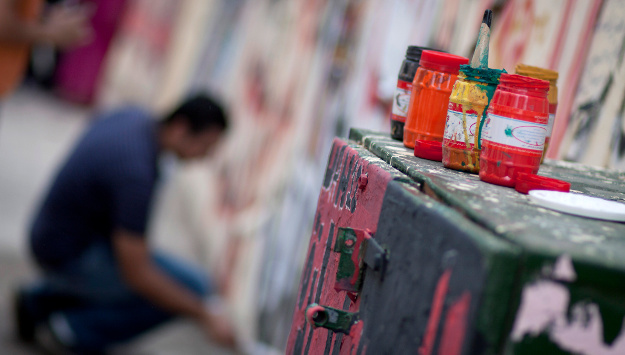
Alexandria, like Cairo, is a mismanaged city with little to offer by way of basic services, much less cultural activities. But unlike Egypt’s insular, desert capital, it is a Mediterranean city, cooler, less polluted or crowded than Cairo (with just six million inhabitants), no longer a cosmopolitan hub but open to the world in material and other ways. There are signs here of a trend toward “social transformation”—a focus on the immediate surroundings, the city itself, to explore and expand its possibilities.