
Tunisia’s New Constitution
Whereas many observers are lamenting the failure of the “Arab Spring,” Tunisia has proven once again that it is on a march toward democracy. On January 3, the National Constituent Assembly (NCA) began voting on the country’s new constitution. Lawmakers have approved many of the chapters and articles, and the final vote on the entire document should take place within a few days. Surprisingly, many of the controversial articles on state identity, the relationship between religion and politics, and gender equality have passed with a clear majority.
Scenarios of Change and Possibilities of Reform in Lebanon
The recent spate of bombings in Beirut underline the degree to which Lebanon has become entangled in the wider regional conflict being fought in and around Syria, but the paralysis of Lebanon’s political institutions indicate an equally deep domestic dysfunction. There is no doubt that part of Lebanon’s problems derive from its difficult geostrategic environment and require external developments and changes, and part of them come from the weaknesses of its domestic political and socioeconomic system and require internal reform.
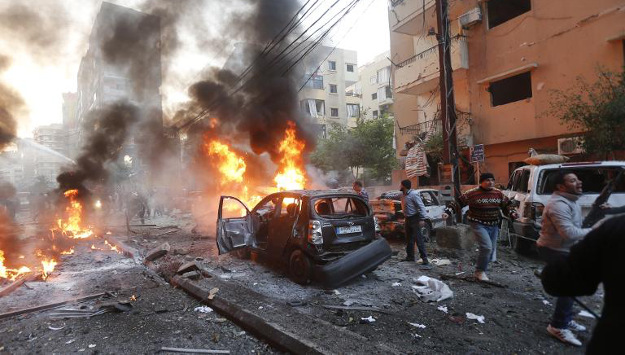
Beirut Car Bombing Continues Deadly Escalation
On January 2, only days after a car bomb in Beirut took the life of former Finance Minister Mohamad Chatah and several bystanders on December 27, another bomb struck the capital’s southern suburbs. With initial reports of four dead and 40 wounded, this latest, and possibly retaliatory, attack fits into an ominous pattern as Syria’s conflict spills into Lebanon.
Transitional Justice and the Politics of Lustration in Tunisia
No transitional justice dilemma is more contested in Tunisia than that of lustration and vetting. While trials of former ruling elites, either in absentia or in the courtroom, grab international headlines, the question of how to deal with the tens of thousands of former Ben Ali regime functionaries who were complicit in past abuses yet are not likely to be brought to trial has proven even more politically charged. To be sure, the question over the fate of these potential targets of lustration and vetting continues to contribute to Tunisia’s prolonged post-revolutionary political crisis, as draft laws on lustration and ad hoc leaks from state archives solidify cleavages among Tunisia’s diverse array of transitional political actors.
Hezbollah and the Assassination of Hassan Laqees
On Wednesday, December 4, Hassan Laqees, a Lebanese Hezbollah leader who was reportedly involved in the group’s weapons procurement and development, was assassinated south of Beirut. On Sunday, another Hezbollah military commander was killed in Syria, bringing the number of Hezbollah dead in the Syrian conflict into the hundreds.
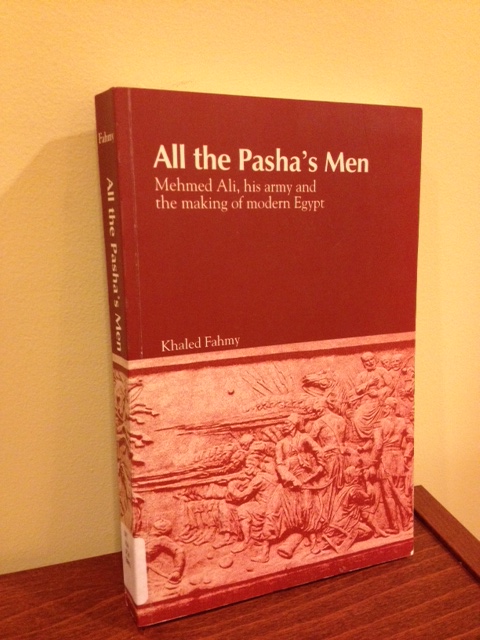
Collection Spotlight:All the Pasha’s Men: Mehmed Ali, His Army and the Making of Modern Egypt
MEI 67th Annual Conference – Assessing the Transitions: Egypt and Tunisia
Panel 1: Assessing the Transitions: Egypt and Tunisia
Moderator: Paul Salem, The Middle East InstituteKhalil al Anani, The Middle East InstituteLarry Diamond, Stanford UniversityNoureddine Jebnoun, Georgetown UniversityRabab El Mahdi, American University of Cairo
Bombings in Beirut Indicate New Escalation
Earlier today, double explosions near the Iranian embassy in Beirut killed at least 23, including an Iranian diplomat. The Abdullah Azzam Brigades, an Islamist group with links to al-Qa`ida, took responsibility for the attack. MEI sat down with its Vice President for Policy and Research, Paul Salem, to discuss the significance of the bombings in Lebanon as well as their regional and global implications.
Tell us about the bombing and the group that claimed responsibility for it.
Whose “Call for Tunisia?”
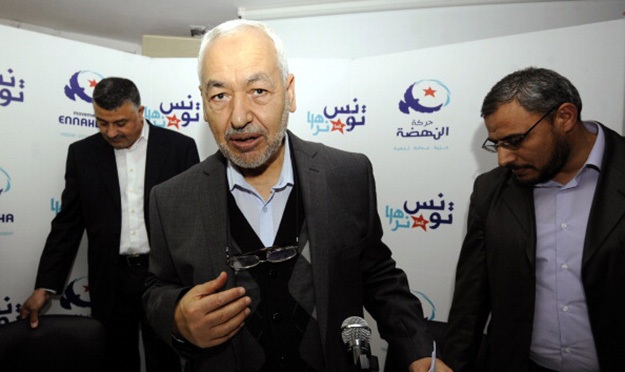
The rise of the Nidaa Tounes (Call for Tunisia) Party has lifted the hopes of many Tunisians who hold Ennahda, the ruling Islamist party, responsible for the increase in religiously-motivated violence and suspect it of trying to establish a theocracy. Yet a closer look at the platform and rhetoric defining Nidaa Tounes suggests that the self-described “modernist” alternative to the Islamists might not be as inclusive and democratic as its leaders claim, as some of the party’s senior figures advocate the exclusion of Ennahda from politics.
Syria and Geneva II
Senior diplomats from the United States, Russia, and the UN failed this week to agree on the details and date for a Geneva II meeting to help resolve the Syrian crisis. UN and Arab League Special Envoy Lakhdar Brahimi had hoped to hold the meeting in late November, but admitted that it might have to be put off until early 2014. Obstacles included disagreement over the participation of Iran and over the role of Syrian president Assad in the process, as well as disunity among the opposition.
Maliki in Washington: Arms Deals, Politics, and Proxy Wars
Iraqi Prime Minister Nouri al-Maliki is in Washington this week for meetings with Vice President Joe Biden, Defense Secretary Chuck Hagel, and President Barack Obama. We sat down with MEI’s Vice President for Policy and Research, Paul Salem, to discuss the topics on the table, what each side hopes to accomplish, and how the United States should approach Iraq.
What is Maliki looking to accomplish?
Syria's Rebels: Radicalization and Division
Last month, when Secretary of State John Kerry sought to dispel the mounting skepticism of lawmakers over the advisability of launching punitive air strikes against the regime of President Bashar al-Assad, he portrayed the rebel fighters in the Western and Gulf-backed Free Syrian Army (FSA) as pluralistic and democratic, distinguishing them from jihadi groups and hard-line Islamists.[1]
Tunisia: Divided and Dissatisfied with Ennahda
The Middle East Institute (MEI) is pleased to welcome James Zogby, president of the Arab American Institute and founder of Zogby Research Services (ZRS), William Lawrence, Professorial Lecturer in Political Science and International Affairs at George Washington University’s Elliot School of International Affairs, and Radwan Masmoudi, Center for the Study of Islam and Democracy, for a discussion about the findings of a recent poll on Tunisian attitudes toward their country’s political actors and institutions, moderated by MEI Vice President Paul Salem.Zogby Research Services recently surveye
Collection Spotlight: Contentious Politics in the Middle East
