This text has been translated by AI and may contain errors.
Skip to Content

Research & Commentary Results

Filter by
3015 Results
Monday Briefing: Iran's Rouhani heads to Baghdad
  • Analysis
  • Monday Briefing: Iran's Rouhani heads to Baghdad

    In this week’s Monday Briefing, MEI experts Randa Slim, Robert S. Ford, Marvin G. Weinbaum, James P. Farwell, Emadeddin Badi, Guney Yildiz, and Jean-François Seznec provide analysis on recent and upcoming events including Iranian President Hassan Rouhani’s visit to Baghdad, reconstruction efforts in Syria, the crackdown on militant Islamists in Pakistan, Iran’s cyber attack capabilities, upcoming elections in Libya, Turkish-Egyptian tensions, and Qatar’s $12B loan from bond markets.

    The art of (another) deal with Iran
    President Donald J. Trump signs a National Security Presidential Memorandum as he announces the withdrawal of the United States from the Iran nuclear deal during a 'Joint Comprehensive Plan of Action' event in the Diplomatic Reception Room of the White House on Tuesday, May 08, 2018 in Washington, DC.
  • Analysis
  • The art of (another) deal with Iran

    Both the U.S. State Department and the American intelligence community have concluded that President Trump’s “maximum pressure” policy toward Iran is not working. Yet, Trump seems determined to carry on. To achieve its stated goal of changing Iran’s policies, the U.S. should adopt a more proportional approach that focuses on Tehran’s most threatening actions, such as its ballistic missile tests.

    March 11, 2019

    US foreign policy towards the Middle East: Pumping air into a punctured tire
  • Analysis
  • US foreign policy towards the Middle East: Pumping air into a punctured tire

    Theorizing the future of the Arab Gulf states and the broader Middle East requires a proper assessment of the state of power distribution in the region. Is there a new balance of power emerging in the Middle East, or is the distribution of power heading in a more dangerous direction?

    Monday Briefing: Tenuous promise in Pakistan and Afghanistan
  • Analysis
  • Monday Briefing: Tenuous promise in Pakistan and Afghanistan

    In this week’s Monday Briefing, MEI experts Marvin G. Weinbaum, Robert S. Ford, Alex Vatanka, and Birol Baskan provide analysis on recent and upcoming events including a potential agreement between Pakistan and Afghanistan, protests in Algeria, Rouhani’s planned trip to Baghdad, and recent Turkish naval exercises.

    Pakistan’s border standoff and domestic politics
  • Podcast
  • Pakistan’s border standoff and domestic politics

    Madiha Afzal, visiting fellow at Brookings, and MEI’s Marvin Weinbaum join host Alistair Taylor to discuss Pakistan’s latest flare-up with India, the recent visit of Saudi Crown Prince Mohammed bin Salman, the US-Taliban talks, and the political and economic challenges facing the government of Imran Khan.

    March 1, 2019

    Targeting the Revolutionary Guard: Why Iran’s blame game is not the answer
    Scene of the suicide attack on a Revolutionary Guards bus on Khash-Zahedan road in Iran's Sistan and Baluchestan Province on February 13, 2019. At least 20 members of Iran's Revolutionary Guards were killed in a suicide bombing in southeastern Iran.
  • Analysis
  • Targeting the Revolutionary Guard: Why Iran’s blame game is not the answer

    Following the Feb. 13 truck bomb on members of Iran’s Islamic Revolutionary Guards Corps in Sistan-Baluchistan, the government was quick to blame foreign powers. Iranian officials aim to deflect attention from the country’s intractable internal problems, such as the persecution of its Sunni minority, a deep-rooted issue that has often been overlooked by the international community.

    February 26, 2019

    Javad Zarif resigns as Iran's foreign minister
  • Video
  • Javad Zarif resigns as Iran's foreign minister

    Gerald Feierstein, MEI’s senior vice president, discusses the context of the resignation and its implications for Iran’s foreign policy, including the nuclear deal, as well as for its domestic politics.

    February 25, 2019

    Monday Briefing: Egypt hosts first EU-Arab League summit
  • Analysis
  • Monday Briefing: Egypt hosts first EU-Arab League summit

    In this week’s Monday Briefing, contributors Mirette F. Mabrouk, Gerald Feierstein, Marvin G. Weinbaum, Przemysław Osiewicz, Grace Wermenbol, and W. Robert Pearson provide analysis on recent and upcoming events including the EU-Arab League summit, the progress in US-Taliban talks, challenges to Israeli Prime Minister Benjamin Netanyahu’s power, consequences of the Kashmir attack, and Turkey’s next steps in Syria.

    Afghanistan's Unending Wars
    An Afghan soldier aims his gun as he guards the area surrounding the Intercontinental hotel during a military operation against Taliban militants that stormed the hotel in Kabul on June 29, 2011.
  • Analysis
  • Afghanistan's Unending Wars

    The current conflict in Afghanistan, the latest in a series of perpetual wars and episodes of civil strife over the past 40 years, is strategically stalemated. While the Taliban are willing to negotiate with the U.S. about the withdrawal of foreign troops from the country, they continue to reject direct talks with the Afghan government for a political settlement. Even with inclusive peace talks, there is reason to question whether the Taliban’s vision of a future Afghan state and society can be reconciled with a liberal, democratic constitutional order.

    Weekly Briefing: MBS South Asia swing aims to shore up relations
  • Analysis
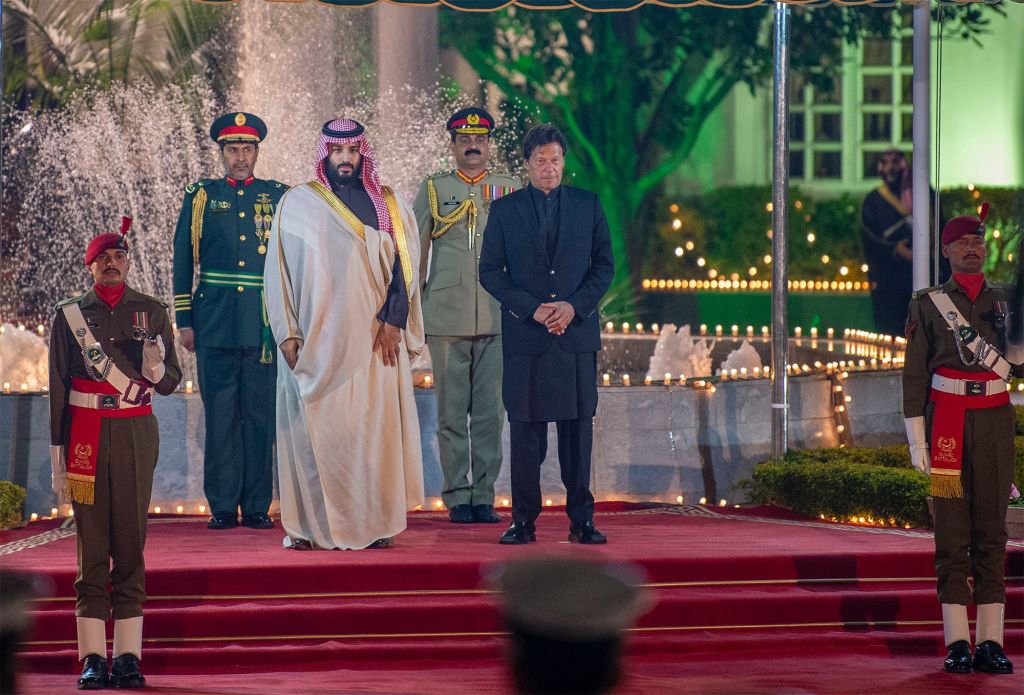
  • Weekly Briefing: MBS South Asia swing aims to shore up relations

    In this week’s briefing, MEI experts Gerald Feierstein, Charles Lister, Marvin G. Weinbaum, and W. Robert Pearson provide analysis on Saudi-Pakistan relations, Turkish politics in the lead-up to March municipal elections, and the question of what to do with ISIS prisoners after the group’s territorial collapse.

    Suicide attack strikes Iran’s Revolutionary Guard
    Scene of the suicide attack on a Revolutionary Guards bus on Khash-Zahedan road in Iran's Sistan and Baluchestan Province on February 13, 2019. At least 20 members of Iran's Revolutionary Guards were killed in a suicide bombing in southeastern Iran.
  • Analysis
  • Suicide attack strikes Iran’s Revolutionary Guard

    The suicide attack today, which killed at least 20 members of the Islamic Revolutionary Guards Corps (IRGC) in Iran’s southeastern province of Sistan and Baluchistan, may have serious implications for the Iranian government’s ability to maintain the legitimacy of its regional intervention in the eyes of the Iranian people.

    February 13, 2019

    Iran’s Islamic Revolution after 40 years
  • Podcast
  • Iran’s Islamic Revolution after 40 years

    John Limbert, former Deputy Secretary of State for Iran under the Obama administration, and MEI senior fellows Alex Vatanka and Ahmad Majidyar join host Alistair Taylor to discuss the 1979 revolution and its continuing impact on US-Iran relations and the region.

    February 13, 2019

    Iran’s economic challenges reach a crisis point
  • Analysis
  • Iran’s economic challenges reach a crisis point

    In this week’s Monday Briefing, MEI experts Ahmad Majidyar, Mirette F. Mabrouk, and Hassan Mneimneh provide analysis on recent and upcoming events including the 40th anniversary of Iran’s Islamic Revolution, a proposal for constitutional amendments in Egypt, and Iraqi PM Abdul-Mahdi’s first 100 days in office.

    Challenges abound as the Islamic Republic turns 40
    Iranian schoolgirls wave their national flag during celebrations in Tehran's Azadi Square (Freedom Square) to mark the 37th anniversary of the Islamic revolution on February 11, 2016.
  • Analysis
  • Challenges abound as the Islamic Republic turns 40

    This February marks the 40th anniversary of Iran’s 1979 revolution and the birth of the Islamic Republic, but for those in power in Tehran, celebrating the victories of the past is easier than dealing with the problems of the present. Challenges abound on all sides.

    Iran and the Gulf states 40 years after the 1979 revolution
    Ceremony marking the 39th anniversary of the Islamic revolution, at Azadi Square in Tehran, Iran
  • Analysis
  • Iran and the Gulf states 40 years after the 1979 revolution

    Geopolitically, the Iranian Revolution did more to transform the Middle East than any other event in the second half of the 20th century. It aimed to restructure not only Iran’s society and political system, but also others across the Islamic world. Refusing to align with either the United States or the Soviet Union in the Cold War, the newly established Islamic Republic sought to create a new geopolitical order in the Persian Gulf and greater Middle East based on a mantra of “neither East nor West.”

    February 8, 2019