Kuwaitis investing in Iranian financial firms losing their money
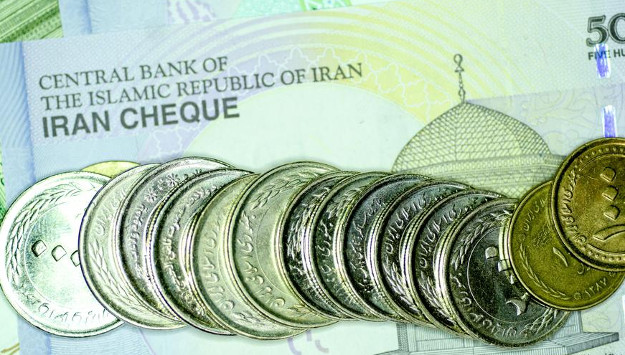
Kuwaiti citizens have lost hundreds of millions of dollars as a result of the collapsing investment firms in Iran, Kuwait’s al-Qabas Arabic daily reported. According to the paper, a sizeable number of Kuwaitis have invested in Iran’s investment institutions that offer returns of more than 20 percent, which is significantly lower than the profit offered by Kuwaiti banks and investment schemes.
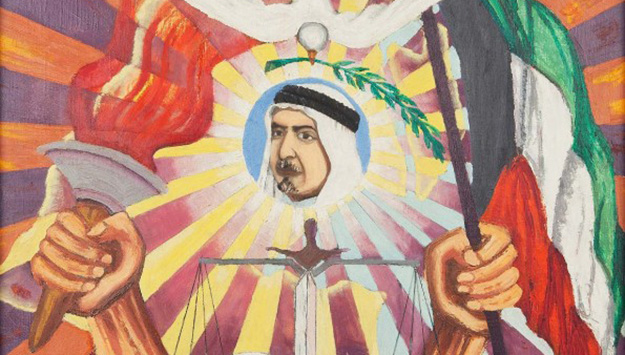
Remembering the Father of Democracy in the Gulf—Sheikh Abdullah al-Salem
It was the age of nationalism and strong men. Egypt’s Gamal Abdel Nasser had just enacted a new charter that guaranteed his hold on power, unelected and unopposed. Iraq’s revolutionary government was overthrown by Baathists, who had also assumed power in neighboring Syria, while Iran’s Mohammad Reza Pahlavi was entrenching his family’s legitimacy through the so-called White Revolution. The lower Gulf emirates were under British “protectorism,” while Saudi Arabia’s King Faisal was wrestling power from his half-brother Saud.
Yemen War and Qatar Crisis Challenge Oman’s Neutrality
Living on the periphery of the tumultuous Middle East, Omanis do not take their security for granted. Oman has been free of violent unrest since the Sultanate crushed the Dhofar Rebellion in 1976. Yet Oman is situated in a dangerous neighborhood, and the Arab Gulf country is not immune to transregional threats.
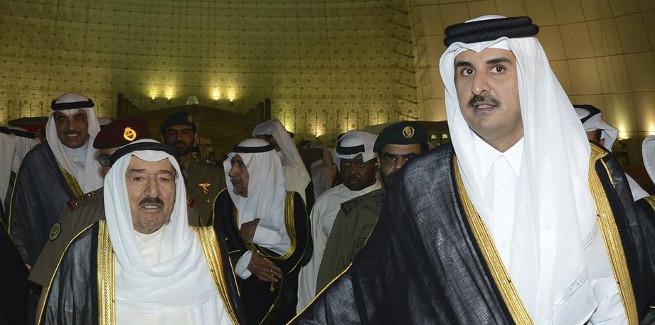
The ongoing Qatar crisis poses a major dilemma for Kuwait and Oman. Consistent with their “neutral” foreign policies, these two Arab Gulf states have maintained ties with Doha and seek to resolve the gravest internal Gulf Cooperation Council (G.C.C.) row since the organization’s establishment in 1981. Officials in Kuwait City and Muscat fear that failure to settle the Qatar crisis will break up the council, which would directly undermine vital Kuwaiti and Omani national interests given the potential for such a scenario to dramatically exacerbate regional geopolitical instability.
Enhancing India-Oman Economic Engagement: Four Promising Initiatives
India’s interests and capabilities extend well beyond the sub-continent. This essay is part of a series that explores the geopolitical dimensions, economic ties, transnational networks, and other aspects of India’s links with the Middle East (West Asia) — a region that plays a vital role in India’s economy and its future. More ...
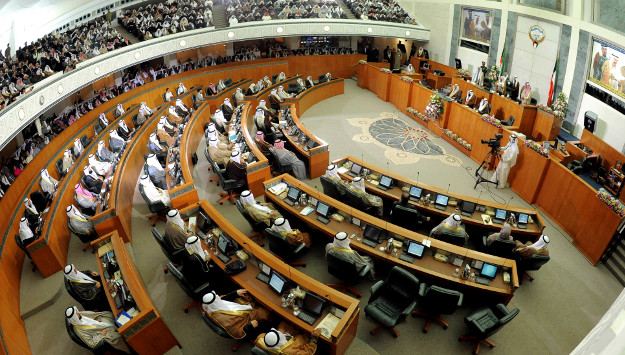
After boycotting parliamentary elections in 2012 and 2013, the Kuwaiti Muslim Brotherhood’s political wing, Hadas, ran their candidates in last year’s snap election. Four out of five of the party’s candidates won, bringing Hadas back into Kuwait’s 50-member National Assembly.
The introduction of the draft in Gulf monarchies — after decades of sovereign statehood — presents an interesting puzzle. What are the reasons behind the newly implemented conscription? What broader implications does this phenomenon have for the Gulf? This essay addresses these questions.
Tehran Views GCC Overture as “Sign of Weakness,” Not Goodwill Gesture
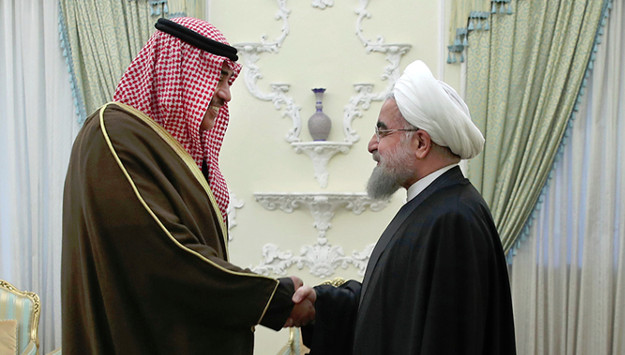
Kuwaiti Foreign Minister Sheikh Sabah Khaled al-Sabah has arrived in Tehran today to deliver a message from Gulf Cooperation Council (GCC) on a strategic dialogue between the Gulf Arab states and Iran, the Iranian and Arab media report. “Gulf states have a true desire that relations with Iran are normal and based on international law,” Sabah said on Tuesday after attending the inauguration of a NATO center in Kuwait.
Hezbollah Front Company Allegedly Training Kuwait University Students
A Lebanese company fronting for Hezbollah allegedly has contracted with Kuwait University to provide students with training in computers and information science, according to the Kuwaiti daily al-Shahed. Alarmed Kuwaitis have asked the Ministry of Education to investigate the reports. According to the al-Shahed report, the sources claim that the front company is using its program to “brainwash” the students and is providing them with free travel to Lebanon, including tickets and accommodations, which includes arranging visits to Hezbollah headquarters in Beirut.
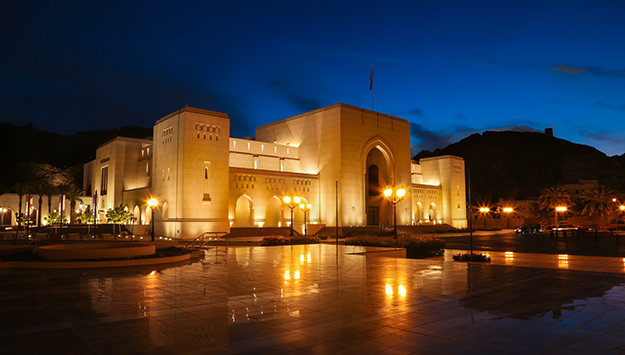
Director Jamal al-Moosawai wanted the new National Museum of Oman to be a space that grows and expands with its knowledge base, and is in tune with ongoing archaeological discoveries in the Arab country.
The result of a ten year collaboration between the Ministry of Heritage and Culture, the Royal Estate Affairs of Oman, Jasper Jacob Associates (J.J.A.), and Arts Architecture International Ltd (A.A.I.), the museum’s blend of the traditional and the contemporary, as well as its high-tech research facilities, make it unique in the region.
In the face of economic challenges and geopolitical shifts, Oman is investing in its strategic partnership with India to diversify Muscat’s web of international allies. This relationship—which dates back to the Indus Valley Civilization when the Arabian Sea’s monsoon winds began facilitating 5,000 years of maritime trade between the two countries—has matured substantially in recent years.[1]
G.C.C., Iran Look to Sea Trade to Reduce Dependence on Oil
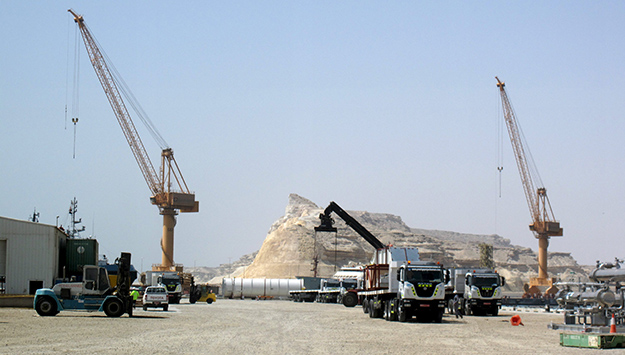
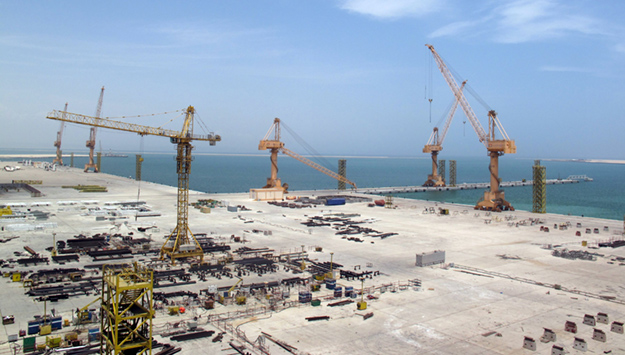
Continuing low oil prices have prompted Persian Gulf states to diversify their heavily petro-dependent economies. This issue is forcing the oil-rich states to invest and expand their potential as international trade hubs as a pathway away from the time bomb of single commodity exports. As many Gulf states have outlined in economic plans, as well as developed on the ground, maritime trade is an increasingly essential link connecting the Middle East to the global economy.
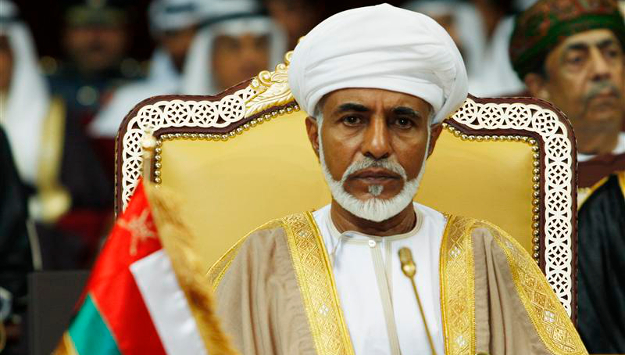
As political and humanitarian crises destabilize many Arab states, the Sultanate of Oman is a beacon of tranquility in a tumultuous region. The nation’s unique cohesion and stability is largely attributable to the legitimacy of Sultan Qaboos bin Said Al Busaidi, the longest serving Arab ruler still in power. Since ascending to the throne in 1970, Qaboos has transformed Oman from an impoverished state into a wealthy country with first-world infrastructure, a vibrant tourism industry and a military alliance with the United States and Britain.
A Look at Oman and South Korea’s Strategic Partnership
Since Oman and South Korea established official diplomatic ties in 1974, trade has largely defined the Muscat-Seoul relationship. Oman’s oil and liquefied natural gas (L.N.G.) and South Korea’s automobiles, electronics, and large vessels have dominated bilateral trade. Yet as Seoul stakes out increasingly vital national interests in the volatile Middle East, a host of geopolitical and security trends will more meaningfully influence the future of Omani-Korean relations.
The intensifying rivalry between Saudi Arabia and Iran is raising sectarian temperatures in some smaller Gulf Cooperation Council (G.C.C.) states. Kuwait’s fractious parliament has seen growing tension and even physical confrontation between its Sunni and Shiite MPs in response to regional developments. Growing tension in Kuwait is also evident in the national media and online forums.