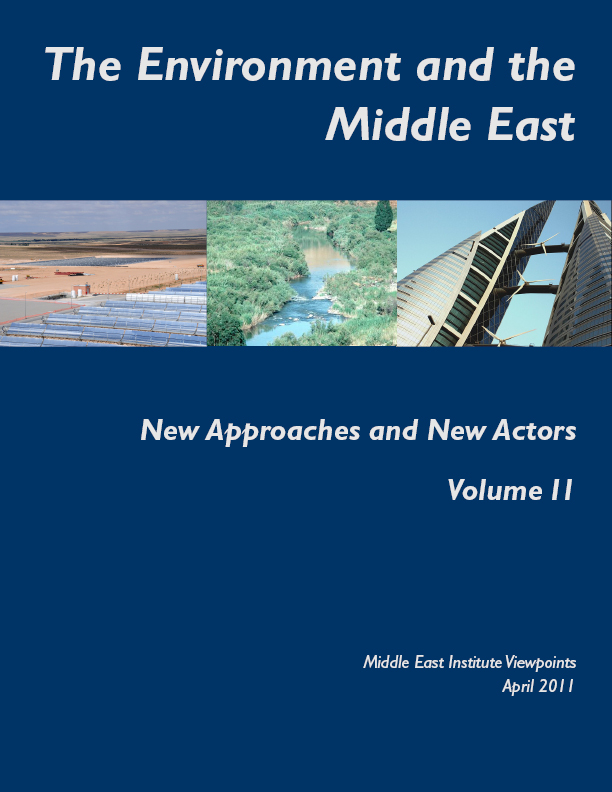
Introduction to The Environment and the Middle East: New Approaches and New Actors , Volume II
The tumultuous political changes taking place across the region dominate the news — deservedly so. Yet, there are other changes taking place throughout the Middle East which, though less prominent, also merit attention. Indeed, the region has no shortage of creative and committed “change agents” who in ways great and small have taken meaningful steps to address the myriad challenges to the sustainability of the region’s physical environment. Volume II in this series offers snapshots of a small selection of the many efforts aimed at cultivating responsible environmental stewardship.
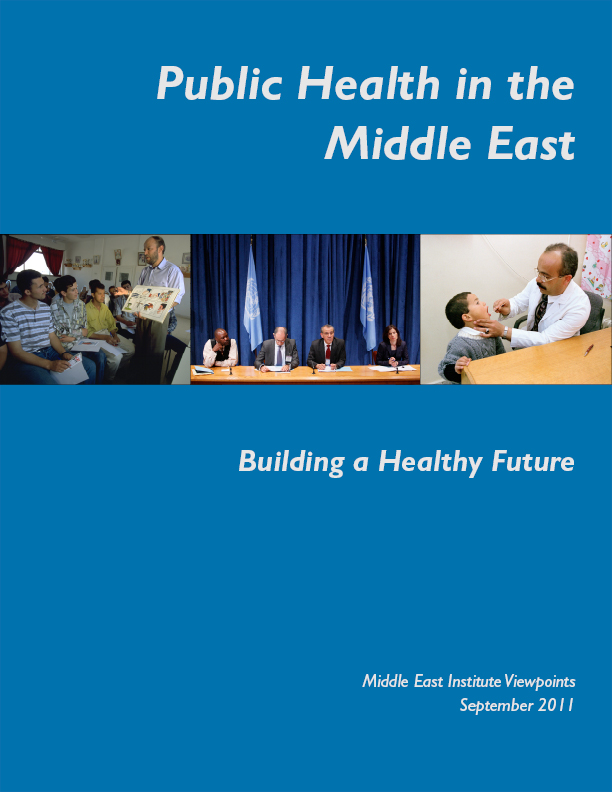
Introduction to Public Health in the Middle East: Building a Healthy Future
Originally posted September, 2011
The flow of ideas, people, and commerce across national boundaries has been occurring with breathtaking rapidity in the broader Middle East, as elsewhere. These increasingly dense exchanges have generated new threats and vulnerabilities that have tended to impact women, children, and the poorest members of society disproportionately. They also have given people more resources and opportunities with which to shape their lives and their futures.
Join MEI Scholar and Levant expert Randa Slim for a discussion about Hezbollah and its reaction to shifting regional dynamics in the wake of the Arab Spring. Although Lebanon has not experienced the same levels of unrest as its neighbors, Hezbollah is not immune from the regional instability resulting from the revolutions roiling the Middle East. Currently, Hezbollah is the principal orchestrator of a new governing coalition in Lebanon that is rife with internal divisions.
Community based-Health Initiatives: Healthy Villages in Jordan
Health for All — First Principles to Action
The International Conference on Primary Health Care was held in Almaty, Kazakhstan in 1978. Nearly all of the members of the World Health Organization (WHO) and the United Nations Children’s Fund (UNICEF) were in attendance. The conference culminated in the issuing of the Almaty Declaration — a major landmark in the field of public health.
The Lesson from Morocco and Jordan: Reform or Perish
The basic legitimization of political authority and the specific logics of domination that have for decades regulated Arabs’ behavior and subjugated their life patterns are under siege in much of the Arab world. Only those regimes that still enjoy the historical prestige of traditional authority have so far managed to weather the assaults on the legitimacy of their rule.
Internationalization of Higher Education in Jordan
There is a growing need in Jordan for universities to establish joint programs with overseas universities in countries such as the United Kingdom and to uphold partnerships with universities in the United States, Europe, and the Gulf states. Public universities are already highly regarded. Private universities are also seeking partnerships or joint programs with foreign institutions.
Benefitting from the Knowledge Economy? Examining Secondary Education Reform in Jordan
Jordan today, in spite of the scarcity of its natural resources, is at the forefront of the region’s states in several areas, primary among them are education, economic growth rates, and the qualifications of the Jordanian youth who have always proved their excellence nationally and abroad.
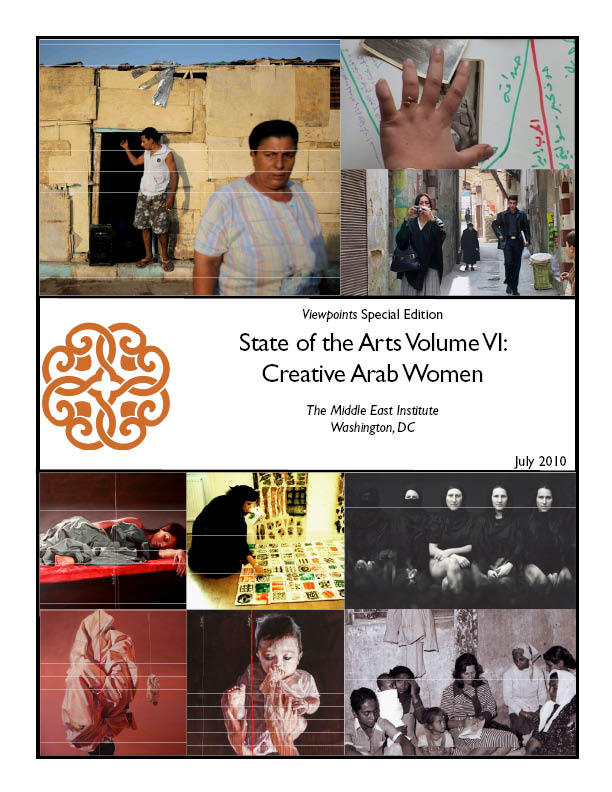
Introduction to The State of the Arts in the Middle East: Volume VI: Creative Arab Women
Creative Arab Women is the sixth edition of the MEI Viewpoints series on the State of the Arts in the Middle East. The 14 essays in this collection offer a glimpse into the rich and varied cultural output of Arab women in the region and the diaspora. Partly reminiscences and partly calls to action, they are essays of survival and empowerment that add a deeply personal dimension to the subject of the role of Arab women as cultural producers. MEI is grateful to Dr.
Al-Wihdat: The Pride of the Palestinians in Jordan
“Wahid, itnen, talagha ya Abu Hussein” (One, two, divorce her Abu Hussein), Al-Faisali supporters sing, as their soccer team plays against Al-Wihdat.[1] Al-Faisali is the club associated with ethnic Jordanians, while Al-Wihdat is the club of the Palestinians.