تمت ترجمة هذا النص بواسطة الذكاء الاصطناعي وقد يحتوي على أخطاء.
تخطي إلى المحتوى

Research & Commentary Results

تصفية حسب
1438 Results
Turkey’s Changing Foreign Policy Stance: Getting Closer to Asia?
معهد الشرق الأوسط
  • التحليل
  • Turkey’s Changing Foreign Policy Stance: Getting Closer to Asia?

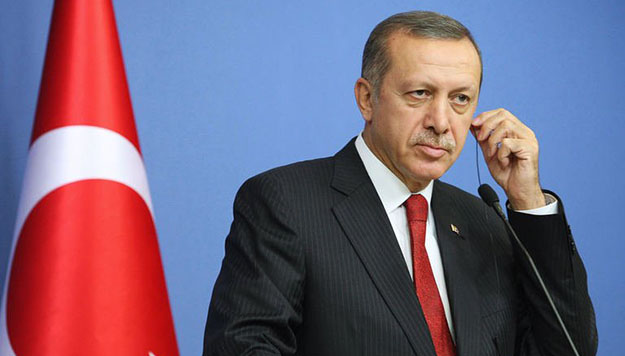
    Turkey’s foreign policy under the current Justice and Development Party (AKP) government continues to attract widespread attention by scholars and policy circles alike. Over the past decade, the way Turkey has formulated and implemented its policies toward the rest of the world has transformed from a traditionally status quo-ist and reactive stance that emphasizes maintaining close relations with the West to a more assertive, multidimensional, and proactive approach with a broader geographical scope. While the process of accession to the European Union (EU) remains the main axis of its foreign policy, Turkey is now showing greater interest in regions hitherto neglected, including Asia, and this interest is materializing in the form of greater dialogue between countries, expanding economic and commercial relations, and frequent exchanges between peoples.
    October 4, 2013

    A Conversation on Yemen
  • التحليل
  • A Conversation on Yemen

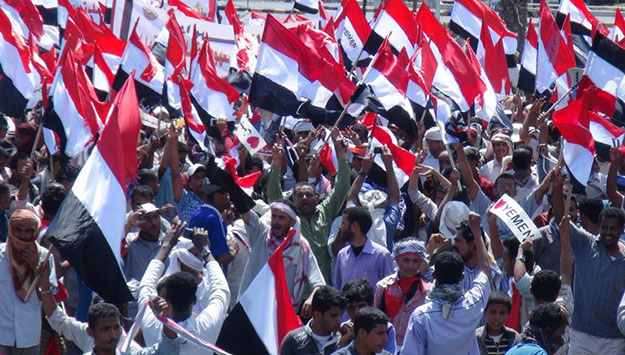
    Last week, MEI scholars Allen Keiswetter, a retired Foreign Service officer, David Newton, former ambassador to Yemen, and Roby Barrett, author of Yemen: A Different Political Paradigm in Context (2011), gathered for an informal discussion about Yemen’s National Dialogue Conference (NDC), which began in March.

    September 27, 2013

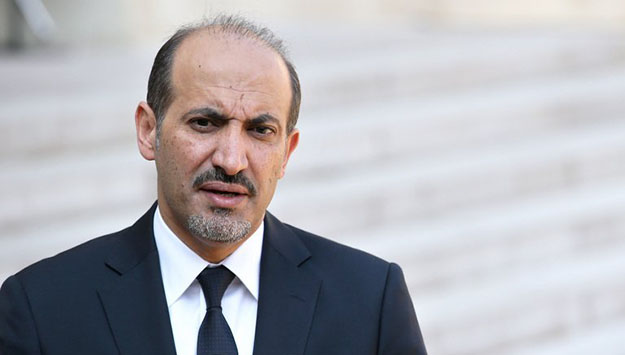
    Saudi Arabia and the Syrian Brotherhood
  • التحليل
  • Saudi Arabia and the Syrian Brotherhood

    The openly difficult relationship between Saudi Arabia and Muslim Brotherhood chapters across the region has become a salient feature of Middle East politics since the advent of the “Arab Spring.” This mutual mistrust has increased in the wake of the Kingdom’s recent support for the military takeover in Cairo and the generals’ subsequent repression of the Brotherhood there. But how is the Islamist organization affected by this dynamic in Syria, where the Muslim Brothers and the Saudis both battle against Bashar al-Assad?

    September 27, 2013

    The Saudis Aren't Going Anywhere
    معهد الشرق الأوسط
  • التحليل
  • The Saudis Aren't Going Anywhere

    This article first appeared on Lobe Log.

    Whenever a Saudi Arabian king or senior prince publicly criticizes U.S. policy, they inevitably touch off speculation about how the Saudis may be rethinking their security alliance with the United States.

    September 16, 2013

    Gulf Governments Offer Financing for U.S. Strike on Syria
    معهد الشرق الأوسط
  • التحليل
  • Gulf Governments Offer Financing for U.S. Strike on Syria

    Like pieces fitting together in a jigsaw puzzle, Arab governments – presumably from the oil-rich Gulf Cooperation Council – offered to finance a U.S. military strike on Syria, according to comments made by Secretary of State John Kerry during testimony September 4 with the House Foreign Affairs Committee. In an exchange with Representative Ileana Ros-Lehtinen (R-FL) on the potential cost of U.S. military action in Syria, Kerry said,

    September 11, 2013

    Support for el-Sisi: What’s in it for al-Saud?
  • التحليل
  • Support for el-Sisi: What’s in it for al-Saud?

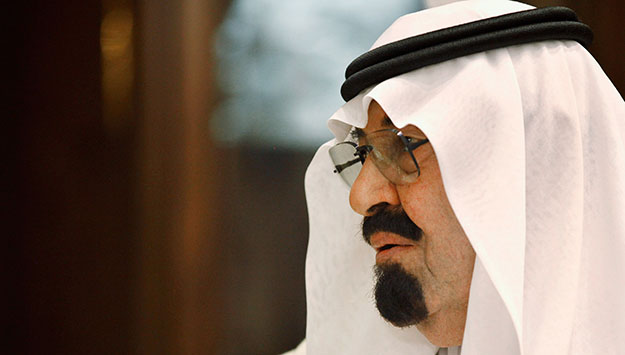
    When King Abdullah of Saudi Arabia and his foreign minister, Prince Saud al-Faisal, issued unequivocal pledges of support for Egypt’s military government and its crackdown on the Muslim Brotherhood, their move was widely depicted in the news media as a logical extension of the kingdom’s opposition to revolutionary movements in the Arab world. This simplistic view overlooks the fact that Saudi Arabia has responded differently to different uprisings—it supports the rebels in Syria, helped to crush them in Bahrain—and that aligning itself with Egypt’s new rulers could be a risky strategy.

    September 3, 2013

    “Invisible” White-Collar Indians in the Gulf
    معهد الشرق الأوسط
  • التحليل
  • “Invisible” White-Collar Indians in the Gulf

    Since the 1970s oil boom, the Gulf region has been one of the principal destinations for workers from South Asia, with the result that today Indians constitute a large percentage of the non-nationals living in the region. Indeed, at five million out of an estimated 15 million people, the Indian community forms the largest expatriate group in each of the Gulf countries. Most Indian immigrants are from the south Indian state of Kerala, while many of the rest originate from Tamil Nadu, Punjab, Uttar Pradesh, and Bihar.

    August 14, 2013

    Transition in Qatar: Lessons for the GCC States
    معهد الشرق الأوسط
  • التحليل
  • Transition in Qatar: Lessons for the GCC States

    When the young Shaykh Tamim bin Hamad al-Thani became ruler of Qatar last month after his father stepped aside in a seamless transition, one of his first official acts was to seal the generational shift by appointing a new prime minister.

    July 17, 2013

    Malaysia-Saudi Arabia Relations: Roots, Dimensions, and Prospects
    معهد الشرق الأوسط
  • التحليل
  • Malaysia-Saudi Arabia Relations: Roots, Dimensions, and Prospects

    Malaysia’s relationship with Saudi Arabia has long been amicable and fruitful. Indeed, Malaysian-Saudi relations have deeper historical roots than are commonly recognized. During the contemporary period, the religio-cultural, economic, and other aspects of the bilateral relationship have expanded. In fact, Malaysian-Saudi relations are complex, multifaceted, and have significant potential for further development.

    June 18, 2013

    Panel 4: The Turkey-Iran-Iraq Nexus
    معهد الشرق الأوسط
  • Podcast
  • Panel 4: The Turkey-Iran-Iraq Nexus

    The Middle East Institute Center for Turkish Studies’ Fourth Annual Conference on TurkeyPanel 4: The Turkey-Iran-Iraq NexusHenri J. Barkey, Lehigh UniversityAlireza Nader, RAND CorporationDenise Natali, National Defense UniversityModerator: Phebe Marr, Author and HistorianJune 14, 2013  3:30pm-5:00 pm

    June 17, 2013

    Panel 4: The Turkey-Iran-Iraq Nexus
    معهد الشرق الأوسط
  • Podcast
  • Panel 4: The Turkey-Iran-Iraq Nexus

    The Middle East Institute Center for Turkish Studies’ Fourth Annual Conference on TurkeyPanel 4: The Turkey-Iran-Iraq NexusHenri J. Barkey, Lehigh UniversityAlireza Nader, RAND CorporationDenise Natali, National Defense UniversityModerator: Phebe Marr, Author and HistorianJune 14, 2013  3:30pm-5:00 pm

    June 17, 2013

    Panel 4: The Turkey-Iran-Iraq Nexus
    معهد الشرق الأوسط
  • Podcast
  • Panel 4: The Turkey-Iran-Iraq Nexus

    The Middle East Institute Center for Turkish Studies’ Fourth Annual Conference on TurkeyPanel 4: The Turkey-Iran-Iraq NexusHenri J. Barkey, Lehigh UniversityAlireza Nader, RAND CorporationDenise Natali, National Defense UniversityModerator: Phebe Marr, Author and HistorianJune 14, 2013  3:30pm-5:00 pm

    June 17, 2013

    Panel 4: The Turkey-Iran-Iraq Nexus
    معهد الشرق الأوسط
  • Podcast
  • Panel 4: The Turkey-Iran-Iraq Nexus

    The Middle East Institute Center for Turkish Studies’ Fourth Annual Conference on TurkeyPanel 4: The Turkey-Iran-Iraq NexusHenri J. Barkey, Lehigh UniversityAlireza Nader, RAND CorporationDenise Natali, National Defense UniversityModerator: Phebe Marr, Author and HistorianJune 14, 2013  3:30pm-5:00 pm

    June 17, 2013