This text has been translated by AI and may contain errors.
Skip to Content

Research & Commentary Results

Filter by
3172 Results
The Syrian Oil Crisis: Causes, Possible Responses, and Implications
Iranian supertanker Grace 1 off the coast of Gibraltar on August 15, 2019.
  • Analysis
  • The Syrian Oil Crisis: Causes, Possible Responses, and Implications

    Unlike most other goods, the inflation-adjusted prices of oil and oil derivatives actually became cheaper in the years after the Syrian uprising and the loss of most of the country’s oil fields. Iran stepped in to fill the gap by shipping oil by sea through the Suez Canal. In recent months, however, these shipments seem to have ground to a halt, crippling regime-controlled areas. This paper examines several competing explanations for the slowdown in Iranian oil shipments, explores a range of possible responses for the Assad regime, and takes a closer look at the implications for the regime, its allies, and regular Syrians.

    August 28, 2019

    Why does Trump treat Iran and North Korea so differently?
    WASHINGTON, DC - MAY 08: U.S. President Donald Trump holds up a memorandum that reinstates sanctions on Iran after he announced his decision to withdraw the United States from the 2015 Iran nuclear deal in the Diplomatic Room at the White House May 8, 2018 in Washington, DC. After two and a half years of negotiations, Iran agreed in 2015 to end its nuclear program in exchange for Western countries, including the United States, lifting decades of economic sanctions. Since then international inspectors have n
  • Analysis
  • Why does Trump treat Iran and North Korea so differently?

    Iran and North Korea both get a great deal of attention from the international community — for all the wrong reasons. Yet while U.S. President Donald Trump and North Korean Supreme Leader Kim Jong-un have met several times now, shaking hands, smiling, and posing for photos, Trump has not once met with Iranian President Hassan Rouhani or other senior Iranian officials. What accounts for this difference?

    August 27, 2019

    Countering and courting Iran: Israeli-Palestinian objectives in Iraq
    An Israeli F-15 I fighter jet launches anti-missile flares at it performs during a graduation ceremony of Israeli air force pilots at the Hatzerim Air Force base in Israel's Negev desert on December 26, 2018. (Photo by JACK GUEZ / AFP) (Photo credit should read JACK GUEZ/AFP/Getty Images)
  • Analysis
  • Countering and courting Iran: Israeli-Palestinian objectives in Iraq

    Israel has reportedly expanded its operations against Iran in the Middle East. In July, Israeli and foreign media attributed airstrikes on Iranian targets near Baghdad to Israel. Last week, U.S. officials confirmed that Israel was responsible for the attacks, which mark the first such air raids on Iraq since 1981, when Tel Aviv destroyed Saddam Hussein’s Osirak nuclear reactor.

    August 26, 2019

    Israel’s new front in the fight against Iran
    An Israeli F-35 fighter jet performs during an air show at the graduation ceremony of Israeli pilots in the Hatzerim Israeli Air Force base in the Negev desert, near the southern Israeli city of Beer Sheva, on June 27, 2019.
  • Analysis
  • Israel’s new front in the fight against Iran

    On Aug. 12, an explosion took place inside an ammunition warehouse in the al-Saqr military base in southern Baghdad, triggering hundreds of mortars and rockets to fire off in all directions throughout urban, populated areas. One person was killed and 29 wounded, as munitions and debris scattered as far as 5 kilometers away.

    What will the European Council's new president mean for EU-MENA relations?
    Belgium's Prime minister Charles Michel (R) addresses journalists as he arrives for the second day of an European Union leaders summit to discuss Syria, relations with Russia, trade and migration, on October 21, 2016 at the European Council, in Brussels
  • Analysis
  • What will the European Council's new president mean for EU-MENA relations?

    While some changes may be in the offing, for now most signs suggest that regional leaders should expect neither new opportunities, nor new challenges, but more likely a broad continuity of existing EU policy toward the region.

    August 20, 2019

    Monday Briefing: A mixed record for PM Khan’s first year in office
  • Analysis
  • Monday Briefing: A mixed record for PM Khan’s first year in office

    This week’s briefing on recent news and upcoming events in the region featuring Arif Rafiq, Ibrahim Jalal, Michael Sexton and Eliza Campbell, and Alex Vatanka.

    August 19, 2019

    Messages for Peace: Iranian Artist Imprisoned for Music Releases New Album
  • Analysis
  • Messages for Peace: Iranian Artist Imprisoned for Music Releases New Album

    Revolutionary Guards came to Mehdi Rajabian’s door on October 5, 2013. His crime? Running a music production company — Barg Music — that the Iranian government deemed offensive to Islam and the regime. Barg Music worked with restricted artists in Iran, particularly women, who have been legally forbidden from performing solo since the Iranian Revolution.

    August 7, 2019

    Monday Briefing: US-Turkey dispute over Syria comes to a head
  • Analysis
  • Monday Briefing: US-Turkey dispute over Syria comes to a head

    This week’s briefing on recent news and upcoming events in the region including the Turkish-U.S. crisis meeting in Ankara on Syria, the resumption of U.S.-Taliban negotiations, Trump’s creation of a new “dovish” line on Iran, a rise in Egypt’s poverty levels, Sudan’s democratic transition, the easing of female guardianship rules in Saudi Arabia, and the end of the ceasefire in Idlib, featuring Charles Lister, Marvin G. Weinbaum, Paul Salem, W. Robert Pearson, Mirette F. Mabrouk, Thomas W. Lippman, and Robert S. Ford.

    Security in South Yemen
    Fighters from the separatist Southern Transitional Council take control of a pro-government checkpoint in Khormaksar, north of Aden, on January 30, 2018. Separatists in war-ravaged Yemen have surrounded the presidential palace in the government's de facto capital Aden, moving closer Tuesday to taking full control of the southern city.
  • Analysis
  • Security in South Yemen

    The UAE is reducing its military presence in Yemen and redeploying its forces. This news has spread rapidly, prompting many questions about what it could mean for the continuation or possible conclusion of the war in Yemen. However, the move will not affect the whole country equally.

    July 31, 2019

    The Huawei Wars and the 5G Revolution in the Gulf
    Middle East Institute
  • Analysis
  • The Huawei Wars and the 5G Revolution in the Gulf

    The fifth generation of mobile phone networks (5G) is poised to become a key enabler of the digitalization of economies and societies. Digital transformation is at the heart of GCC nations’ ambitions to accelerate economic diversification, deliver public services more effectively and efficiently, and promote sustainable growth. GCC ambitions to accelerate the large-scale deployment of 5G dovetail with those of China’s hi-tech giant Huawei, which is competing for market share in infrastructure and smartphones. However, the US push to stymie Huawei’s efforts to expand the reach of its networking technologies has emerged as a potential stumbling block to more extensive ties between that company and GCC wireless carriers and customers.

    Iran's IRGC reshuffle and its security implications
    Iran Revolutionary Guard
  • Analysis
  • Iran's IRGC reshuffle and its security implications

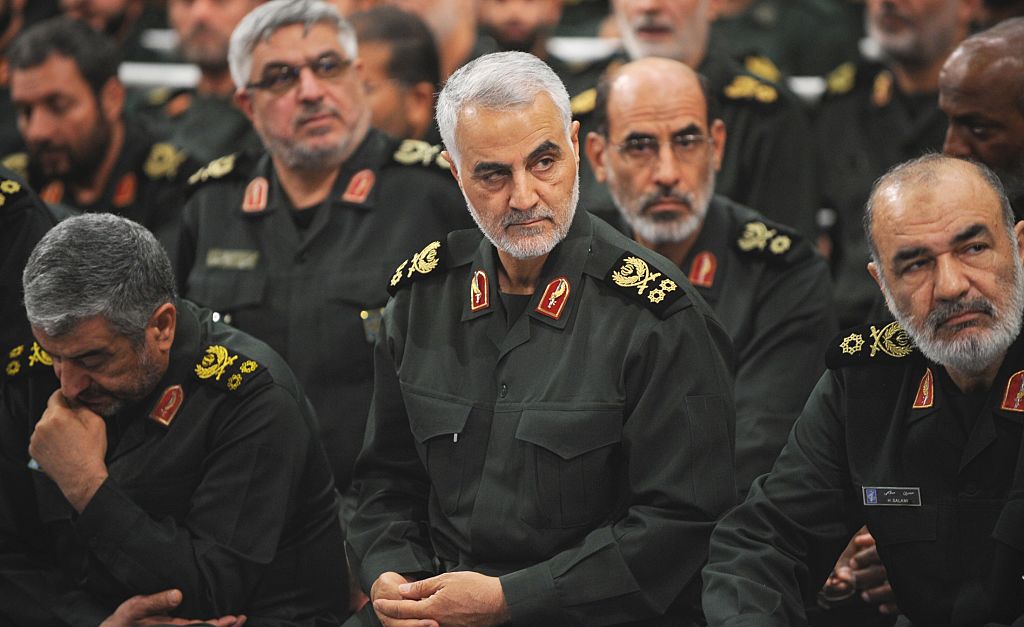
    As the Islamic Republic shifts to a more muscular foreign policy in the face of mounting external pressure, its defense and security apparatus is also undergoing key changes. This includes a reshuffling within the Islamic Revolutionary Guards Corps (IRGC) and the creation of a separate “air defense force” within the regular Army. Much less publicized, however, are reports of high-profile removals and replacements within the IRGC and more broadly, the armed forces, as part of a systematic effort to enhance their operational efficacy at a time of growing internal and external threats.

    July 25, 2019

    The Gulf states, the “deal of the century,” and the Iranian threat
    Former British Prime Minister Tony Blair and Jared Kushner, U.S. President Donald Trumps senior White House adviser and son-in-law attend U.S.-led workshop in Manama, Bahrain on June 26, 2019.
  • Analysis
  • The Gulf states, the “deal of the century,” and the Iranian threat

    Many analysts have been dismissive of the plan’s prospects, but for Gulf states like Saudi Arabia, the UAE, and Bahrain, there’s at least one major reason to line up with Washington on the issue: Iran.

    July 25, 2019

    Divided over narratives: The new fault line in the Arab World
    a helicopter flying over flags at the Ithra center during the 29th Summit of the Arab League in Dhahran in Eastern Province, Saudi Arabia on April 15, 2018.
  • Analysis
  • Divided over narratives: The new fault line in the Arab World

    Many of the divisions in the Arab World today are ideological and revolve around narratives — carefully constructed ontological representations of both how the world works and how it is supposed to work conforming to clearly set out interests and values. While the old sectarian narratives might still play an underlying role, what divides Arabs from Morocco to Oman are different grand-strategic visions of the region’s future after the Arab Spring.

    July 24, 2019