Defying Gravity: Working Toward a Regional Strategy for a Stable Middle East
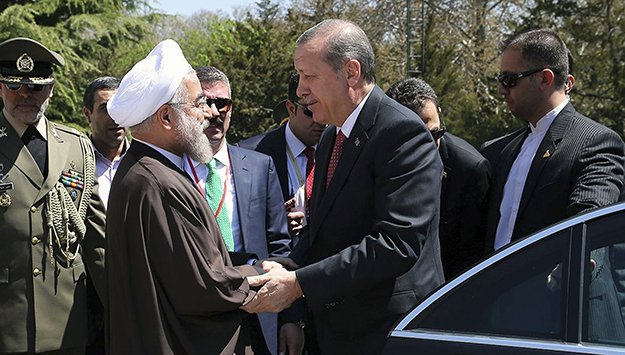
In this MEI Policy Paper, Ross Harrison asserts that a new regional order is emerging out of the conflicts of the Middle East. The relationships among the pillars of this order–Egypt, Saudi Arabia, Turkey, and Iran–are crucial, as they will largely determine “whether the future of the Middle East will be a continuation of the current chaos and destruction or a more positive transition toward stability and prosperity.” Harrison argues that global powers must concentrate on creating conditions conducive to cooperation among the pillars.
Will China Interfere in the Israeli-Palestinian Conflict?
In June 1954, the leaders of China, India, and Burma (now Myanmar) issued a joint statement affirming the Five Principles of Peaceful Coexistence―mutual respect for sovereignty and territorial integrity, mutual non-aggression, non-interference in each other’s internal affairs, equality and mutual benefit, and peaceful coexistence―as the basis for conducting international relations. Since then, China has adhered strictly to the principle of non-interference in other countries’ domestic turmoil, as displayed prominently over the past several years in Beijing’s response to the Syrian civil war.
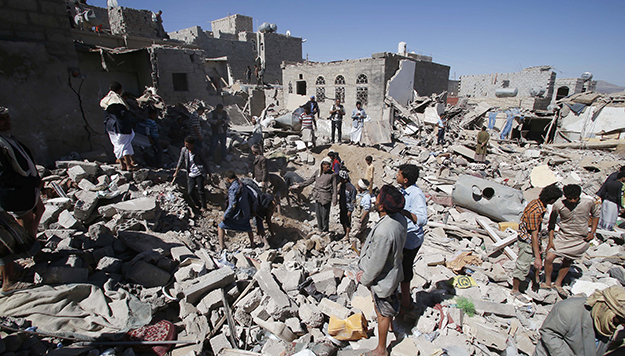
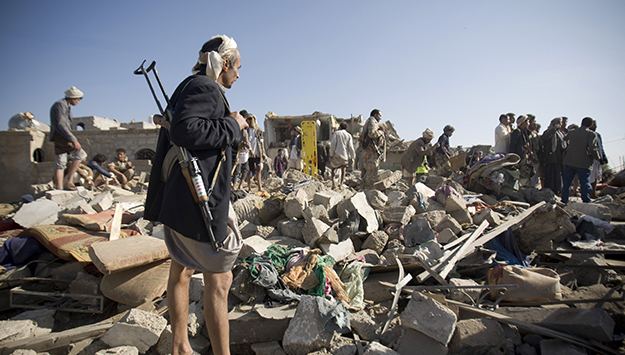
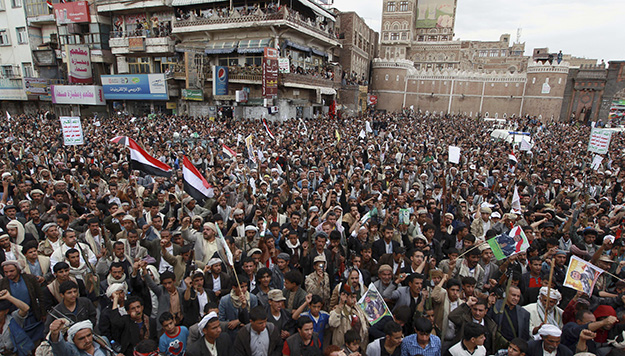
Saudi Arabia’s intervention in Yemen is not surprising given Riyadh’s past policies and current perspectives on Gulf security. Yemen has always suffered from varying degrees of chaos and civil strife. Even in the best of times, large areas of the country lacked government control, and few if any in the region saw it as a functioning nation state. Whatever Gulf Arab leaders may have said publicly, most have viewed Yemen as a loose collection of autonomous or even independent regions, held together only by the lines drawn on a map.
Pakistan’s Balancing Act Between Saudi Arabia and Iran
April 23, 2015 – Marvin Weinbaum, director of the Center for Pakistan Studies at The Middle East Institute, explains Pakistan’s decision not to provide military aid for Saudi Arabia’s operation in Yemen, and how Prime Minister Sharif is working to repair relations with Riyadh.
When it Comes to Israeli Occupation, Better is Not Good Enough
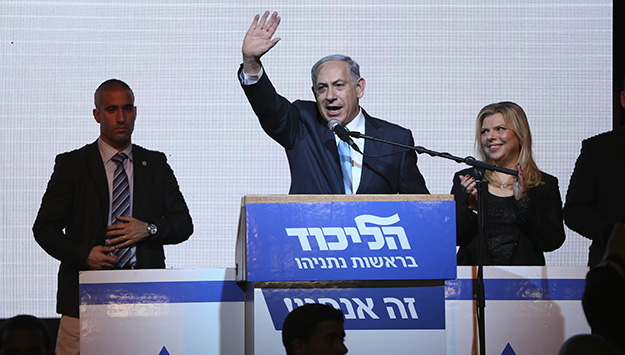
Palestinians, beset by calamities at every turn, have all but ceased to think about their indeterminate prospects for independence and freedom. This dismal state of affairs suits Israel’s newly reelected Prime Minister Benjamin Netanyahu fine. His opposition to a sovereign Palestinian state, broadcast in word and deed, leaves little room for doubt.
The bar has been set so low that all concerned are searching for any shred of evidence that merely hints at better times for Palestinians, who have now lived under Israeli rule for almost a half century.
Relations between Iran and Saudi Arabia have always been thorny, but rarely has the state of affairs been as venomous as it is today.
Tehran and Riyadh each point to the other as the main reason for much of the turmoil in the Middle East. In its most recent incarnation, the Iranian-Saudi conflict by proxy has reached Yemen in a spiral that both sides portray as climatic.
Turkey’s Balancing Act between Iran and Saudi Arabia
Turkish Foreign Minister Mevlut Cavusoglu, reiterating Turkey’s support for a diplomatic solution over the use of force regarding Iran’s nuclear program, welcomed the interim deal between Tehran and the world powers. Turkey’s slowing economy may be among the first to reap economic benefits from the deal, and Ankara’s longtime quest to become an energy hub could finally be realized. Yet the deal could also pose a challenge to Ankara’s Iraq and Syria policies and its recent rapprochement with the Saudis.
Misadventures in Violence in Yemen: Operation Resolute Storm
Saudi Arabia’s military intervention in Yemen is a risky move motivated by various Saudi objectives in Yemen and in the region. The immediate objective is to save President Abdu Rabbu Mansour Hadi from Ansar Allah’s advance on Aden and reinstall him as head of state by forcing Ansar Allah to make major political concessions. But the operation also marks the increasing willingness of the Saudis to use their own military rather than rely on the United States.
Israeli Elections and U.S. Policy Reevaluation: What Lies Ahead?
The Obama administration has lost all patience with Israeli Prime Minister Benjamin Netanyahu’s defiant challenges to two basic U.S. goals: a two-state Israeli-Palestinian peace and a nuclear deal with Iran. Netanyahu’s hostility and the emergence after the March 15 elections of a new, more right-wing coalition, have triggered a major crisis in relations and an apparent decision by Obama to “reevaluate” U.S. policy.
With its bold and public intervention in Yemen’s civil war, Saudi Arabia has cast off a half-century of caution and restraint in regional security affairs.
Collection Spotlight: In the Name of Oil: Anglo-American Relations in the Middle East, 1950-1958
Ivan L. G. Pearson’s In the Name of Oil: Anglo-American Relations in the Middle East, 1950-1958 provides a comprehensive analysis of the extent to which British interests in the Middle East influenced or were furthered by the United States between 1950 and 1958.
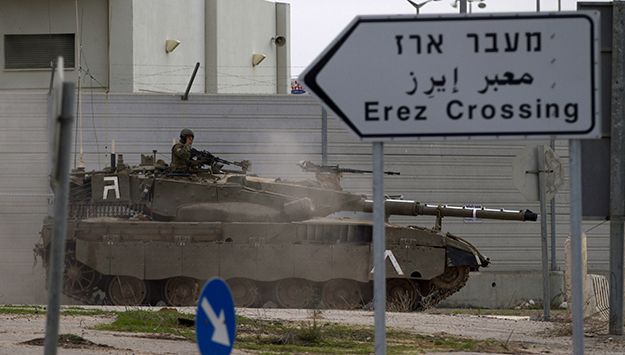
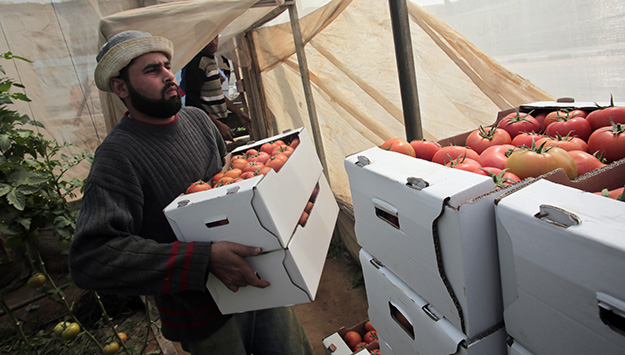
The Middle East is in disarray, but in Gaza, of all places, there are fragile hints of better days.
Two weeks ago, for the first time since Hamas’s takeover of the Gaza Strip in 2007, Israel permitted produce exports from Gaza into Israel and the West Bank.
Former British Prime Minister Tony Blair acknowledged Gaza’s plight during a visit to the area in February.
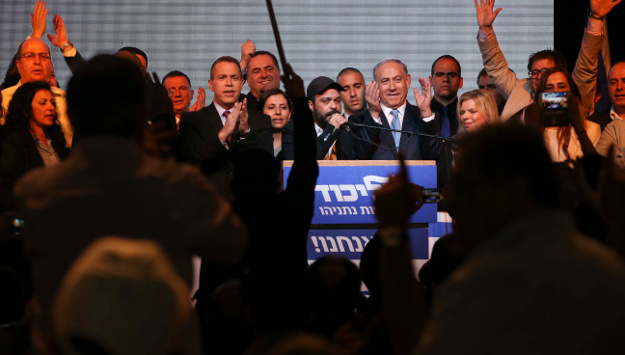
Those Israelis who hoped for a change in Israel’s direction awoke this morning to news worse than they had feared. With more than 99 percent of the vote reportedly counted, Prime Minister Benjamin Netanyahu’s Likud Party has won 30 seats to 24 for his main challenger, the Zionist Union’s Isaac Herzog.
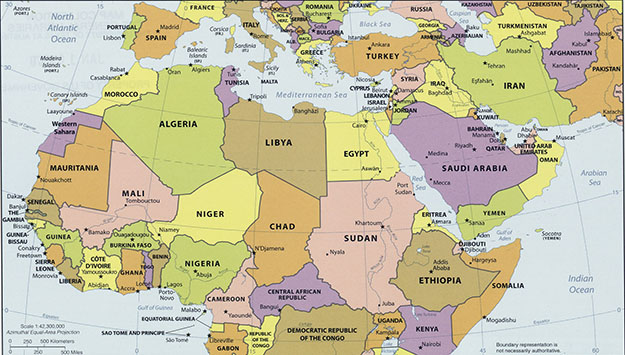

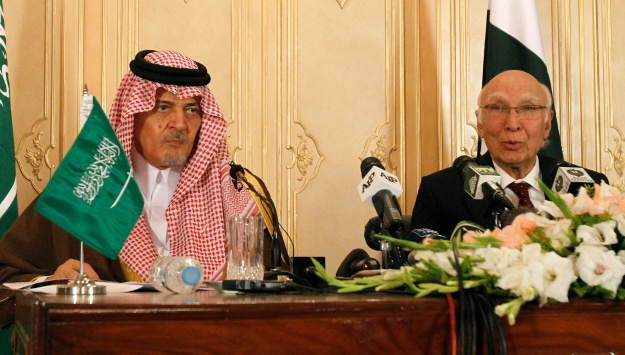

 Ivan L. G. Pearson’s In the Name of Oil: Anglo-American Relations in the Middle East, 1950-1958 provides a comprehensive analysis of the extent to which British interests in the Middle East influenced or were furthered by the United States between 1950 and 1958.