Egypt’s Least Bad Option for Addressing Energy Troubles
A proposed deal to export Israeli natural gas through Egypt has the potential to enable Israel’s entry into its first major export markets, help Egypt escape a deepening energy crisis, and welcome the first European players into Israel’s natural gas industry. However, the deal is complicated by political realities and a history of deeply rooted grievances between the two countries, made worse by the recent violence between Israel and Hamas in Gaza.
Amb. Philip Wilcox, MEI scholar and president of the Foundation for Middle East Peace, discusses the motivations that led to the current escalation of hostilities between Israel and Hamas, and why Israel decided to pursue a ground assault in Gaza.
Israel’s ground assault continues an historical pattern of dealing with threats from adversaries. How well has this strategy worked before?
Why Securing a Cease-Fire Will Be Harder This Time
In thinking about how the crisis between Israel and the Hamas leadership in Gaza might play out, it’s useful to reflect upon the preceding Israeli incursion into Gaza in November 2012.
Violence and Peace Spoilers in the Southern Philippines
The 27 March 2014 signing of the Comprehensive Agreement on the Bangsamoro (CAB) by the Philippine Government (GPH) and the Moro Islamic Liberation Front was heralded as the start of enduring peace and development in Mindanao. Unfortunately, spoilers opposed to the CAB remain capable of derailing the process. Joseph Franco explains some of the nuances of spoiling efforts as well as the prevailing socioeconomic milieu in the Southern Philippines that sustains latent enablers for sectarian conflict.
Putting Out the Fire in Southern Thailand: An Appeal for Truce Seeking
Observers have struggled to explain ongoing sectarian violence in southern Thailand given that both Thai Buddhists and Malay/Thai Muslims are victims of violence, have historically coexisted peacefully, and share local customs and spiritual traditions. Tim Rackett explores the role of majority and minority ethnic and religious identities in fueling sectarian violence and identifies a way out.
The New Wave of Violence between Israelis and Palestinians: The View from Israel
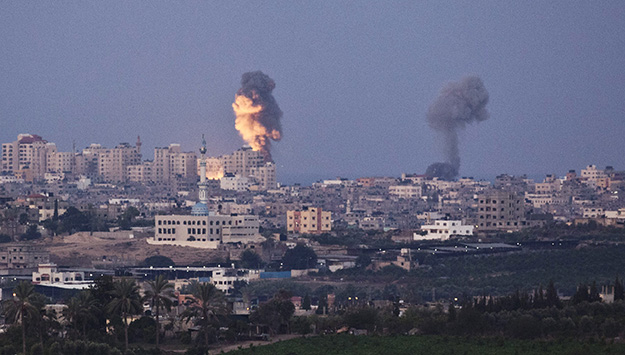
The recent wave of violence between Israel and Hamas, which to date has resulted in the death of more than 100 Palestinians and the injury of several Israelis, continues to escalate with no clear sign of when it might end.
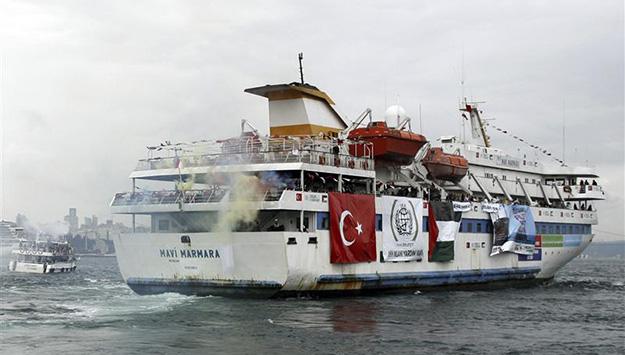
On the north side of Istanbul’s Golden Horn, the Mavi Marmara sits in quiet isolation. In May 2010, the Turkish vessel was carrying aid for the besieged Gaza Strip when Israel forcibly intercepted it in international waters. Nine activists were killed in the raid, and a tenth succumbed to his injuries last month.
The maritime crisis set off several years of polarized relations between Israel and Turkey that both countries believe are now on the mend. These improving ties may produce humanitarian and economic benefits for the West Bank and Gaza Strip.
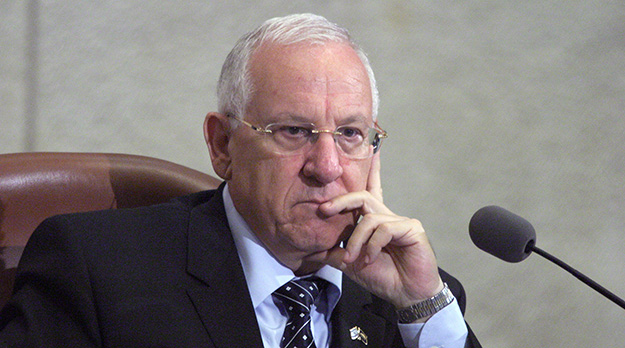
The New President of Israel: Not Easily Categorized
Understanding the new president of Israel, Reuven (“Ruby”) Rivlin—his motives and beliefs, how he contrasts with outgoing President Shimon Peres, and what role he is likely to play during his seven-year term—requires some knowledge of history and Zionist ideology.
Pakistan is only one of three countries—the others being Afghanistan and Nigeria—in which polio has never been eradicated. Polio in Pakistan has been a particular worry recently, with a disturbing spike in cases. According to the World Health Organization (WHO), 61 out of 77 cases of polio reported worldwide from January through mid-May 2014, or 79 percent, were in Pakistan.[1]
Israel’s Natural Gas Sector: A Regional Perspective
Israel’s recent natural gas discoveries have the potential to transform the country into a major supplier of natural gas to the Eastern Mediterranean and beyond. Israel’s Leviathan field alone is believed to contain tens of billions of dollars worth of natural gas, and is the world’s largest offshore natural gas discovery of the last decade. In addition to representing a tremendous boon for Israeli domestic energy needs, the finds are likely to result in significant windfalls for the Israeli state and could dramatically impact the political economies of neighboring states.
Shifting Allegiances: The Israel-Gaza-Egypt Triangle
U.S. diplomatic efforts to resolve the conflict between Israel and the Palestinians have in the last year focused on relations between Israel and the Ramallah-based Palestinian Authority, led by PLO chairman Mahmoud Abbas. Yet there is arguably a far more dynamic and perilous front: one that encompasses Israel, Egypt’s lawless Sinai Peninsula, and the Gaza Strip, the latter of which is run by Hamas.
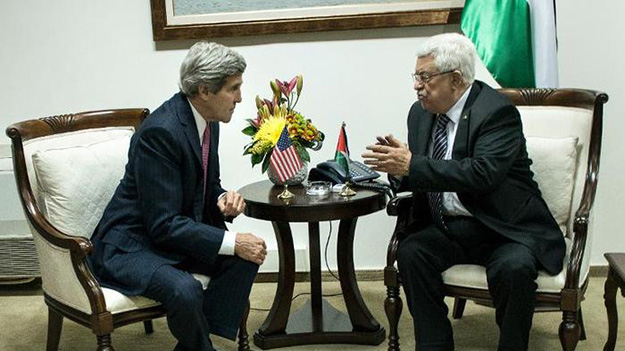
Kerry’s Proposed “Framework” Offers Way Forward for Israel/Palestine
John Kerry’s extraordinary efforts to make peace between Israel and Palestine through six months of bilateral talks have produced no significant results. Kerry, determined to succeed, is turning to a “framework” that would create a new basis for continued negotiations. The framework has not yet been released. But if it is a clear outline of an American plan for peace, not just a collection of ideas that avoids laying out U.S. positions, it could be a game changer.
Dressing for Diplomatic Success: Iranian Negotiations Lead the Way
In the Middle East today, diplomatic success and failure are unfolding side by side, often with some of the same players. High-profile attempts are being made to end the conflict between Israel and the Palestinians, to stop the massacre of innocents in Syria, and to bring Iran in from the cold.