Building an Addiction Workforce in the Middle East: A Counselor Training Program Partnership Between Kasr Al-Ainy and UCLA
Drug and alcohol problems know no borders. Annually, the United Nations World Drug Report documents that heroin, methamphetamine, cocaine, alcohol, and prescription drugs negatively impact public health, public safety, and social institutions in countries around the world.[1] In many parts of the Middle East, there is limited data on the nature and extent of alcohol and drug problems.
Supporting Democratic Movements in the Arab World: An Economist's Perspective
The global community was surprised by the suddenness and intensity of democratic movements in the Arab countries. While universally welcomed, the global response in support of these movements has so far been reactive, uncertain, and slow to build up. The only coherent rendering of such an initiative is the declaration of Deauville Partnership by the Group of 8 countries on May26-27, 2011.
Egypt's Revolutionary Elite and the Silent Majority
It was a small group that set out on January 25, marching on National Police Day to decry the quotidian indignities they suffered at the hands of Husni Mubarak’s abusive police. Public protest in Egypt had long been a minority practice, rarely mustering more than a few hundred, or at best a few thousand, core movement activists. The organizers of the January 25 march expected the same base of dedicated demonstrators, and were shocked when the crowd swelled to more than 10,000.
Looking across the Middle East and North Africa (MENA), there is a real fear that both reform movements and revolutions risk snatching defeat from the jaws of victory. The momentum that made so many inspirational gains a few months ago is slowing, and the forces of conservatism remain in control. The only hope is that stamina, vigilance, and strategy will lead to a complete transition to democracy in at least one of the region’s countries. Not one revolution has yet been completed. If such a success is to happen soon, I hope it will be in Egypt.
Two big misconceptions have been circulated about the Egyptian revolution in January 2011: first in the international media, research, and policy circles, and second inside Egypt itself through the Egyptian media. In the international sphere, the misconception was that the Egyptian revolution was a “cute” Facebook, social media, social network, or internet revolution (in which scrappy youths banded together over the internet to create change). Inside Egypt, the second misconception is that it was a pre-planned, organized, orchestrated, well-led revolution.
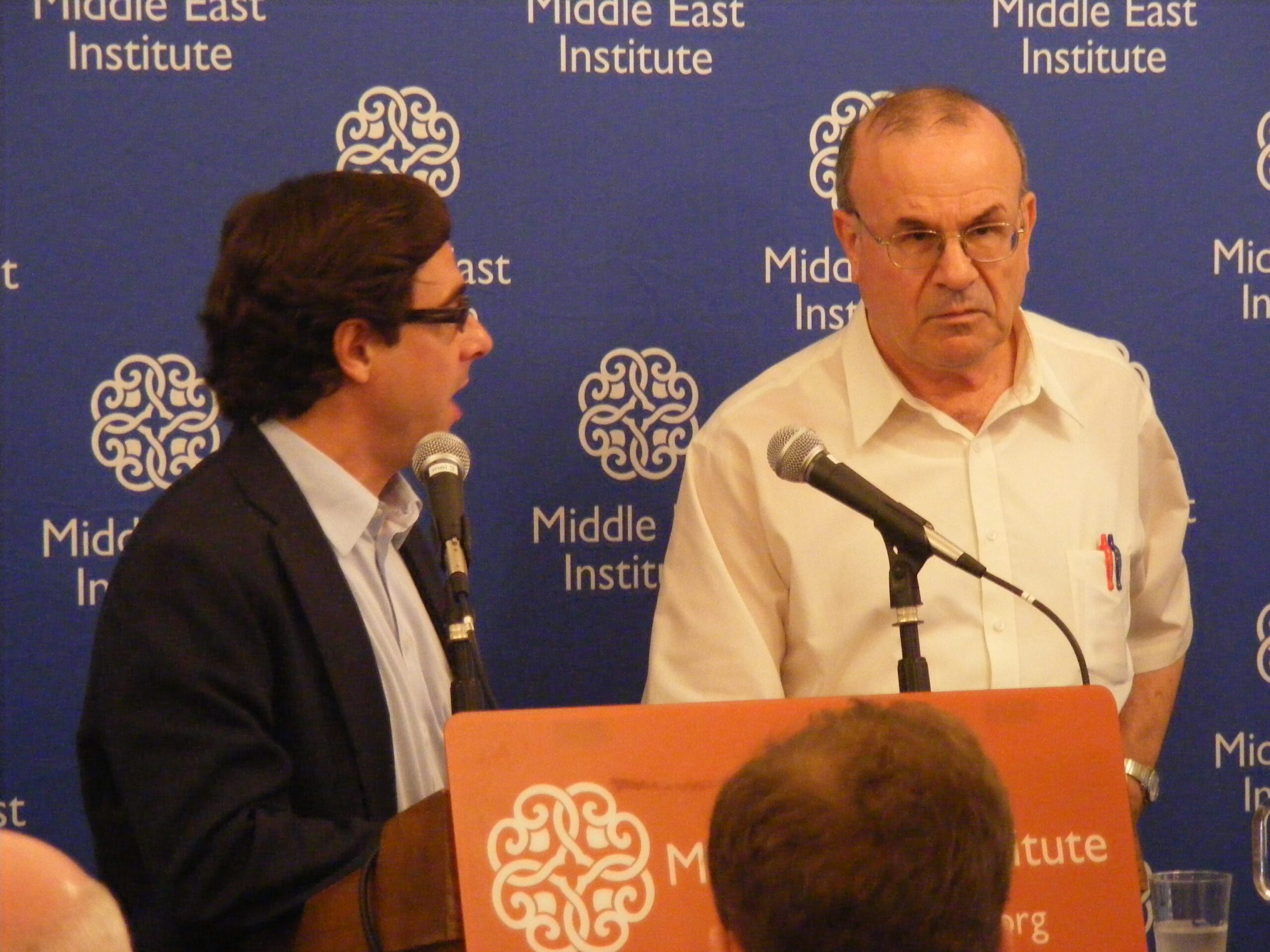
The Middle East Institute is proud to host Ilan Peleg and Dov Waxman, authors of the book Israel's Palestinians:The Conflict Within (Cambridge, 2011), for a discussion about their findings. One in five citizens of Israel are Palestinian. Often overlooked by outside observers, the challenges facing the Palestinian minority in Israel are an inseparable part of the Israeli-Palestinian conflict. Resolving this conflict – a central concern of U.S. foreign policy and current international diplomacy – requires more than the establishment of a Palestinian state.
After the Arab Spring: Toward Political & Economic Inclusion in the Arab World
The Middle East Institute and the UNDP are proud to host a discussion with UNDP Administrator Helen Clark, Under Secretary for Economic, Energy and Agricultural Affairs Robert D. Hormats, and Middle East Institute Scholar Amb. Edward Walker about how best to address political, economic and human development needs in the Arab world today.
*Co-written by James P. Farwell. This article originally appeared in the National Interest online on June 9, 2011
Informed observers are increasingly raising the fear that new elections will put the Muslim Brotherhood in control of Egypt’s parliament and the presidency. Of course it will try. Senior Brotherhood leader Sobhi Saleh, who helped write Egypt’s interim constitution, said in a recent video that he expects the new government to be Islamist.
Cooperation over Nile Waters: Needed More under Climate Change, More Attainable after the "Arab Spring"?
2011 marks the beginning of a new era for both Egypt and Sudan, opening new possibilities to overcome the decade-old Nile water conflict. After the revolution in Egypt, many hope for a reorientation of the country’s foreign policy towards Africa and a potential new approach to negotiations on allocation of the Nile waters.
Middle East Revolutions: An Environmental Perspective
Most of the numerous articles written about the ongoing revolutions in the Middle East have focused on their political and/or economic causes and likely consequences. However, environmental and natural resource-related issues, which are also at the center of these revolutions, have received little or no attention.
This Opinion first appeared in the Huffington Post on May 17, 2001
As the Arab world is getting ready to listen once again to a major speech by the U.S. President Barack Obama, many Egyptians wonder about how the outcomes of the political change will be received outside of the country, and especially from the U.S.
This Opinion first appeared in the Huffington Post on May 6, 2011
As the shadow of the Egyptian revolution that succeeded in the overthrow of Hosni Mubarak's 30 years reign has generated an explosion of new political parties and activists movements representing all colors of the political spectrum, debates within Egyptian political landscape are not anything but chaotic and inflammatory.