Outside Views on the U.S. Strategy for Iraq and Syria and the Evolution of Islamic Extremism
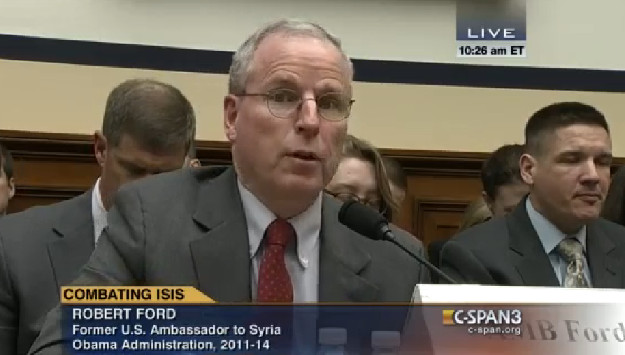
Amb. Robert Ford delivered the following prepared remarks at a hearing of the U.S. House Armed Services Committee on January 12, 2016. Click here to watch C-SPAN’s coverage of the hearing.
Mr. Chairman and members of the Committee,
It is an honor to be on this distinguished panel. Thank you for inviting me.
Russia’s Military Campaign in Syria Contradicts Push for Geneva Compromise
On the eve of the third round of Syrian peace talks, it is becoming clear that the political track is far removed from the military trajectories on the ground. While diplomats scurry to draw up agendas for Geneva III, and opposition delegates argue over representation, the war in Syria continues on its own course seemingly oblivious to the murmurs around it.
Has Jordan Acquiesced to Assad Regime Offensive in Southern Syria?
Jordan is yet to react publicly to a fresh land assault by Syrian regime forces, backed by Hezbollah and Iran’s Islamic Revolutionary Guard Corps fighters, against rebel-held towns in southern Syria.
On Syrian Talks and Ceasefires: An Open Letter to Secretary Kerry
Mr. Secretary,
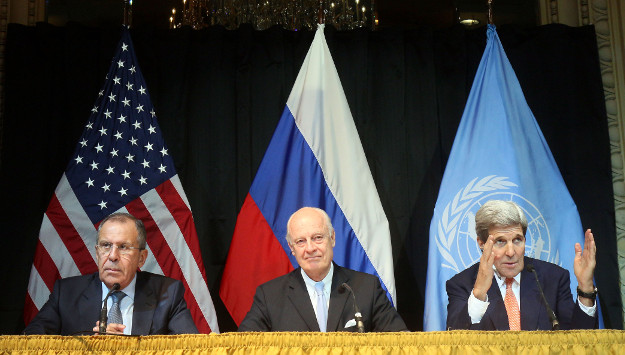
No one has worked harder than you to find a way to bring all sides together to stop the Syrian civil war and muster more international action against the Islamic State. But as a former colleague, let me caution that without some major adjustments in its approach to the Syrian peace talks in Vienna, the Obama administration is headed down another dead end.
This article was first published in The Hoover Institution’s The Caravan.
Daesh or ISIS does not represent an existential threat to any state except Syria and Iraq. It occupies and controls ungoverned space in the region between Iraq and Syria and in parts of northern Africa; and its self-proclaimed Caliphate has benefited from the seizure of some income producing assets in these areas. Daesh depends on the dynamism of success and expansion, both of which have been in short supply of late.
Charting a Course for Syria after Paris and Vienna
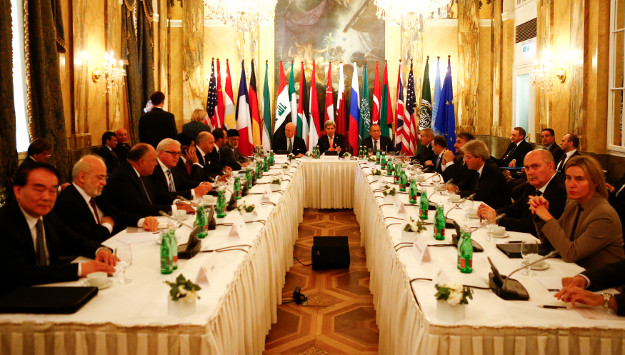
The shooting down of a Russian SU-24 by Turkey on November 24 has ratcheted the Syrian crisis to a new level of urgency. This escalation, combined with the horrific attacks in Paris and the security situation still unfolding across Europe, is understandably dominating the news cycle. Amidst this tumult, however, the results of the Vienna Summit of November 14 have been largely buried. In truth, the downing of the Russian fighter and the massacre in Paris underscore the importance of looking again at what came out of the Vienna talks and what steps the U.S.
Under the pall cast by the horrific terrorist attacks in Paris, the U.S., Russia and other world powers met in Vienna Saturday and agreed on a timetable for a political process in Syria. However, the principles and steps they set conjure a sense of déjà vu.
This piece was co-authored by Chester Crocker, the James R. Schlesinger Professor of Strategic Studies at Georgetown University’s Walsh School of Foreign Service. Read the full article at The National Interest.
There is a debate within U.S. policy circles about Russian president Vladimir Putin’s strategy in Syria. While all agree that Putin intervened to shore up the faltering regime of Bashar al-Assad, there are at least two interpretations of what Putin’s ultimate objective is.
Ten days ago 17 countries called for “credible, inclusive, nonsectarian governance” in Syria followed by a new constitution and elections. It sounds good on paper. However, the key element is not elections, nor is it a new constitution; it is the rule of law. Syria has had no rule of law to speak of under Baath and Assad family rule, and in its absence the Constitution is worth little and fair elections are impossible. Thus, the governance reference in the Vienna statement is the vital element. Only after serious governance changes are made can a new constitution come into real effect
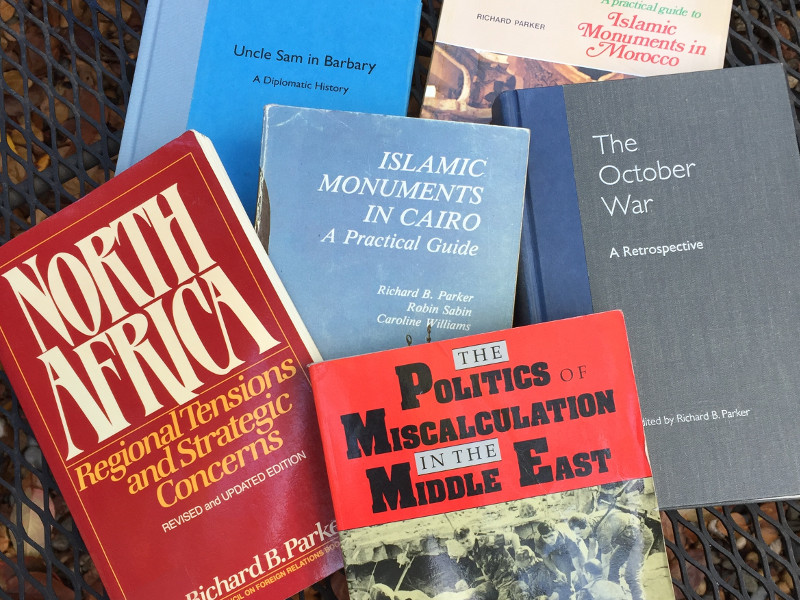
Only a few authors have works that can be found on both floors of the Oman Library at The Middle East Institute, and fewer still that have a personal connection to both the institute and the history of the region. The late Ambassador Richard B. Parker can claim this status, having served 31 years in the Foreign Service and as the third editor of The Middle East Journal. He was also a longtime MEI scholar-in-residence.