Gulf Investment in China: Beyond the Petroleum Sector
This essay explores recent GCC investment in sectors of the Chinese economy other than the petrochemicals industry and examines the challenges confronted by Gulf investors.
The rise of China and India, coupled with major changes in the global energy market such as the US shale revolution have shifted the Gulf countries’ economic focus towards the Asian continent. East Asia has already emerged as the GCC’s most important trade partner, accounting for over 57% of its external trade.
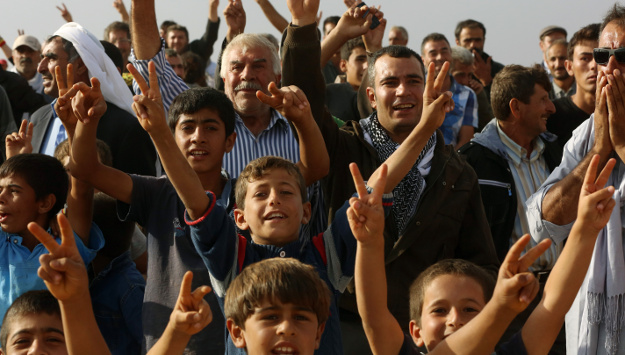
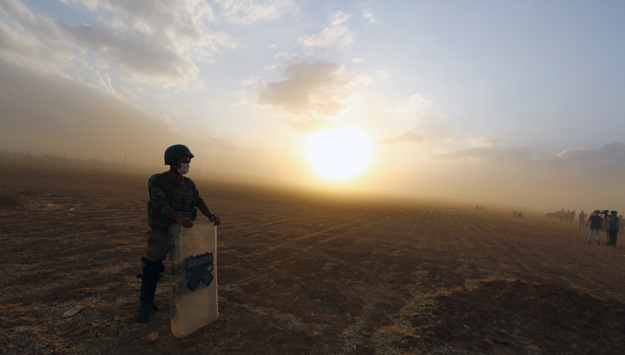
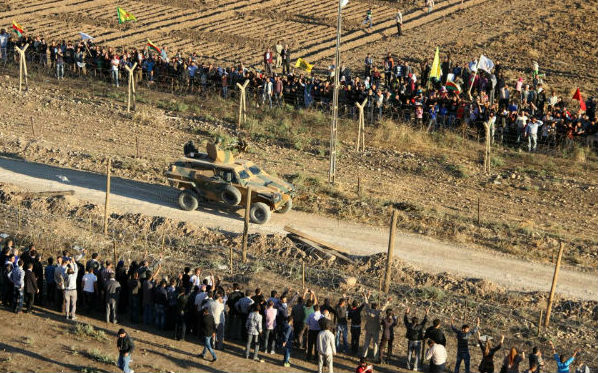
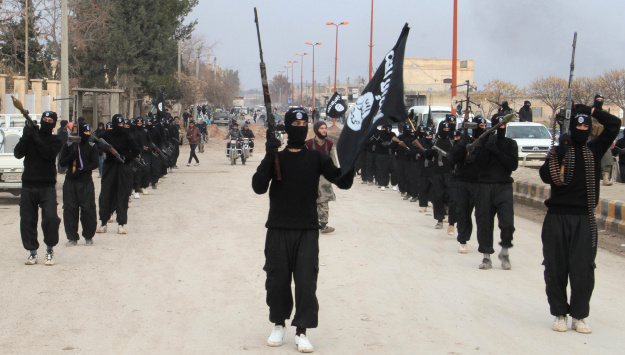
Alongside the wave of Syrian Kurdish refugees into Turkey this month is an equally unsettling story: alarming gains by the Islamic State in an offensive against a potential ally. Syria’s Kurds carved out their own regional bastion extending west from their main base in the extreme northeast corner of Syria. For two years they have fiercely defended their lands against the Islamic State and other extremists, employing many thousands of veteran Kurdish fighters.
Turkey, a key U.S. ally and a NATO member that borders the territory captured by ISIS, which now calls itself the Islamic State, in Syria and Iraq, could play a critical role in the U.S.-led military assault against the jihadist group.
One way to grasp the immense difficulty facing President Obama as he tries to forge an effective international coalition to oppose the Islamic State is to examine the difference between this effort and the last time the United States led a diverse group of countries to take on a conflict in the Middle East: Operation Desert Storm, in 1991.
Turkey: A Reluctant Partner in the Fight against the Islamic State
Last week, President Obama laid out his strategy to fight the Islamic State (also known as ISIS or ISIL). The strategy includes a systematic campaign of airstrikes; support to forces fighting ISIS on the ground, including Iraqi Security forces and the Peshmerga (the Kurdish armed forces); redoubling U.S. efforts to cut off ISIS funding; improving intelligence; strengthening defenses; and stemming the flow of foreign fighters into and out of the Middle East.
Turkey’s Syria and Iraq Policy Hostage to Islamic State
As the United States struggles to mobilize a coalition of allies including Turkey behind potential military action against the Islamic State (formerly known as ISIS) in Syria, Turkey’s Iraq and Syria policies remain captive to ISIS and the 49 Turkish hostages it holds. Turkey might be key to the U.S. effort to confront ISIS, and it is in a very tough spot.
Pro-Kurdish Peoples’ Democratic Party is Big Winner in Turkish Elections
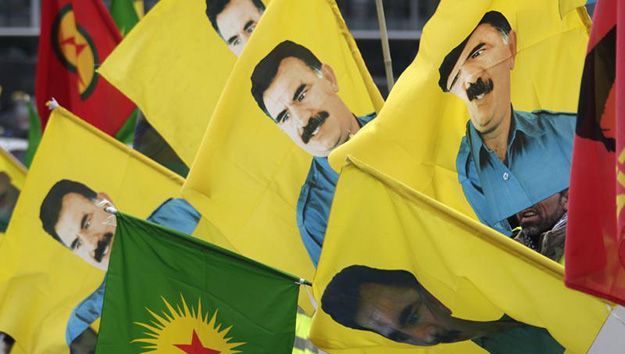
A recent statement from the imprisoned leader of the Kurdistan Workers’ Party, Abdullah Ocalan, hails a new era for Turkey’s Kurds. In a statement from his cell on the prison island of Imrali in the Sea of Marmara, Ocalan said that Turkey was now on the verge of “historic developments” after last week’s presidential elections and declared that through a major democratic negotiation, the 30-year war was coming to an end.
Erdogan Wins the Presidential Vote but the Race Is Not Over
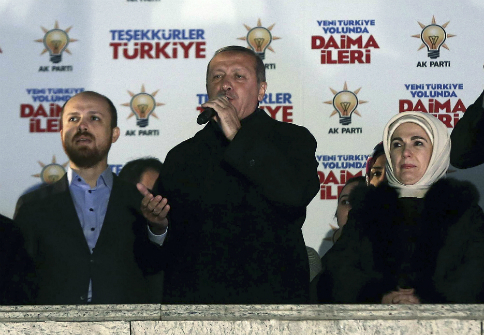
Turkish Prime Minister Recep Tayyip Erdogan has won the presidential election in Turkey’s first direct presidential election on Sunday, extending his 12-year grip on power. Despite heavy campaigning and the financial support from public funds, he won the election with only 51.95 percent of the vote, slightly higher than the minimum required to win the election.
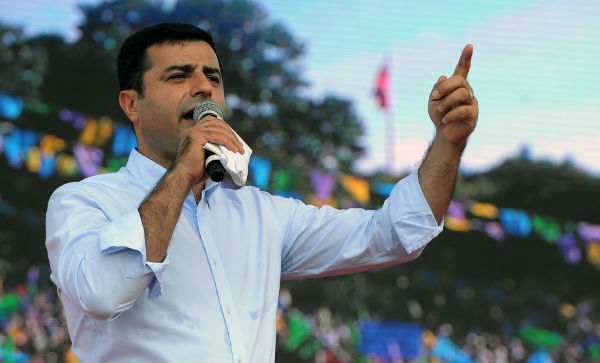
On August 10, Turkish voters will go to the polls to choose a new president for the first time in the country’s history. The following candidates are on the ballot: Recep Tayyip Erdogan, the Prime Minister and leader of the governing Justice and Development Party (AKP); Ekmeleddin Ihsanoglu, joint candidate for the opposition Republican People’s Party (CHP) and Nationalist Action Party (MHP); and Selahattin Demirtas, the candidate of the pro-Kurdish People’s Democratic Party (HDP).
The Israeli incursion into Gaza and the ensuing diplomatic efforts to end the violence have revealed Turkey’s waning influence in the region.
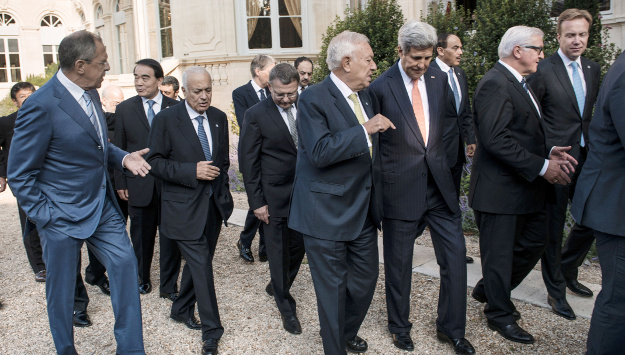
The Turkish government has been promoting itself as a potential mediator between Israel and Hamas. The latter’s rejection of an Egyptian ceasefire in mid-July bolstered Turkey’s hopes of playing a key role, as did its inclusion in this past weekend’s Paris summit hosted by U.S. Secretary of State John Kerry.
With the Syrian civil war raging and the ISIS offensive in northern Iraq creating a fresh crisis, Turkey now effectively has two failed states on its southern border and is dealing with new security, political, and economic challenges. Gonul Tol, director of MEI’s Turkish Center, explains how Turkey is responding to this predicament.
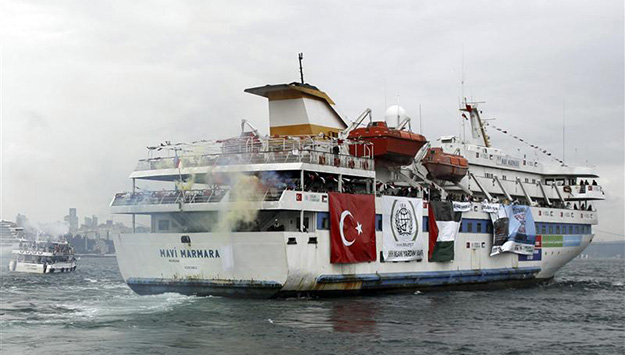
On the north side of Istanbul’s Golden Horn, the Mavi Marmara sits in quiet isolation. In May 2010, the Turkish vessel was carrying aid for the besieged Gaza Strip when Israel forcibly intercepted it in international waters. Nine activists were killed in the raid, and a tenth succumbed to his injuries last month.
The maritime crisis set off several years of polarized relations between Israel and Turkey that both countries believe are now on the mend. These improving ties may produce humanitarian and economic benefits for the West Bank and Gaza Strip.
The Islamic State of Iraq and Syria (ISIS), a Sunni militant group controlling territory spanning the border between the two country’s northern regions, made a rapid advance toward Baghdad this week, seizing control of Mosul, Iraq’s second largest city, and Tikrit, and attacking the refinery town of Baiji. Forces from Iraqi Kurdistan have since moved to secure Kirkuk as the Iraqi central government’s military has fled in disarray. Robert Ford, former U.S.