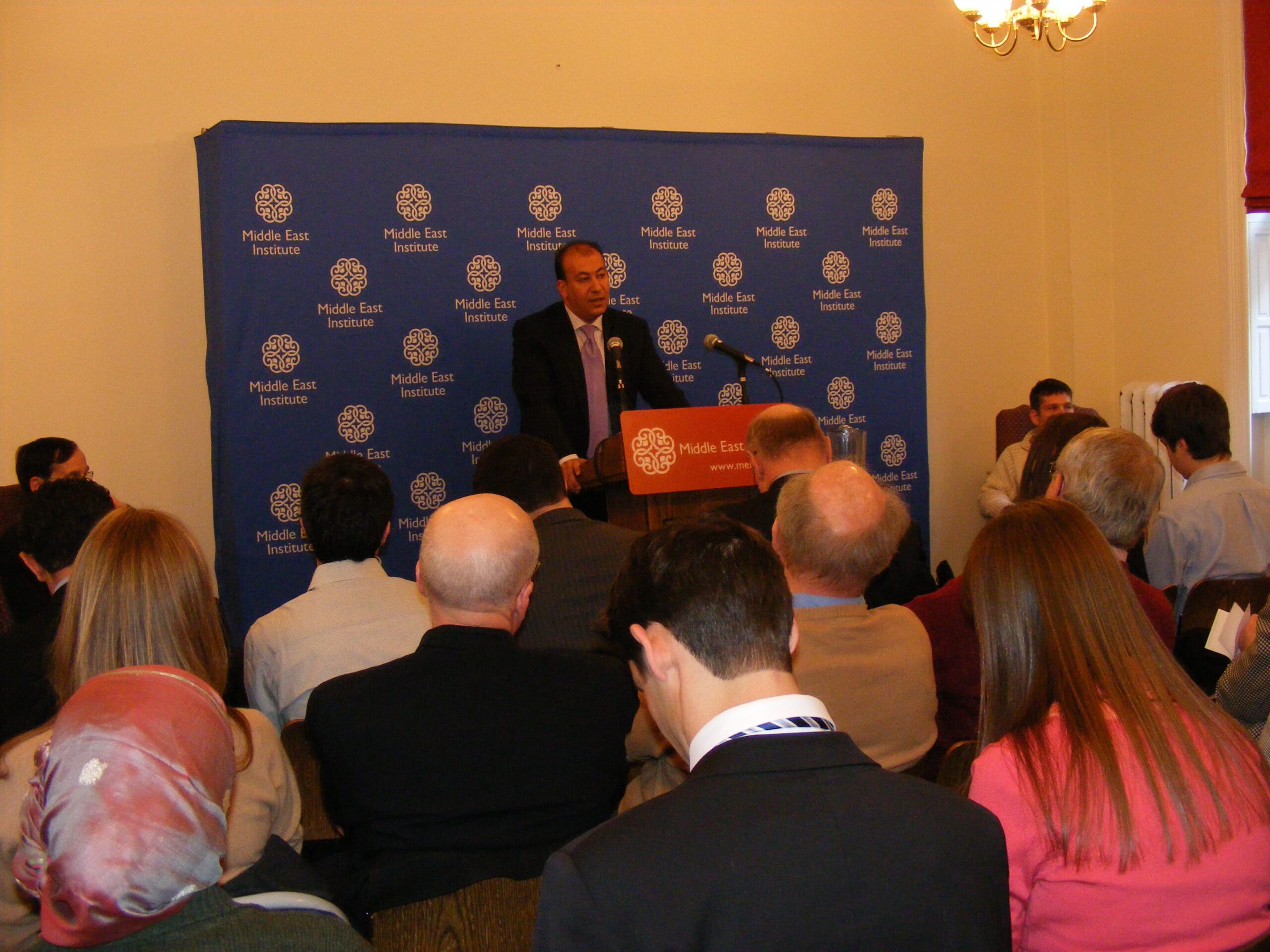
The Middle East Institute is pleased to host poet, writer and activist Nimah Nawwab for a conversation about Saudi women in an era of unprecedented change in the Middle East. Despite the many advances of the Arab Spring, the region continues to face mounting social, political, and economic challenges. In Nawwab's native Saudi Arabia, these challenges form the basis for her art and activism.
Arab Economic Challenges and Opportunities in the Wake of the Upsrisings
What are some of the fundamental socio-economic features they all share and what steps must they take if their economies are to enjoy sustained growth in the medium to long term? Dr. Toufic Gaspard, the economic adviser to Lebanon's minister of finance, will focus on Arab economies in Egypt and the Levant to examine how to solve the dominant regional problems of unemployment and poor productivity with the goal of establishing social and political stability.
The Middle East Institute is proud to host Georgetown University professor Paul Pillar for a discussion about Iran and how best to address its nuclear ambitions. Pillar argues that the acceptable range of opinion on Iran has narrowed around the idea that all options, including a military strike, must be pursued to prevent the country from acquiring nuclear weapons. And yet, Pillar argues, if the combination of nuclear talks and sanctions do not yield the outcome the West and Israel seek, containment is preferable to war.
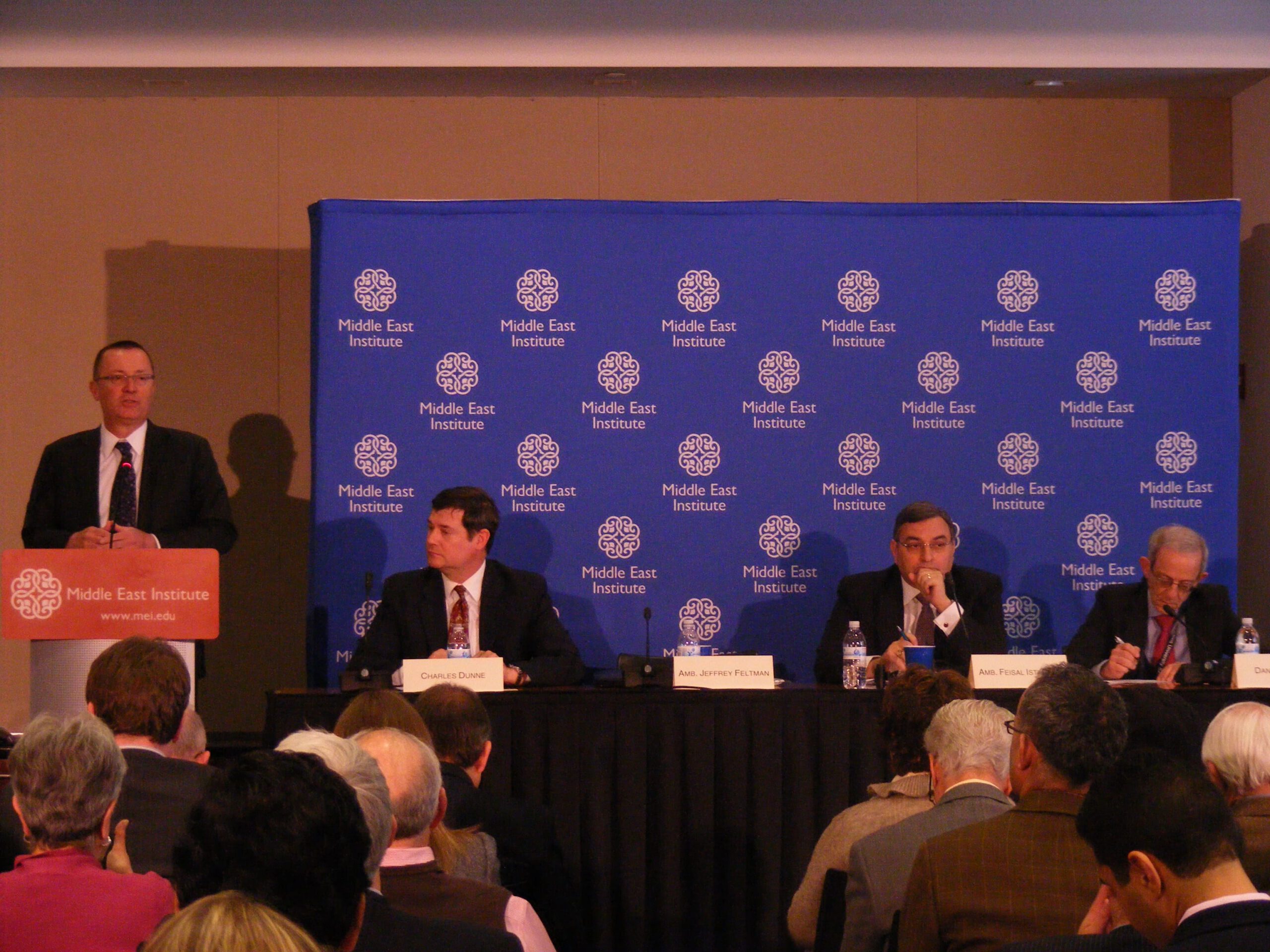
Panelists will explore both the challenges and opportunities presented by the transition of the U.S.-Iraqi partnership from a mainly military to a diplomatic one. What sort of working relationship is emerging between the U.S. and Iraqi governments? What kind of cooperation is taking place in the areas of domestic and regional security, diplomacy, trade, energy, and reform? How has the troop drawdown affected U.S. influence in Iraq and the region in general? Feltman, Istrabadi and Serwer will explore strategies and policies resulting from the new bilateral dynamics.
Egypt and the Dynamics of Transition and Revolution
Today, more than a year after the Tahrir Square protests toppled the Mubarak regime, tension remains between the old guard and the new. As the Muslim Brotherhood works to assert political authority, the military elite, as represented by the Supreme Council of the Armed Forces, seeks to retain some vestige of power in government. Dr. Ghabra posits that the ongoing attempts on the part of the SCAF to retain control over Egypt's political future will not succeed, given the new political awareness and involvement of Egyptian citizens.
Dr. George Gavrilis of the Hollings Center for International Dialogue will serve as the discussant. The talk will focus on Younis's recent publication in the Turkish Policy Quarterly on the role of Turkey in a changing MENA region and the potential influence it can have on the process of democratization in Egypt. Younis will also share some insights from Gallup's polling in other Arab Spring countries on the public's perceptions of the challenges facing their nations following the uprisings of 2011.
A View From the Gulf: A Discussion of Gulf Politics and Security
The Middle East Institute is proud to host Gulf Research Center experts Abdulaziz Sager, Mustafa Alani, and Christian Koch for an examination of recent developments in the Gulf in the wake of the Arab Spring. The speakers will address the crises in Yemen and Bahrain, US-Gulf relations and the question of reform in the region.
Iran and the West at a Crossroad: Will Recent Elections Make or Break a Deal on Iran's Nuclear Program?
U.S. Secretary of State Hillary Clinton has described upcoming talks with Iran over its nuclear program as "the last chance to resolve the crisis." Yet as the final hour approaches for an opportunity to avert a military attack, there are few apparent signs Iran will make compromises. Recent parliamentary elections have only strengthened the power of Supreme Leader Ali Khamenei and the hardliners in his inner circle who aspire to make the Islamic republic a regional superpower.
Russia's relations with Syria – even under the Assad regime – have been more troubled than current press accounts of Moscow-Damascus ties indicate. But despite the internal and external opposition to the Assad regime that has risen up over the past year, the Russian government has defended it staunchly via its Security Council veto and other means. In his talk, Mark Katz will discuss why Moscow supports the Assad regime so strongly as well as why it is willing to incur the costs of doing so.
Definitive election results are not yet available, but Stacher and Elmenshawy will analyze early polling data regarding the performance of Egypt's Islamist, liberal and youth parties, as well as examine election turnout and the role of the military. The November 28 poll is the first of three, and marks the first time since a popular uprising ended former President Hosni Mubarak's 30-year rule that millions of Egyptians voted to establish a parliament.
Reflections on the Role of American Universities in the Middle East
American higher education has been present in the region since 1866, when the American University of Beirut set the precedent for successful localization by planting roots and adapting to local society. Today, Arab governments themselves often direct and fund the cross-cultural educational export process, with far-reaching economic and social goals. For example, Qatar's U.S. branch campuses are an integral part of its broad education reform strategy designed to transform the country into a knowledge producing society. The UAE, in contrast, has adopted a business-model view of U.S.
Saudi Arabia on the Edge: The Uncertain Future of an American Ally
Of all the countries that are vital to the strategic and economic interests of the United States, Saudi Arabia is the least understood by the American people. Today's Saudis, far better informed than previous generations, are looking for new political institutions that will enable them to be heard, but these aspirations conflict with the kingdom's strict traditions and with the House of Saud's determination to retain power. Meanwhile, the country wishes to remain under the protection of American security but still clings to a system that is antithetical to American values.
Following last week's Russian-Chinese veto of an Arab-backed U.N. resolution, the international community is struggling to find ways to stem the ongoing violence and bloodshed. European states are considering a fresh round of sanctions, while Turkey says it's preparing a new initiative to address the crisis. Nerguizian, Slim and Yacoubian will discuss the international community's options, as well as examine the status of the Syrian opposition and the role of regional players.
Reflections on Palestinian Unity, the Statehood Bid, and Prospects for Peace
In the wake of the February 6 announcement that Palestinian President Mahmoud Abbas will head an interim unity government there is renewed hope for political cooperation between rival parties Fatah and Hamas. The formation of the unity government however threatens U.S. aid to Palestine, as the United States has said that it refuses to send money to Hamas, which it considers a terrorist organization. The PLO's continued pursuit of statehood recognition in the UN Security Council has also isolated it from the United States even as it earned popular and international support.
Kurdish Issues: Turkey and the Kurdistan Regional Government in a Changing Middle East
The Arab Spring has driven a wedge between Turkey and its once-close allies, Iran and Syria. Ankara's ties with Baghdad are strained, as well. Panelists will address the impact of external upheaval on Turkey's internal Kurdish issue and examine the situation in the context of Turkey's changing relationship with the Kurdistan Regional Government (KRG) of Iraq. Given the realities of the new regional dynamics, what are the prospects for Turkey's "Kurdish Opening?" What impact will increased bilateral Turkey-KRG cooperation have on the security situation?