A View From the Gulf: A Discussion of Gulf Politics and Security
Dr. Abdelaziz Sager, Dr. Mustafa Alani, and Dr. Christian Koch of the Gulf Research Center share their perspectives on regional events and the Arab Spring.
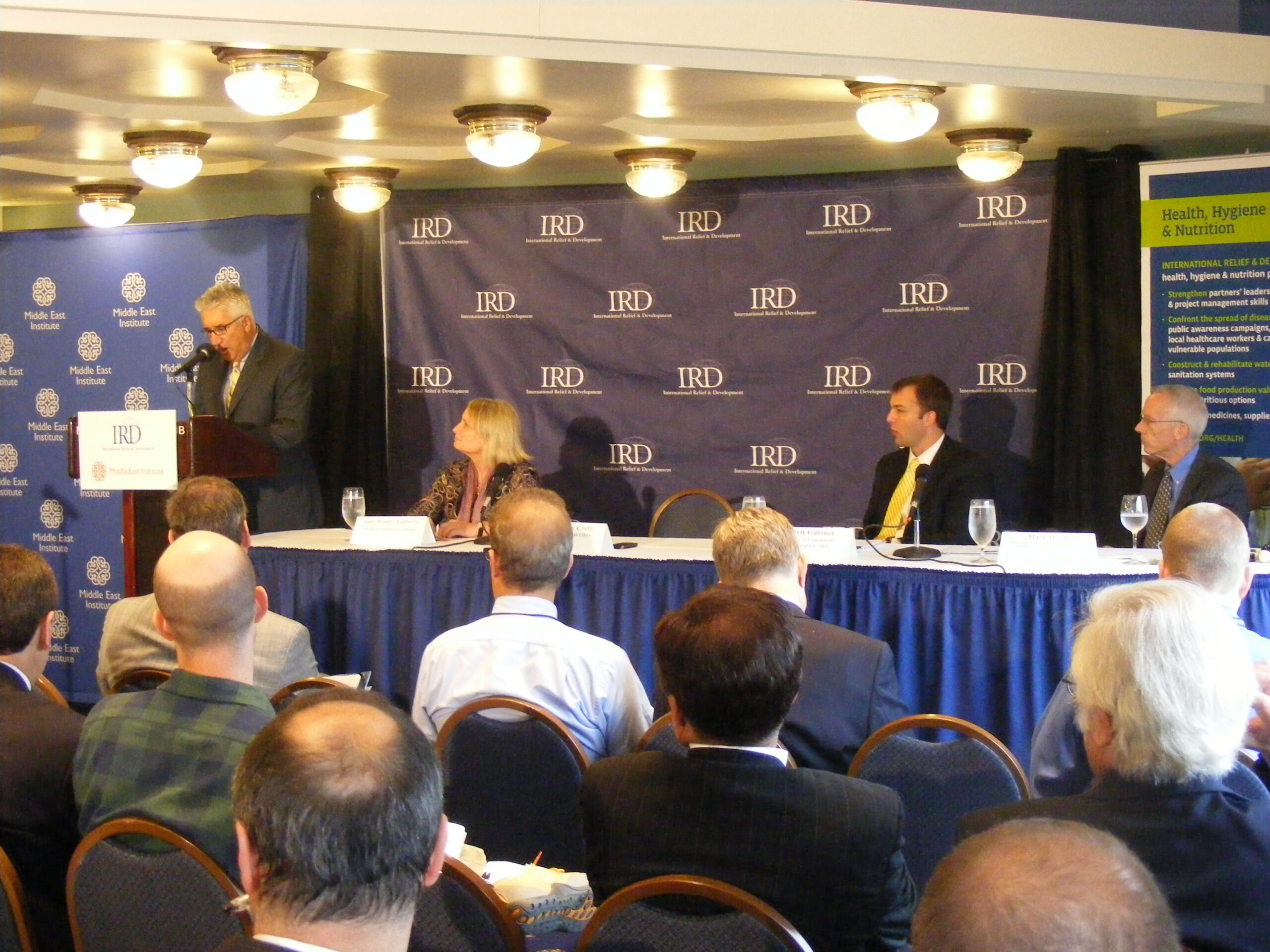
Rebuilding Libya: A Status Report on the Humanitarian Situation on the Ground
Speakers: Amb. Wendy Chamberlin, MEI President
Amb. Gene Cretz, US Ambassador to Libya
Mark Ward, Deputy Assistant Administrator for the Bureau of Democracy, Conflict, and Humanitarian Assistance, USAID
Travis Gartner, Director of Community Stabilization, IRD
The Middle East Institute is proud to host a discussion with Trita Parsi and Michael Singh on the prospects for a diplomatic solution to the Iran nuclear crisis in the wake of recently imposed UN and US sanctions.
Their discussion will draw upon a forthcoming Middle East Journal article entitled "The Case Against the Case Against Iran" written pseudonymously by a European diplomat, who argues for greater engagement by regional actors like Turkey, Saudi Arabia, Russia and China to mediate and mitigate Iran's nuclear ambitions.
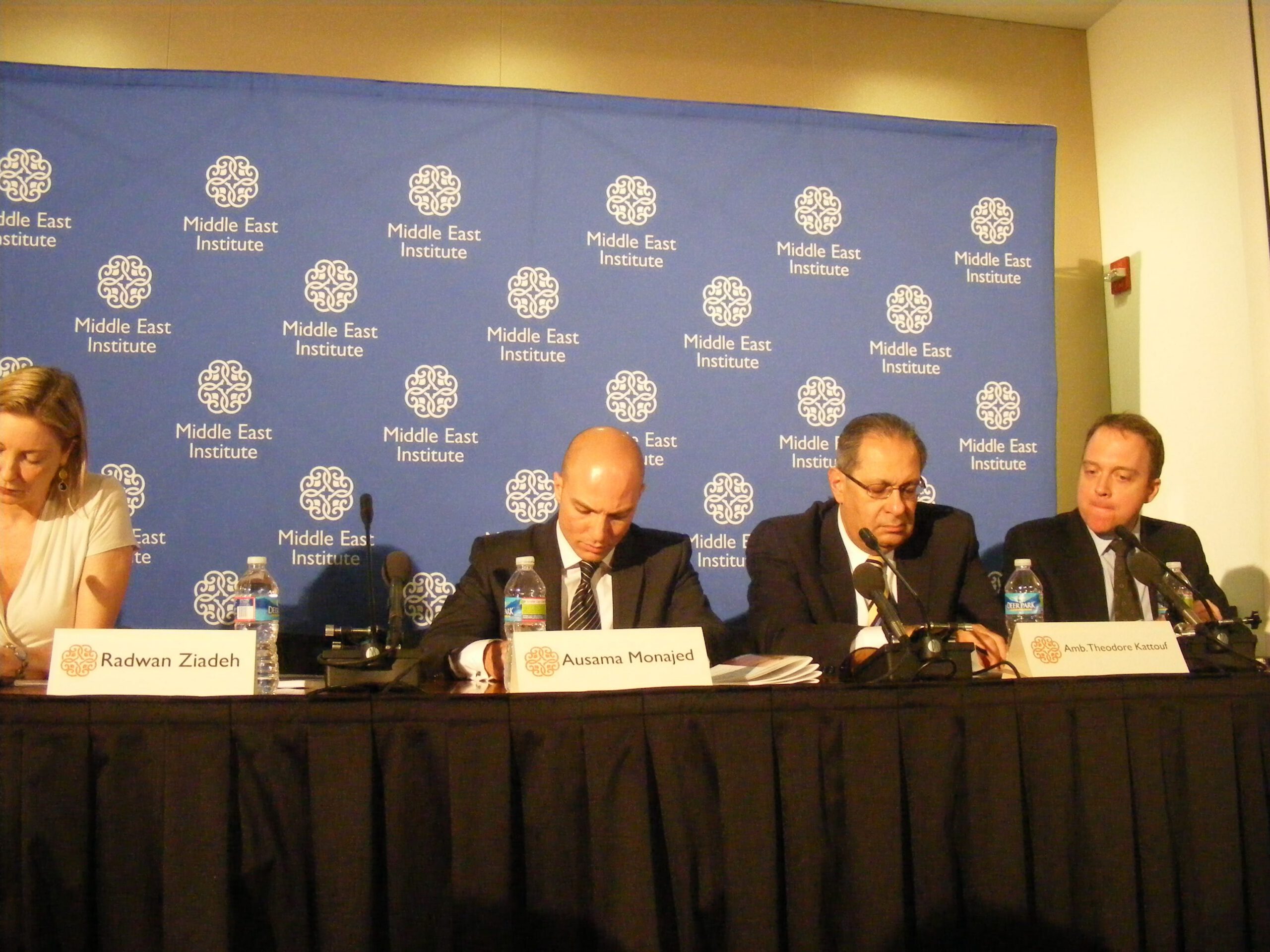
Syria on the Verge: Implications for a Nation in Revolt
The Middle East Institute is honored to host Syria experts Radwan Ziadeh, Ausama Monajed, Amb. Theodore Kattouf, and Andrew Tabler for a panel discussion about the domestic and regional implications of the ongoing political unrest and violence in Syria. With protests continuing to rock Syria for the sixth month, the Assad government recently introduced a law allowing the formation of independent parties. But protesters say it's too little too late and point to the government's ongoing crackdown.
The Middle East Institute is proud to host Ilan Peleg and Dov Waxman, authors of the book Israel's Palestinians:The Conflict Within (Cambridge, 2011), for a discussion about their findings. One in five citizens of Israel are Palestinian. Often overlooked by outside observers, the challenges facing the Palestinian minority in Israel are an inseparable part of the Israeli-Palestinian conflict. Resolving this conflict – a central concern of U.S. foreign policy and current international diplomacy – requires more than the establishment of a Palestinian state.
After the Arab Spring: Toward Political & Economic Inclusion in the Arab World
The Middle East Institute and the UNDP are proud to host a discussion with UNDP Administrator Helen Clark, Under Secretary for Economic, Energy and Agricultural Affairs Robert D. Hormats, and Middle East Institute Scholar Amb. Edward Walker about how best to address political, economic and human development needs in the Arab world today.
Uprising in Syria: Implications for US and Regional Policy
The Middle East Institute is proud to host Syria experts Ammar Abdulhamid, Helena Cobban, and Steven Heydemann for a discussion about the ongoing protests in Syria and the international and regional reactions to the shifting Syrian landscape. As the uprising continues into its third month, how sustainable is the protest movement? Are the Syrian government's tactics in crushing dissent succeeding? What impact has the violence had on the Assad regime's relationship with its neighbors like Turkey and close allies like Iran, Hezbollah and Hamas?
The Middle East Institute is proud to host Ambassador Ali Suleiman, Paul Pillar, and Jeffrey White for a discussion about the current situation in Libya and ways to address the stalemate between Libya's rebels and the forces of Colonel Qaddhafi. As the conflict drags into its third month, Aujali, Pillar and White will examine the humanitarian situation on the ground, NATO's recent operational innovations, and the role of the US and Europe in aiding Libya's rebels.
The Upcoming Turkish Elections: Implications for Domestic and Foreign Policy
The Middle East Institute's Center for Turkish Studies is proud to host Mr.Taha Ozhan, Director General of the Foundation for Political, Economic and Social Research (SETA Ankara), for a discussion on Turkey's upcoming elections on June 12.
Palestinian Peace Strategy in a Changing Middle East: Prospects for Fatah-Hamas Reconciliation, and US-Palestinian Relations
The Middle East Institute and the Foundation for Middle East Peace are proud to host Ziad Abu Zayyad a veteran journalist and the co-founder and editor of the Palestine/Israel Journal. In his talk, Mr.Abu Zayyad will address whether a rapprochement between Fatah and Hamas is possible, and will also discuss the main challenges facing the US-Palestinian bilateral relationship.
The Middle East Insitute is proud to host Amb. Edmund J. Hull (retired) for for a discussion about his recent book High-Value Target: Countering Al Qaeda in Yemen. Hull's book tells the inside story of how al Qaeda's Yemeni safe haven was disrupted during Hull's tenure.
Joining the Global Oil Sector: Challenges and Opportunities for Iraq
The Middle East Institute is proud to host Ben Lando, Iraq Bureau Chief of the Iraq Oil Report, which provides business, political and security analysis on Iraq. Lando will discuss Iraq's potential within the global oil sector, as well as the political and security concerns that could affect oil supply, growth, security and policy in Iraq now and in the future. Lando will also touch upon relations between Iraq and its neighbours, as well as key domestic issues such as the Arab-Kurdish conflict.
Joining the Global Oil Sector: Challenges and Opportunities for Iraq
The Middle East Institute is proud to host Ben Lando, Iraq Bureau Chief of the Iraq Oil Report, which provides business, political and security analysis on Iraq. Lando will discuss Iraq's potential within the global oil sector, as well as the political and security concerns that could affect oil supply, growth, security and policy in Iraq now and in the future. Lando will also touch upon relations between Iraq and its neighbors, as well key domestic issues such as the Arab-Kurdish conflict.
The Middle East Institute is proud to host Dr. Mona Makram-Ebeid, Professor of Political Science, American University of Cairo, and former Egyptian Parliamentarian, for an examination of the unprecedented changes that have taken place in Egypt over the last three months. Dr. Makram-Ebeid will analyze the current situation in Egypt, as well as expectations for upcoming parliamentary and presidential elections.
Reform and Development in Egypt: U.S. Goals and Priorities
The Middle East Institute is proud to host Hady Amr of USAID and Thomas Garrett of IRI for a discussion about shifting U.S. funding goals and priorities in Egypt in the wake of the January 25 revolution. Egyptian NGOs and nascent political parties face multiple challenges as Egypt transitions toward democracy, including a lack of resources and a democratic system. Egypt is also facing new economic challenges and calls from some quarters for a Western-backed Marshall Plan. Amr and Campbell will explore the role the U.S.