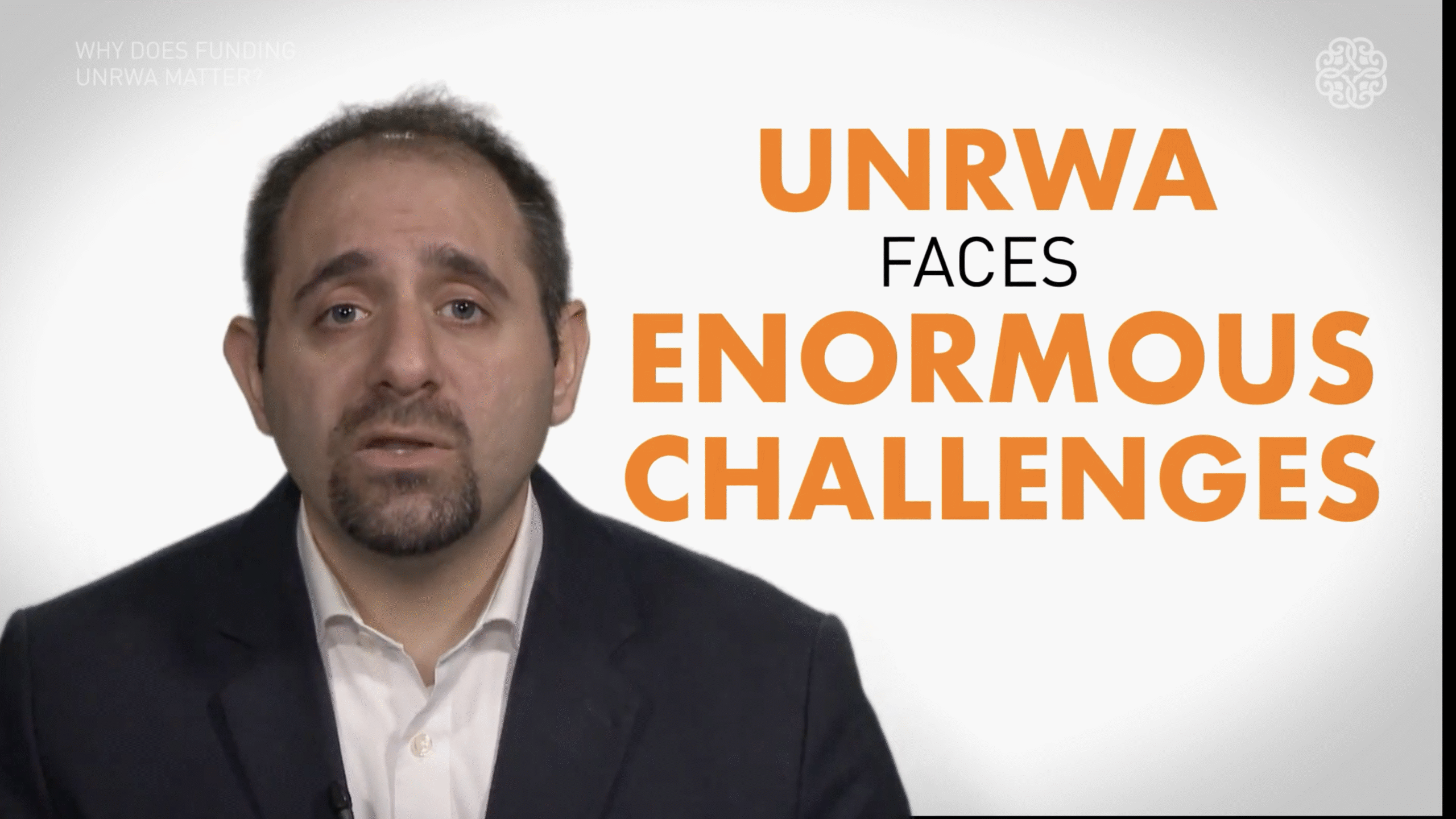
In January, President Donald Trump announced a major cut–$300 million–to the United Nations Relief and Works Agency (UNRWA). Since 1949, UNRWA has provided a critical lifeline to Palestinians displaced by war. Today, UNRWA supports 5 million Palestinian refugees.
Envisioning Palestine: strategies for Palestinian self-determination
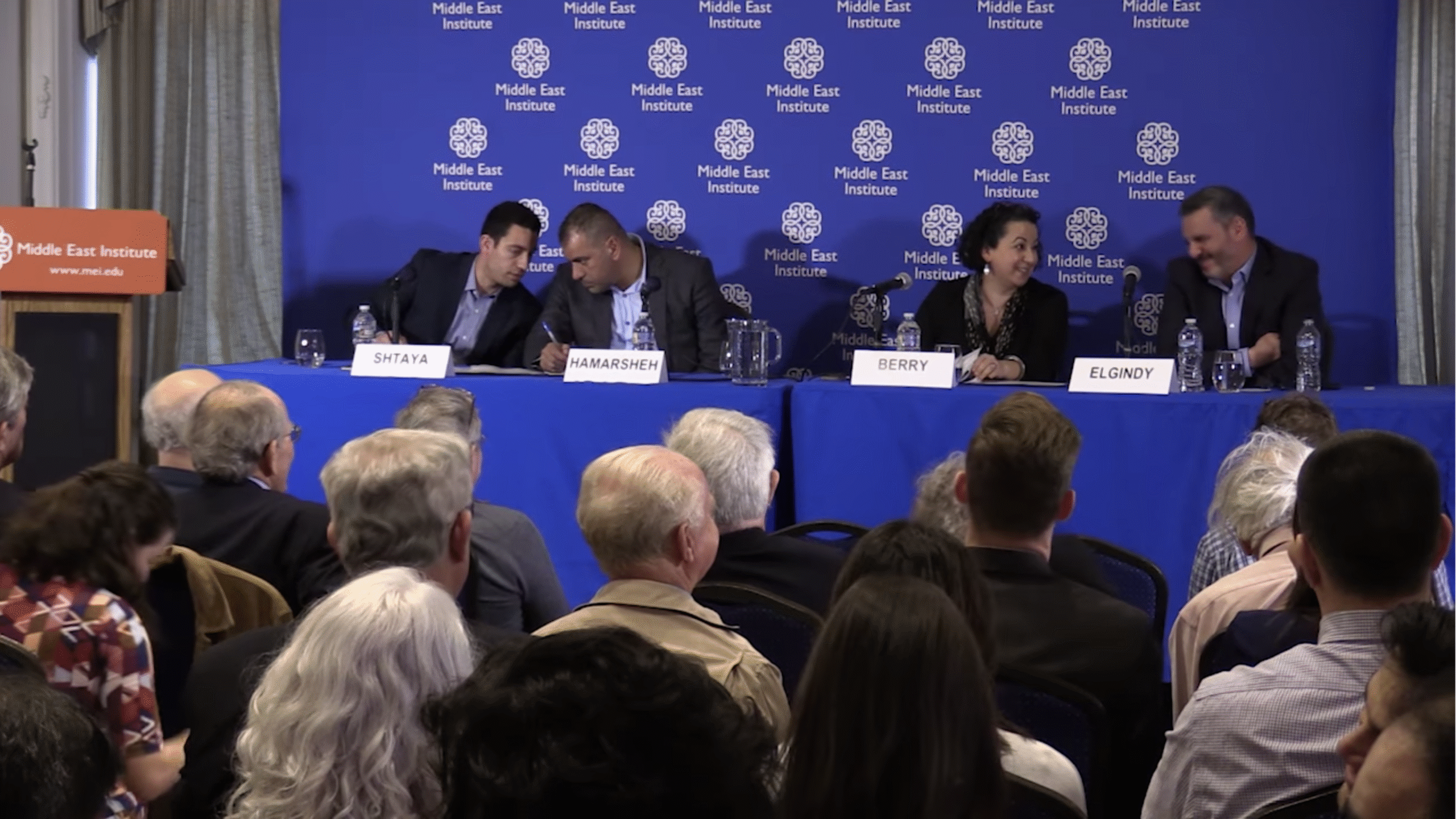
Relations between the U.S. and the Palestinians are in free-fall. The Trump administration’s decisions to recognize Jerusalem as Israel’s capital and then cut funding to UNRWA to force the Palestinians back to the negotiating table have been met with mass protests and official recriminations. Meanwhile, peace has never seemed more distant, with a recent poll showing support for a two-state solution at a historic low among both Israelis and Palestinians.
The war in Afghanistan, the longest in U.S. history, shows little sign of winding down. Despite hundreds of billions of dollars in military aid and state support, Afghanistan still struggles with resilient Taliban and Islamic State insurgencies. Recent brazen terrorist attacks and growing disunity among the country’s political leadership raise new doubts about its future.
Alive in Graves: A film screening and discussion on Syria's detainees
Tens of thousands have been subjected to enforced disappearance in Syria since 2011. The regime is responsible for a majority of these detentions, but various armed groups have been guilty of the practice as well. Amnesty International has warned that “the plight of those who have vanished after being arrested by the authorities or detained by armed groups is a tragedy that has been largely ignored internationally.”
In the wake of his announcement to relocate the U.S. embassy in Israel to Jerusalem, President Trump has also vowed to cut funding to the United Nations Relief and Works Agency for Palestine Refugees (UNRWA) by 83 percent, in a stated effort to bring the Palestinian Authority to the negotiating table. International governments and NGOs swiftly condemned these funding cuts by the United States, citing the critical role UNRWA plays in promoting security and stability in the region through health, education, and assistance programs for Palestinian refugees.
Seven years after the outbreak of the Arab Spring in North Africa, demonstrators are taking to the streets again. In Tunisia, protesters demand change to new austerity laws, which compound already stagnant economic conditions and youth unemployment. Protests have also occurred in the small town of Jerada in Morocco following the deaths of two young miners. Both of these movements reflect ongoing socio-economic inequalities and were met with governmental crackdown.
President Trump’s decision to recognize Jerusalem as Israel’s capital and to relocate the U.S. embassy there was met with Arab and international censure. The United Nations General Assembly voted 128 to 9, with 35 abstentions, for a resolution demanding that the United States rescind this declaration. Human rights groups decry the decision as a death knell for the two-state solution.
January 24, 2018 – Turkey began 2018 embroiled in domestic dissent and diplomatic friction. Last April’s constitutional referendum was met with widespread criticism as an attempt by President Erdogan to consolidate power. Activists and journalists face increasing restrictions on their rights, the government continues its crackdown on the opposition, and debates swirl over the future of Turkey’s economy, the Kurdish question, and relations with the United States and European Union.
January 12, 2018 – The protests shaking provincial cities and towns in Iran since December 28, 2017 are a new and different phenomenon for the Islamic Republic. Young, politically voiceless people of modest means are apparently frustrated over the economic prospects and inequities they perceive. The Middle East Institute (MEI) and Radio Free Europe/Radio Liberty (RFE/RL) were pleased to provide an inside view of the demonstrations and how they contrast with the “Green Movement” of 2009 or an Iranian “spring” of the like that spread through the Arab world in 2011.
January 10, 2018 – Mobile technologies for consuming and spreading information are empowering individuals and nonstate actors in politics and in conflicts. Social media activists scrutinize authoritarian and democratic powers alike. Violent extremists such as ISIS have used the web to advance their ideologies, project invincibility, undermine governments, and sow fear and hatred. The information battlefield surrounds all internet users.
December 4, 2017- The Middle East Institute (MEI) and the Friedrich Ebert Foundation were pleased to host MEI’s 8th Annual Conference on Turkey. At a time of critical internal developments and international tensions, this program of three panels on Turkey’s domestic politics, economy, and foreign relations featured Turkish, European, and U.S. office-holders, policymakers, and expert analysts from both sides of the Atlantic.
Conditions Facing Religious Minorities in Iraqi Kurdistan (Livestream)
Surrounded by conflict and grappling with a rapidly changing political landscape, the Kurdistan Region of Iraq (KRI) stands out as a locus of relative stability in its region. A recently-released report by the United States Commission for International Religious Freedom (USCIRF), entitled “Wilting in the Kurdish Sun: The Hopes and Fears of Religious Minorities in Northern Iraq,” highlights the difficulties faced in the KRI to address religious freedom.
November 29, 2017- Syrian protest art served as a critical form of non-violent expression during the uprisings against the Assad government starting in 2011. Recognizing the work’s historic significance, the British Museum recently acquired a collection of posters, prints drawings and photographs produced during the conflict, and turned them into a unique exhibit, “Living Histories.”
Public Opinion in a Conflicted Middle East (Livestream)
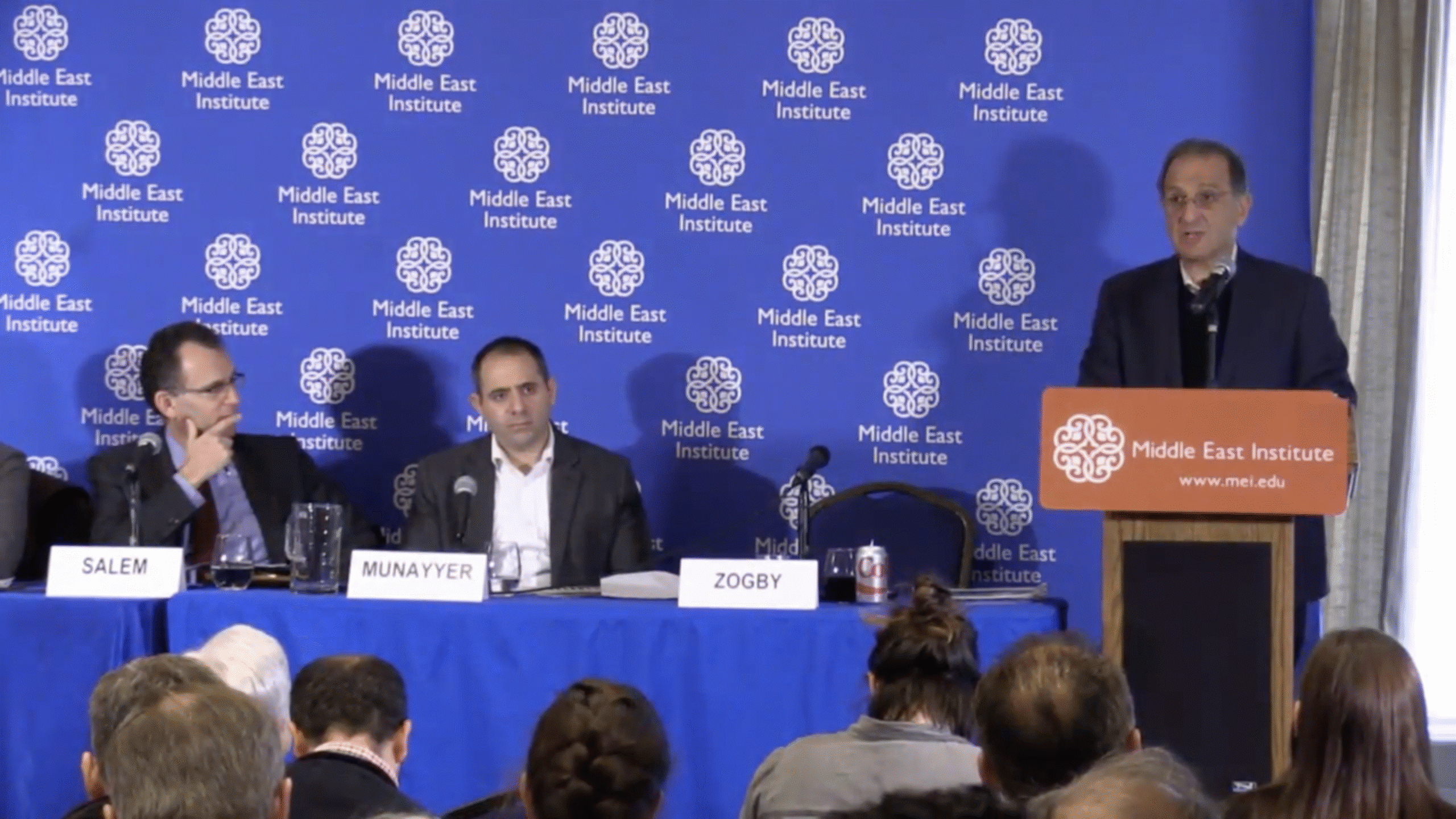
The Middle East Institute (MEI) and the Arab American Institute (AAI) are pleased to host James Zogby (AAI and Zogby Research Services) for the presentation of fresh polling results from across Egypt, Lebanon, Jordan, Palestine, Iraq, Saudi Arabia, the UAE, Iran, and Turkey. The report examines opinions from 7,800 respondents about the U.S. and other regional states’ roles in Syria, Iraq, and Yemen. It also looks at Trump Administration policy, political Islam, prospects for Israeli-Palestinian peace, the Iran nuclear deal, and the region’s refugee crisis.