Skip to Content

Research & Commentary Results

Filter by
827 Results
Priority policies for an economic recovery in Lebanon
Photo by Golden_Brown via Getty Images
  • Analysis
  • Priority policies for an economic recovery in Lebanon

    The current government in Lebanon is keen to encourage financial recovery and find a new path to economic growth. A thorough understanding of the causes behind the country’s recession and the factors constraining a recovery are necessary to shape policy priorities. These are also important as an input into the discussions of the 2026 budget and to the ongoing negotiations with the International Monetary Fund (IMF). Using the wrong framework for these decisions could yield low economic growth, which would be harmful for a quick and decisive economic recovery. Conversely, improved economic outcomes and broad buy-in, following public consultations, will ease the implementation of politically difficult reforms. Thus, policymakers must take great care to develop a narrative about how to achieve progress in the short and medium terms that is adjusted to local circumstances.

    October 20, 2025

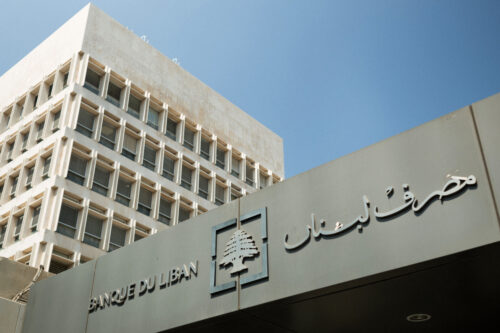
    Lebanon’s monetary crisis and the future of the Central Bank
    Photo by Anwar Amro/AFP via Getty Images
  • Analysis
  • Lebanon’s monetary crisis and the future of the Central Bank

    While the banking crisis remains unresolved, there is still ample scope for Lebanon’s central bank to advance reforms and set the stage for a sustainable economic recovery even without a comprehensive reform program supported by the IMF.

    October 20, 2025

    Defining and stabilizing Lebanon’s borders
    Photo by Christina Assi/AFP via Getty Images
  • Analysis
  • Defining and stabilizing Lebanon’s borders

    The central challenge facing Lebanon today is whether the country will graduate to functional statehood or continue struggling to survive. Yet with Lebanese officials now insisting that the state “monopolize arms” and become the decisive arbiter on matters of war and peace, a relevant question arises: Where, territorially, does Lebanon begin and end?

    October 20, 2025

    An international hands-on approach to Lebanon
    Photo by Houssam Shbaro/Anadolu via Getty Images
  • Analysis
  • An international hands-on approach to Lebanon

    To encourage and incentivize long-overdue structural reforms, the European Union and the broader international community should adopt a more proactive, hands-on approach to Lebanon. The current context calls for an approach that balances assistance delivery with active support to the Lebanese government in its quest to reform and rebuild the state.

    October 20, 2025

    Has Pakistan agreed to use nuclear force to defend Saudi Arabia?
  • Video
  • Has Pakistan agreed to use nuclear force to defend Saudi Arabia?

    Saudi Arabia and Pakistan signed a mutual defense pact on September 17, 2025, declaring that “any aggression against either country shall be considered an aggression against both.” The wording of the agreement sparked speculation that Pakistan might use its nuclear capabilities to defend Saudi Arabia. MEI’s F. Gregory Gause contends otherwise, offering insight into the history and strategic calculations driving the deal. To learn more about the deal, visit our website.

    Pakistan’s strategic defense pact with Saudi Arabia: A new security architecture in the wider Middle East
    Photo via Saudi Ministry of Foreign Affairs
  • Analysis
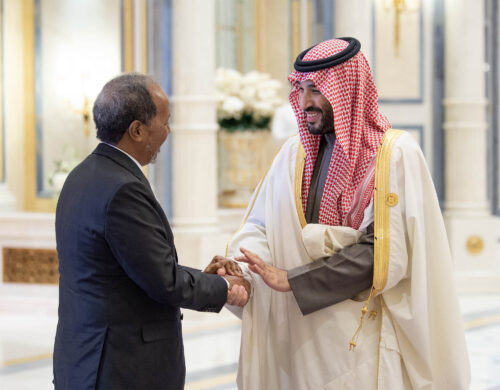
  • Pakistan’s strategic defense pact with Saudi Arabia: A new security architecture in the wider Middle East

    Following Israel’s September 9 strike on Hamas targets in Qatar, Pakistan has taken swift and significant foreign policy steps in response and adopted an unusually assertive stance. This shift was largely influenced by Pakistan’s military chief, Field Marshal Asim Munir. The latter is determined to enhance his country’s strategic autonomy and diplomatic leverage in an increasingly complex international environment by positioning Pakistan as a key security actor and an emerging middle power on the global stage.

    Silent leverage, quiet gains? China and the Saudi-Pakistan defense pact
    Photo by Madoka Ikegami-Pool/Getty Images
  • Analysis
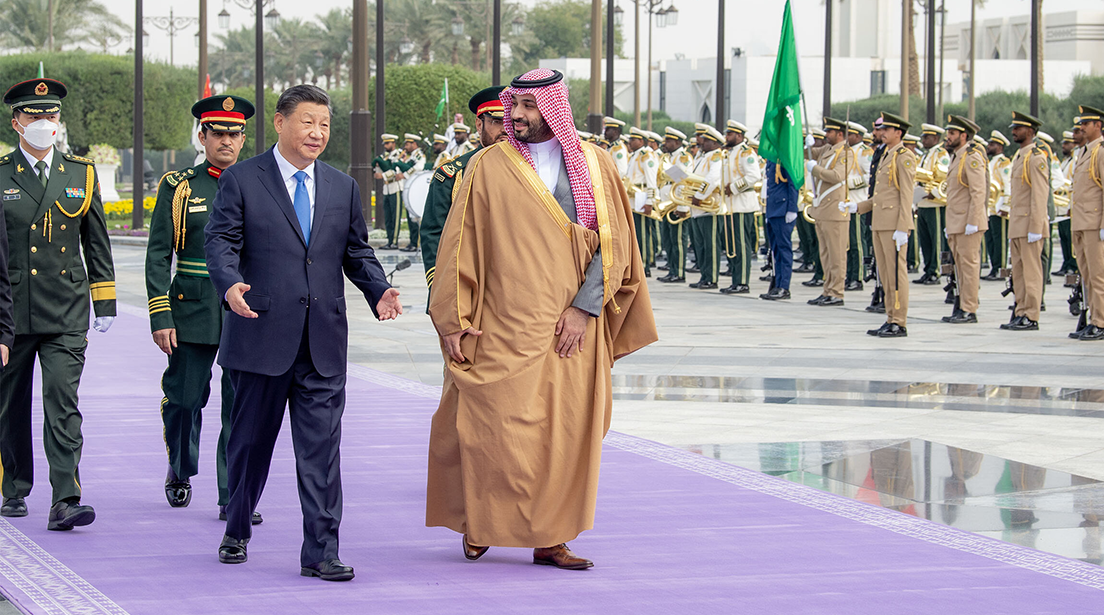
  • Silent leverage, quiet gains? China and the Saudi-Pakistan defense pact

    The Strategic Mutual Defense Agreement (SMDA) between Saudi Arabia and Pakistan, signed in Riyadh on September 17, is far more than a bilateral pledge. It represents a profound reordering of alignments in the Gulf and South Asia, reflecting and reinforcing the broader erosion of US preeminence in the Eurasian security architecture. While much of the initial commentary centered on the striking commitment of a wealthy Gulf monarchy to the defense of a nuclear-armed South Asian state, as well as the question of whether Pakistan had in fact extended its nuclear umbrella to Saudi Arabia, the deeper story is arguably China’s potential advance.

    Moroccan youth angrily protest government’s failed development promises
    Photo by Abdel Majid Bziouat/AFP via Getty Images
  • Analysis
  • Moroccan youth angrily protest government’s failed development promises

    Hundreds of young Moroccans are protesting across 11 cities since September 27 under the banner “GenZ 212.” The central trigger behind the demonstrations has been a deep popular frustration with Morocco’s persistent inability to deliver on its development plans and promises. This sort of broad disaffection will be challenging for the government to address quickly and credibly.

    A Middle East NATO? Regional Security Options After Doha
    Middle East Institute
  • Podcast
  • A Middle East NATO? Regional Security Options After Doha

    Israel’s September 9 strike on Hamas leaders in Doha rattled Gulf capitals and revived a decades-old debate over whether the region needs a NATO-style defensive alliance. MEI Senior Fellow Jason Campbell joins hosts Alistair Taylor and Matthew Czekaj to unpack why past attempts at collective defense have fallen short, whether this moment is different, and what the crisis means for US security strategy in the Middle East.

    September 25, 2025

    Can Lebanese Democracy Be Saved?
  • Podcast
  • Can Lebanese Democracy Be Saved?

    Once hailed as a rare democracy in the Middle East, Lebanon has now slipped into the ranks of closed autocracies. Decades of corruption, sectarian rule, and foreign meddling have left the country reeling — and the past year brought assassinations, mass displacement, and Israel’s full-scale war against Hezbollah in the south. With its economy in free fall and its political system on life support, Lebanon stands at a crossroads: could shifts in regional power, efforts to disarm Hezbollah, and a change in leadership pave the way for recovery, or will instability deepen?

    Israel’s Doha strike could further destabilize region, undermine US security partnerships
    Photo by JACQUELINE PENNEY/AFPTV/AFP via Getty Images
  • Analysis
  • Israel’s Doha strike could further destabilize region, undermine US security partnerships

    The reverberations of Israel’s strike on the Hamas negotiating team in Doha yesterday are still rippling across the globe and will continue to for the foreseeable future. Its ramifications are profound and will alter the geopolitical landscape not just in the Middle East but likely on a global scale.

    UNIFIL should reset or go home
    Photo by Niall Carson/PA Images via Getty Images
  • Analysis
  • UNIFIL should reset or go home

    At the end of August, the future of the United Nations Interim Force in Lebanon (UNIFIL), established nearly 50 years ago, goes on trial in New York, where the Security Council will debate the renewal of its mandate. Nearly two decades after its transformation under UN Security Council Resolution 1701, UNIFIL is now part of the problem it was created to solve. Ten thousand blue helmets from almost 50 countries, including major North Atlantic Treaty Organization (NATO) members, failed to stop the latest conflict between Israel and Hizballah, and, if business continues as usual, will fail to prevent the next.

    Lebanon and the UNIFIL Mandate: Disarming Hizballah and Reclaiming Sovereignty
    Middle East Institute
  • Podcast
  • Lebanon and the UNIFIL Mandate: Disarming Hizballah and Reclaiming Sovereignty

    With its new government at the half-year mark and the UNIFIL international peacekeeping force’s mandate due for reauthorization at month’s end, Lebanon stands at a pivotal moment. In this episode of Middle East Focus, hosts Alistair Taylor and Matthew Czekaj are joined by MEI Senior Fellow Fadi Nicholas Nassar to evaluate whether the Lebanese state can reclaim its sovereignty, starting with the disarmament of Hizballah and the enforcement of a cease-fire.

    August 7, 2025

    Digital frontlines: What the 12-day war revealed about the evolution of Iran’s cyber strategy
    Photo by SASAN/Middle East Images/AFP via Getty Images
  • Analysis
  • Digital frontlines: What the 12-day war revealed about the evolution of Iran’s cyber strategy

    During June’s Israel-Iran war, a quieter but significant battle played out in cyberspace, highlighting how Tehran has refined its use of digital tools to shape the battlespace, control domestic narratives, and project influence abroad. While largely ineffective in operational terms, Iran’s cyber response marked a new phase in its strategic evolution.

    August 4, 2025

    One year of Pezeshkian: The scapegoat-in-waiting
    Photo by Raheb Homavandi/AFP Via Getty Images
  • Analysis
  • One year of Pezeshkian: The scapegoat-in-waiting

    President Masoud Pezeshkian’s first year in office has been defined by Iran’s familiar political structural constraints, external crises, and a moderate-reformist base forever frustrated with his cautious pragmatism and unfulfilled promises. His July 2024 election was undeniably a setback for hardliners. Yet one year later, the assessment is sobering: While Pezeshkian has in some ways perhaps helped in slowing the hardline march, he has not made any fundamental difference in how the Islamic Republic is run. Every decision requires second-guessing Supreme Leader Ali Khamenei’s next move, and even as a president boxed in by the system with limited powers, he is constantly under the sword of Damocles.