Egypt’s Economy: Missed Opportunities and Flawed Priorities
External Publication
February 29, 2024
Share
For the past several decades, successive Egyptian governments have practised the economic equivalent of riding a skateboard without a helmet; risky but manageable in the short run as long as one doesn’t encounter any obstacles. However, the inevitable has happened. Egypt’s economy smashed into not one, but two, major obstacles; a pandemic, which it just managed to stagger away from (World Bank, 2021), followed by the full-scale Russian invasion of Ukraine.
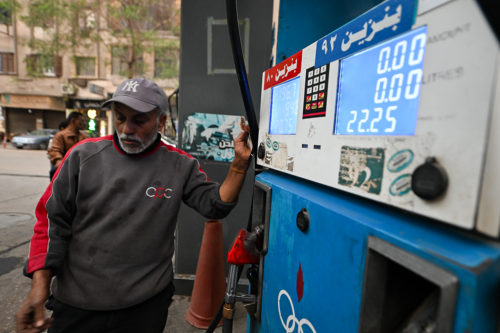
Both of these developments have had devastating and far-reaching global ramifications that are in no way unique to Egypt, but the country’s economy has inherent weaknesses that have long made it particularly vulnerable to external shocks. Those weaknesses include a long-standing and risky reliance on foreign debt, particularly short-term loans, coupled with massive food and fuel imports. Put simply, Egypt spends more than it makes and it has borrowed heavily to feed this habit. A staggering 56% of the current fiscal year’s budget is being allocated to debt servicing (Kassab, 2023). The Russian war on Ukraine disrupted global supply chains and sent prices soaring, making the cost of Egypt’s imports prohibitive and dramatically reducing available foreign currency deposits. Those dwindling deposits have in turn crippled imports across every sector of society; medicines and medical supplies, machinery and agricultural fodder, which has, in turn, affected the price and availability of livestock, causing food prices to soar. A devaluation of the Egyptian Pound, mandated by the latest loan from the International Monetary Fund (IMF, 2022) in December 2022, has seen the local currency lose almost half its value against the dollar since the beginning of the year. Another of the IMF’s conditions was that the State (and by direct implication the military) relinquish its outsize role in the economy and allow the private sector to become the engine of growth that it normally would be.
The Middle East Institute (MEI) is an independent, non-partisan, not-for-profit, educational organization. It does not engage in advocacy and its scholars’ opinions are their own. MEI welcomes financial donations, but retains sole editorial control over its work and its publications reflect only the authors’ views. For a listing of MEI donors, please click here.