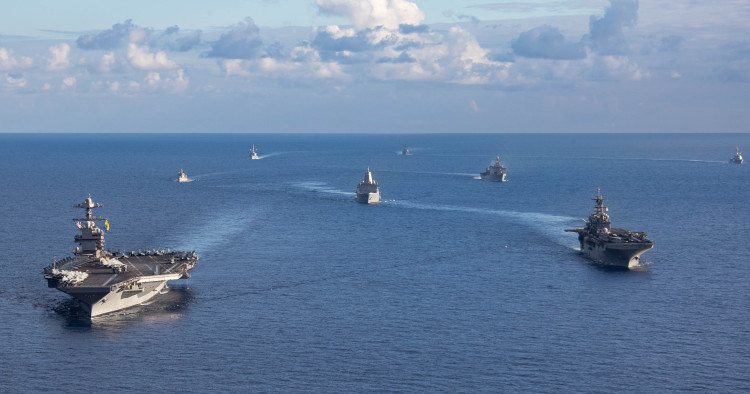
The Biden administration has largely relied on airstrikes to prevent the Houthis from causing further harm to international maritime trade in the Red Sea and the Gulf of Aden. But as we have seen already, this approach is unlikely to work against an armed group that has survived years of such one-off attacks from above. To effectively degrade the military capacity of the Houthis, a comprehensive and fully-resourced interdiction regime at sea is needed to target their supply lines and deny them the use of various forms of Iranian assistance.
Even though the Houthis have stated that their attacks are in response to Israel’s war against Hamas in Gaza, their violence cements their political control in northern Yemen. It is also consistent with Iranian efforts to achieve regional primacy. So, those attacks are likely to continue, regardless of what happens in Gaza; after all, they were occurring, albeit with less frequency, before the Oct. 7 attacks by Hamas kicked off the latest regional conflict.
Continue reading on Breaking Defense
US Navy photo by Mass Communication Specialist 3rd Class Maxwell Orlosky
The Middle East Institute (MEI) is an independent, non-partisan, not-for-profit, educational organization. It does not engage in advocacy and its scholars’ opinions are their own. MEI welcomes financial donations, but retains sole editorial control over its work and its publications reflect only the authors’ views. For a listing of MEI donors, please click here.
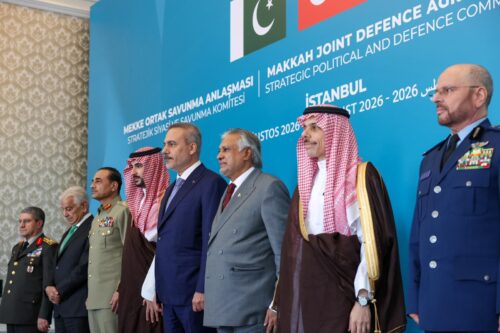
The Mecca Alliance Meets the Red Sea – Saudi Arabia’s New Defense Pact Faces Its First Major Test