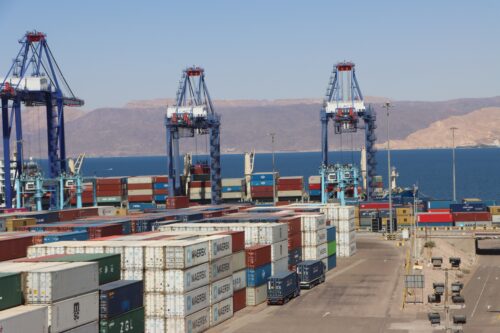
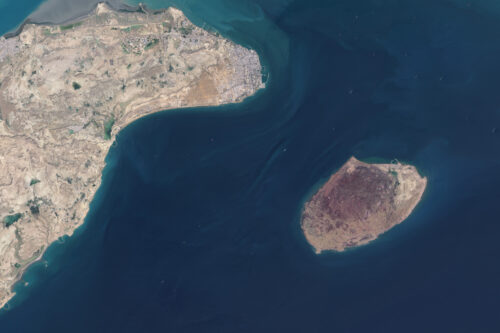
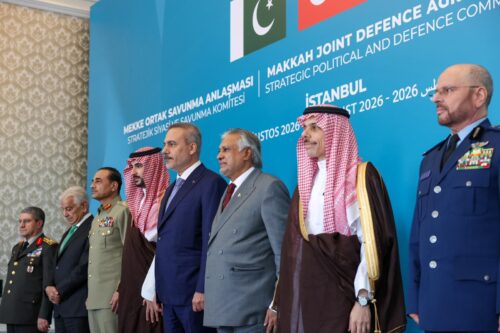
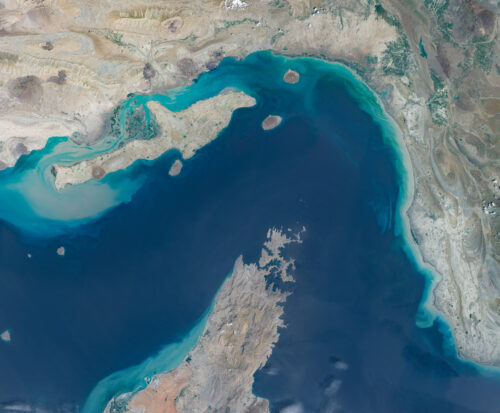
President Trump has said that he went to war to stop Iran from ever having a nuclear bomb. Unfortunately, the war he launched led Iran to discover that it already had an extremely effective doomsday weapon—one that promised the economic equivalent of mutual assured destruction. The Strait of Hormuz has always been vulnerable; the United States has always known that Iran might try to close it if attacked. But neither Washington nor Tehran imagined how easy it would be for Iran to do so, how hard it would be for the U.S. to reopen it, or how widely and rapidly the economic effects of a closed strait would fan out.
Photo by Gallo Images/Orbital Horizon/Copernicus Sentinel Data 2026
The Middle East Institute (MEI) is an independent, non-partisan, not-for-profit, educational organization. It does not engage in advocacy and its scholars’ opinions are their own. MEI welcomes financial donations, but retains sole editorial control over its work and its publications reflect only the authors’ views. For a listing of MEI donors, please click here.