Iran’s foreign policy has generally been characterized by continuity in the postrevolutionary period, yet its motives have transformed over time. This research paper argues that Islamic fundamentalism goaded and motivated foreign policy in the first decade of the Islamic Republic of Iran. After the death of Ayatollah Ruhollah Khomeini, the country’s foreign policy maintained a fundamentalist posture, but was forcefully driven by policies to guarantee its political survival. From 1989 to the present, core revolutionary elites have applied ideology and religious symbolism to cloak policies to avoid normalization with the United States, pursue an anti-Israeli struggle to reinvigorate confrontation with Washington, and seek leverage vis-àvis the United States and Israel by nurturing proxies, an extensive missile industry, and a robust nuclear program. These components of leverage constitute a playbook to practice deterrence, with occasional compromises to circumvent large-scale military confrontation with the United States.
Continue reading at The Atlantic Council
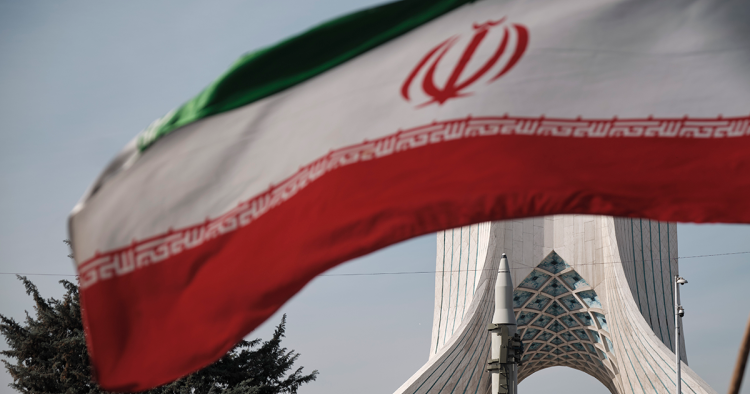
Photo by Morteza Nikoubazl/NurPhoto via Getty Images
The Middle East Institute (MEI) is an independent, non-partisan, not-for-profit, educational organization. It does not engage in advocacy and its scholars’ opinions are their own. MEI welcomes financial donations, but retains sole editorial control over its work and its publications reflect only the authors’ views. For a listing of MEI donors, please click here.