Iran’s foreign policy has generally been characterized by continuity in the postrevolutionary period, yet its motives have transformed over time. This research paper argues that Islamic fundamentalism goaded and motivated foreign policy in the first decade of the Islamic Republic of Iran. After the death of Ayatollah Ruhollah Khomeini, the country’s foreign policy maintained a fundamentalist posture, but was forcefully driven by policies to guarantee its political survival.
Will BRICS membership recast Iran’s foreign policy?
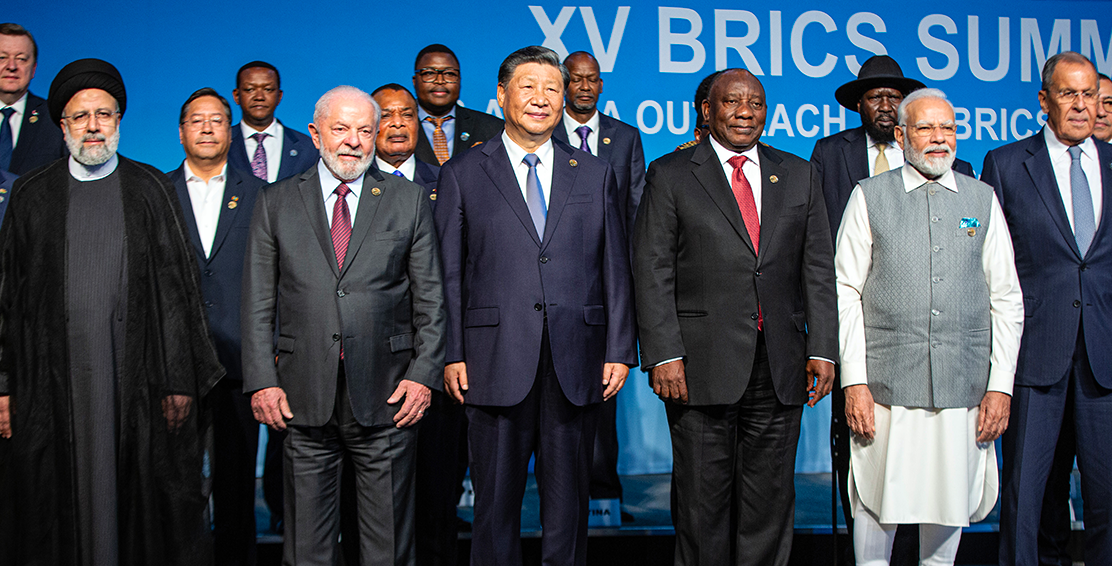
Iran has said that its membership in the BRICS grouping of major emerging economies, announced at the BRICS summit in South Africa in late August, is an “historic achievement,” but what’s really driving Tehran’s actions and how much is its membership likely to achieve?
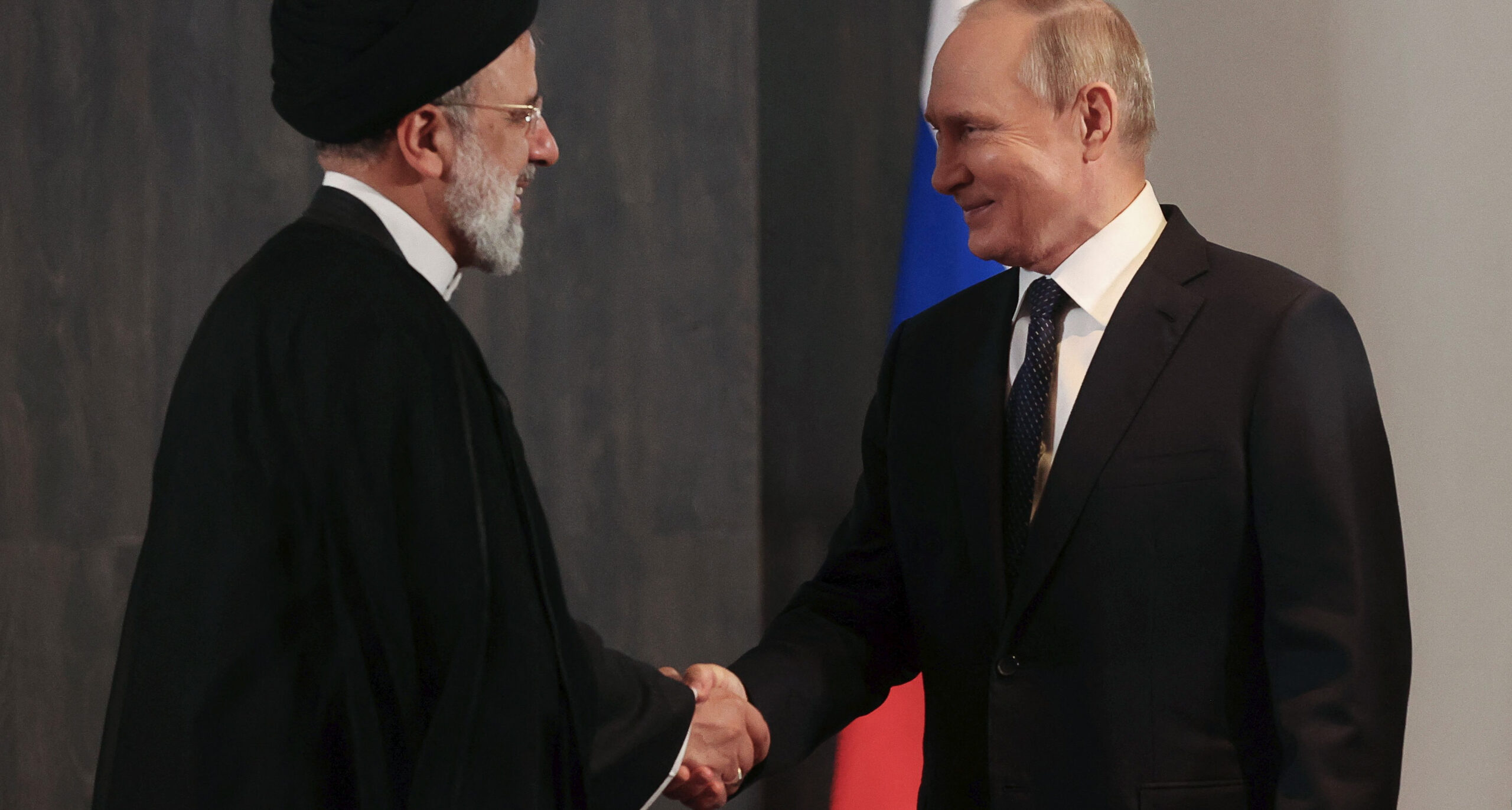
Diagnosing Iran’s emerging pivot toward Russia and China
Since Raisi’s election to the presidency, Iran is pursuing a two-tiered foreign policy: a vigorous and determined shift toward Russia and China on the one hand, while, on the other hand, making incremental concessions on its nuclear program to give the impression that another deal can be struck to replace the JCPOA. The former approach is being implemented with almost zero fanfare and the latter with extensive publicity.
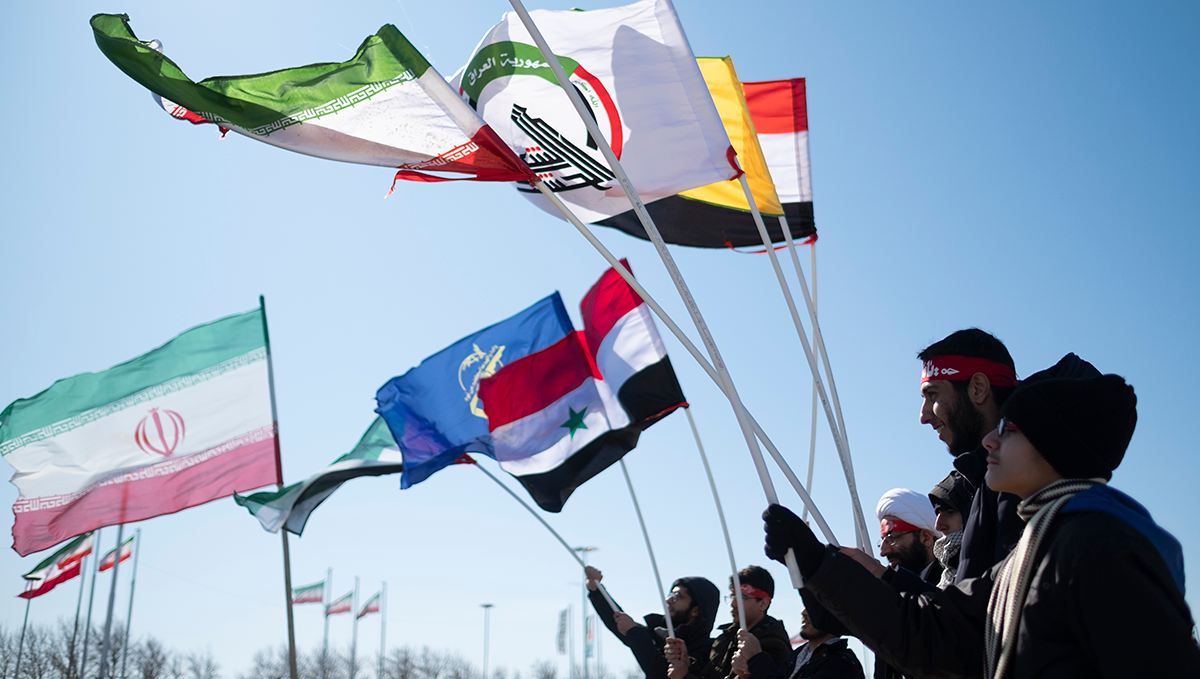
Iran’s playbook in the Arab world: Ideology or domestic politics?
Over a span of more than four decades, Iran’s foreign policy toward the United States, Israel, and the Arab world has demonstrated remarkable continuity. The ideological underpinnings of the first decade were substituted with regime security and national security exigencies in the later decades.
For the past year, negotiations over the revival of the 2015 Iran nuclear deal, known as the Joint Comprehensive Plan of Action (JCPOA), have not been conclusive. It appears that Iran’s current JCPOA calculations are shaped by three key factors: the future transition of power, lessons learned from the Ukraine war, and changes in the emerging international order.
The role of algorithms in the persistent US-Iranian impasse
Even if we assume that there is goodwill between the U.S. and Iran to improve relations, the power of algorithms will place major stumbling blocks in the way of efforts toward future normalization. A priori programming of foreign policy options and lines of argument have led to immutable algorithms causing the relationship between the two countries to calcify. On both sides, the key personalities who define national security, interpret events, and shape policies toward one another have had virtually no direct contact or experiences with each other’s country. They interpret events, extract meanings, react to one another, and delineate policies through prisms, images, metaphors, binaries, groupthink, and in the lexicon of artificial intelligence, algorithms.