Post-Saddam Iraq at 23: The War It Never Wanted Is Back
External Publication
March 21, 2026
Share
On the anniversary of the 2003 invasion, Iraq finds itself trapped between the same external powers that have defined — and destroyed — its last quarter-century
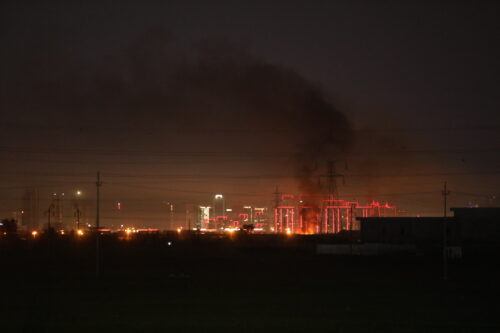
When American bombs first fell on Baghdad on 19–20 March 2003, the stated mission was liberation. Twenty-three years later, Iraq is again being bombed—this time not by U.S. forces seeking regime change, but by U.S. and Israeli strikes targeting Iranian assets and by Iranian-backed militias attacking American facilities.
The anniversary is heavy with irony. The invasion produced immense death, destruction, and prolonged instability. Iran—once Iraq’s bitter enemy during the brutal eight-year Iran-Iraq War (1980-88)—was arguably the biggest strategic beneficiary of the U.S.-led invasion, filling much of the political and security vacuum that followed the fall of Saddam Hussein.
Now those two legacies have collided. A country reshaped by American intervention has become a battleground for America’s confrontation with the regional power that intervention unwittingly helped empower.
The Middle East Institute (MEI) is an independent, non-partisan, not-for-profit, educational organization. It does not engage in advocacy and its scholars’ opinions are their own. MEI welcomes financial donations, but retains sole editorial control over its work and its publications reflect only the authors’ views. For a listing of MEI donors, please click here.