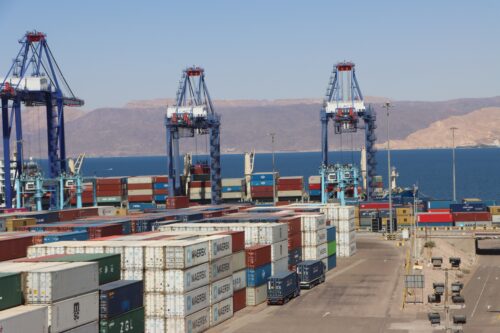
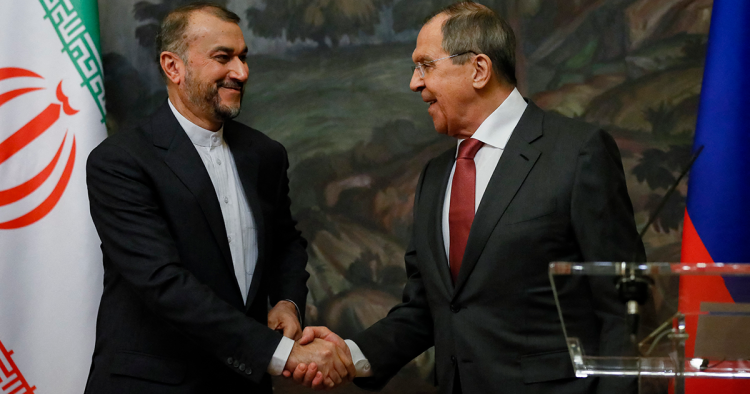
One of Russian President Vladimir Putin’s special envoys keeps visiting Iran. Igor Levitin, Putin’s advisor, has visited Tehran twice in 2023, totaling five visits in the last six months. During his latest visit, Levitin met with top Iranian figures, including Mohammad Mokhber, first vice president and top economic coordinator, and Ali Shamkhani, secretary of the Supreme National Security Council. Levitin’s repeated visits are linked to negotiations between Tehran and Moscow to complete the International North-South Transport Corridor (INSTC), a new trading route connecting the Indian Ocean to Russia through Iran.
Much hope is presently invested in Iranian-Russian economic relations as an emerging axis of sanction-busters. Shamkhani characterized the INSTC as a project that could play a “decisive role in changing the geometry of goods transit in the region.” According to Mokhber, the INSTC could turn Iran into Russia’s export outlet for agricultural goods destined for markets in the broader Middle East. To this end, Mokhber called for a new committee to push Iran and Russia toward closer coordination on infrastructure projects such as railroads and highways. But the Iranian regime has a history of exaggerating foreign economic partnerships to counter perceptions that Tehran’s foreign policy—and the sanctions it provokes—is undermining the country’s economic potential.
The Middle East Institute (MEI) is an independent, non-partisan, not-for-profit, educational organization. It does not engage in advocacy and its scholars’ opinions are their own. MEI welcomes financial donations, but retains sole editorial control over its work and its publications reflect only the authors’ views. For a listing of MEI donors, please click here.