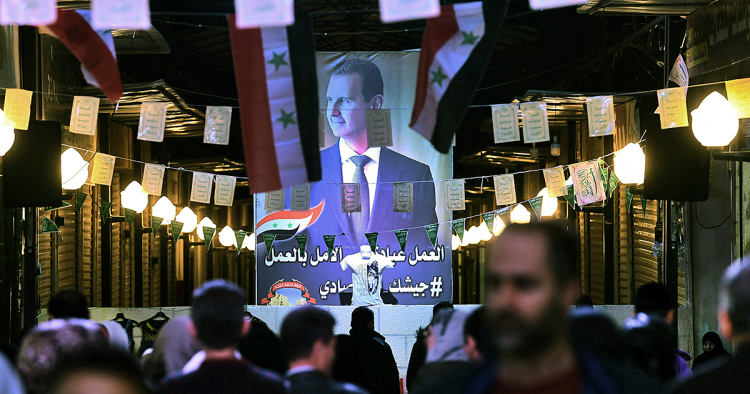
Syria’s crisis is set to enter its 13th year in March. Although the level of violence across the country remains relatively low today compared with earlier years, the crisis is a long, long way from over. Within Syria, at least six distinct conflicts involving internal actors and foreign governments are ongoing to this day, and all of them show more signs of escalating than calming down.
The country remains in ruins, society has been torn apart, and Bashar al-Assad’s regime rightly remains an international pariah. Every poll of Syrian refugees in Syria’s neighboring states continues to underline their complete lack of intent to return to a Syria ruled by Assad, and in 2022, illegal Syrian migration to Europe rocketed by 100 percent. That is likely a harbinger of what is to come in 2023.
With the exception of the ongoing campaign against the Islamic State, Syria has become an afterthought for most. In recent years, it has become increasingly common to hear claims that “Assad has won” or that “the war is over.” Whether driven by fatigue or genuine analysis, these assertions were as inaccurate in 2019 as they are today. With Turkey’s impending elections, Russia’s struggles in Ukraine, Iran’s energy crisis, and persistent regionalhostilities associated with Iran, the prospect for major destabilizing developments in Syria this year are significant.
The Middle East Institute (MEI) is an independent, non-partisan, not-for-profit, educational organization. It does not engage in advocacy and its scholars’ opinions are their own. MEI welcomes financial donations, but retains sole editorial control over its work and its publications reflect only the authors’ views. For a listing of MEI donors, please click here.