The consensus among analysts is that Hamas is down, but hardly out. The group may be badly battered, but it has been around since 1987, and in that time, it has been repeatedly attacked by Israel and has always grown back. The conditions that gave rise to the organization—occupation, dispossession, and humiliation at the hands of Israel—are as severe as ever. And in the Gaza Strip, there is no comprehensive alternative to Hamas’s governance. Even in its weakened state, the group has institutional memory, administrative infrastructure, and coercive capacity that its competitors cannot match.
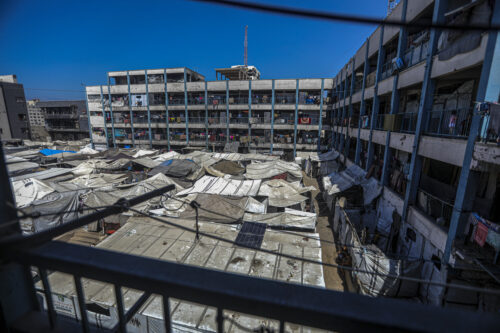
But in truth, Hamas’s two-year war with Israel has decimated the organization beyond the point of recovery. It may still be more powerful than other groups in Gaza. But Israel’s bombing campaigns and invasion have cost Hamas essential military infrastructure, torn apart its leadership, and cut it off from its patrons. As a result, the organization lacks the power to actually rule Gaza. It is suffering from political paralysis and facing financial disaster in the enclave. Finally, it has lost public support: many Gazans blame the group for starting a war that has resulted in the destruction or damage of 90 percent of the homes in the Gaza Strip and the deaths of roughly four percent of the prewar population.
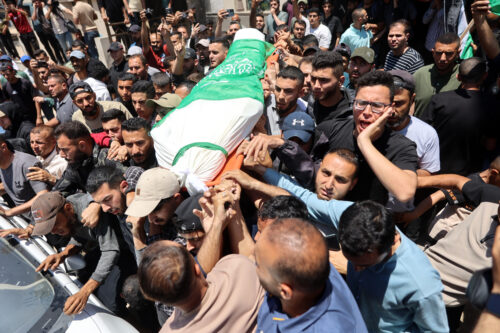
Photo by Majdi Fathi/NurPhoto via Getty Images
The Middle East Institute (MEI) is an independent, non-partisan, not-for-profit, educational organization. It does not engage in advocacy and its scholars’ opinions are their own. MEI welcomes financial donations, but retains sole editorial control over its work and its publications reflect only the authors’ views. For a listing of MEI donors, please click here.