Attacks in recent weeks by Yemen’s Houthis on ships passing through the Bab el-Mandeb strait have increased calls in Washington for a forceful US military response directed at Iranian proxies – and at Iran itself.
Officials in the Department of Defense as well as senior officers in the US military have expressed concern about what they view as a relatively timid US response to the Houthi attacks.
This follows Sen. Tom Cotton’s proposal for ‘massive retaliation’ against Iranians operating in Iraq and Syria, and presidential candidate Tim Scott advocating ‘attacking Iran, not just warehouses in Syria’ during Republican debates.
It’s true that Iranian money, weapons and training have allowed the Houthis and other Tehran-supported militias in the region to launch sophisticated attacks against US personnel and interests in Iraq, Syria, the Red Sea, and elsewhere.
But calls for a kinetic response against Iran imply that US deterrence is woefully inadequate. It seems more accurate to say it has been weakened, but not fatally.
Continue reading on Chatham House website
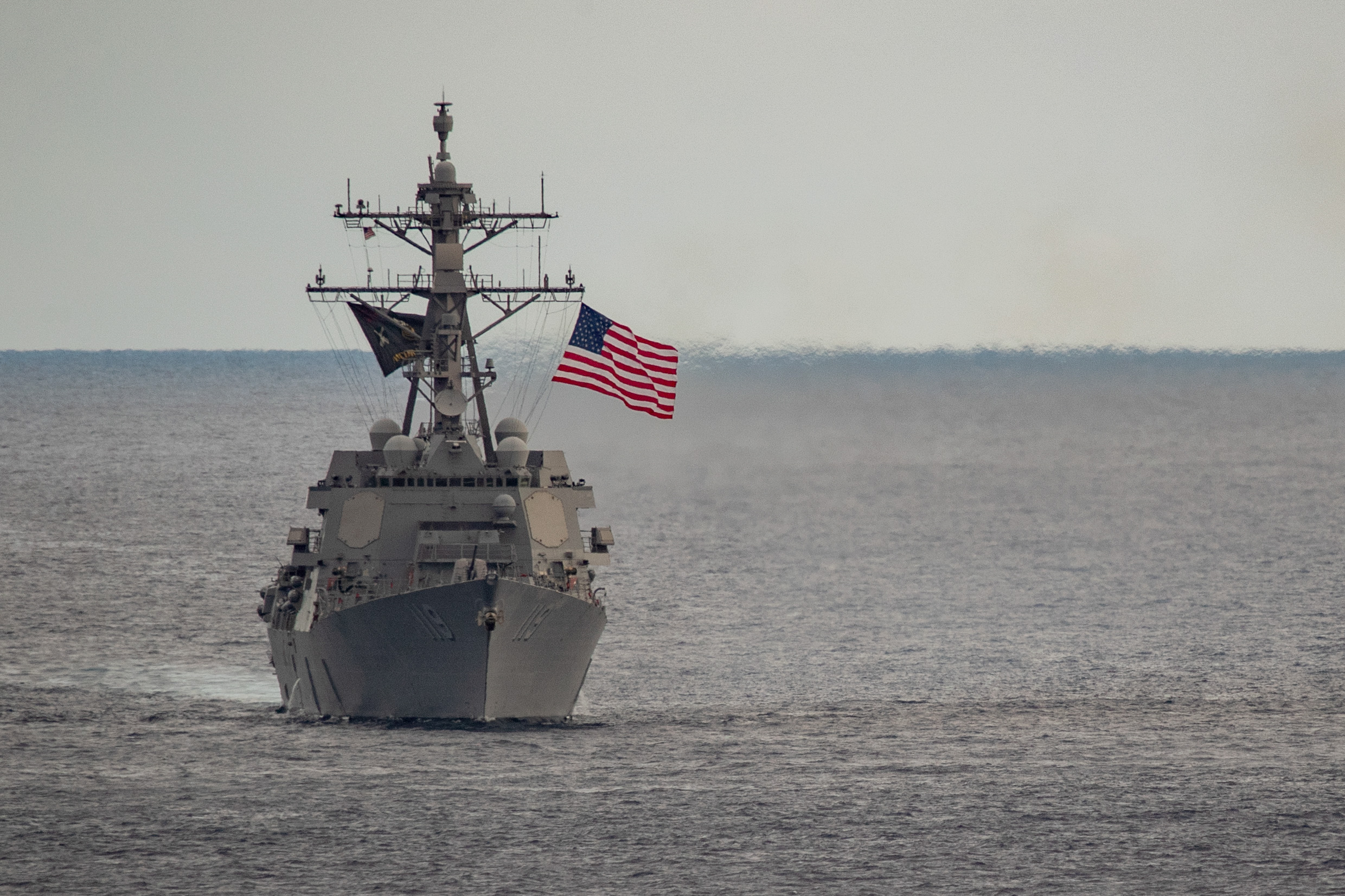
US Navy photo by Mass Communication Specialist 2nd Class Nolan Pennington
The Middle East Institute (MEI) is an independent, non-partisan, not-for-profit, educational organization. It does not engage in advocacy and its scholars’ opinions are their own. MEI welcomes financial donations, but retains sole editorial control over its work and its publications reflect only the authors’ views. For a listing of MEI donors, please click here.
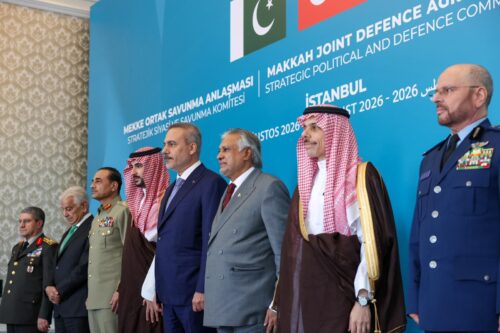
The Mecca Alliance Meets the Red Sea – Saudi Arabia’s New Defense Pact Faces Its First Major Test