My experience is in the greater Middle East, more specifically wars in Lebanon (I served as the United States’ ambassador to this country in 1990-93), Iraq (I was ambassador in 2007-09), and Afghanistan (ambassador during 2011-12 and was later named to the Afghanistan War Commission). This past June, I had the opportunity to visit Ukraine and see a bit of a war I heretofore had only read about. The contrasts with the Middle Eastern wars I had experienced were stunning, as was, in particular, the juxtaposition with the current Iran conflict and the ongoing threat to our Gulf allies. There are lessons to be learned about commitment, intensity, self-reliance, and the importance of alliances. They could serve our allies and ourselves well in both theaters.
What I Saw in Ukraine
I understood the strategic logic behind US and European support for Ukraine in its war with Russia: to deny Moscow a victory that would embolden further aggression against the West. What I did not understand until I traveled to Ukraine last month was the incredible strength and determination of the Ukrainian people to prevail in this fight, forged on the anvil of generational memories of earlier Soviet and Nazi occupations. Their struggle today reinforces the broader transatlantic effort to block the reemergence of the militarism and authoritarianism that produced two world wars in the 20th century; Ukraine is our vital ally on this front. We therefore need to increase our political and military support for the Ukrainian people and those who are keeping them in the fight.
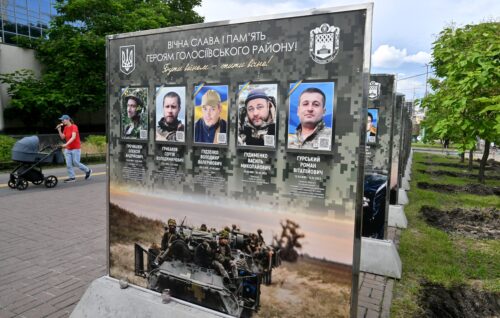
I was one of a small group of Americans visiting Ukraine for a week at the invitation of the United Nations Office of the High Commissioner for Refugees (UNHCR) to assess its work in assisting the millions of internally displaced Ukrainians and others whose homes have been damaged by the Russians in this war, now in its fifth year. UNHCR is the gold standard in the UN system. Led by the dynamic new High Commissioner, Barham Salih (himself an Iraqi refugee who later was president of Iraq), UNHCR is the first to the worst with the most. In Ukraine, the organization’s staff is immediately on the scene of residential strikes, often within minutes, providing emergency assistance as well as longer-term support for those affected. Under the able leadership of country director Bernadette Castel-Hollingsworth, UNHCR officials are clear that they operate in support of the Ukrainian government, not as a substitute for it.
What perhaps impressed me the most in this nation at war was the role played by Ukrainian women. They are in uniform and at the front as snipers, drone operators, and infantry, fighting and dying for their country. They also lead in the civilian effort. In Zaporizhzhia, the provincial capital most heavily targeted by Russia, the head of the provincial council and the acting mayor are both women. The mayor arrived late for a meeting, having raced from directing recovery operations at the site of an attack earlier that morning. “How is your day?” she asked, somewhat out of breath.
In other frontline cities in the east, Kharkiv and Dnipro, women direct municipal relief efforts, and are usually the first on the scene after Russian drone and missile strikes. We met several older women whose homes had been damaged in strikes and were being helped by municipal authorities and by the UNHCR. The apartment of one woman, a widow, had been hit three times. She spends her nights in a nearby air raid shelter but is back home every day and has no intention of leaving Kharkiv, 12 miles from the front. “I will stay.”
To say the Ukrainians are a resilient people is an understatement. Despite nightly drone and missile bombardments in many major cities, life goes on. Cafes, restaurants, and shops bustle. In many respects, it is reminiscent of Britain under the Nazi Blitz of World War II. There has been no commercial air service in Ukraine since the war started in February 2022. Intercity travel is by train. We crossed into Ukraine from Poland by road and took the night train from Lviv to Kyiv. Another train took us six hours east to Dnipro. The trains run on time.

As in London during the Blitz, Kyiv’s subway stations serve as air raid shelters. To keep children safe and avoid interruptions to their education, Ukraine has built more than 200 underground schools. In Kharkiv, one is located in a Cold War-era nuclear bunker, which UNHCR had converted into classrooms for 1,500 students. A summer school class of happy six- and seven-year-olds we toured could have been anywhere; it was in a drone- and missile-proof underground fortress.
Some of the strength of Ukrainians today comes from their harsh history in the 20th century. Joseph Stalin’s enforced collectivization in the 1930s produced a famine that killed millions of inhabitants of Soviet Ukraine. After the start of World War II, Ukraine did not suffer only from Nazi German bombs; it endured a horrific Nazi occupation from 1941 to 1944. We visited Babi Yar, on the outskirts of Kyiv, where upwards of 150,000 people were massacred, including most of the city’s Jewish community.
War crimes continue. We were in Bucha, a town less than an hour’s drive from Kyiv, that saw the high tide of the Russian advance in 2022. Before retreating, Russian soldiers massacred some 435 Ukrainian civilians.
Ukrainians are tired after more than four years of war but remain absolutely determined to resist Russian aggression. We visited a drone factory that produces hundreds of drones a day, from small first person-view (FPV) craft to larger versions that have struck targets in Moscow and beyond. The creativity and resolve of Ukrainians have turned the country into a drone superpower whose technological advances increasingly also benefit its strategic partners and allies — notably, the Arab Gulf states in the recent Iran conflict as well as the US.
Although very much a nation at war, Ukraine is not a militarized society. The streets are alive with private vehicles (and traffic jams). There is a curfew from midnight to 5 a.m., but it does little to stifle a vibrant nightlife. There is scant evidence of censorship. In Kyiv, I visited the Ukraine bureau of Radio Free Europe/Radio Liberty, a US government-funded broadcaster, originally launched during the Cold War, that continues to cover Central Eastern Europe and the post-Soviet space, including Russia (I was formerly on the board of RFE/RL and am currently the board chairman of a sister organization, Middle East Broadcasting Networks). Under the inspired leadership of Bureau Chief Nataliya Sederova, the outlet provides unvarnished coverage of the war, including by embedded teams of journalists on the Luhansk and Donetsk fronts. Both teams are led by women. The investigative reporters at RFE/RL dig deeply into allegations of governmental corruption, resulting in discomfort for some officials and libel lawsuits — all of which RFE/RL has won — but no serious effort to muzzle the reporting. There is a vibrant civil society, some of whose representatives we met, speaking out against corruption and supporting efforts to curb it.
At every level of government with which we met, from the presidency to the provinces, there was a notable lack of whining. All expressed gratitude for US support and hope that it will continue, but they also conveyed a conviction that this is Ukraine’s war and Ukrainians will fight it. After decades in the Middle East, where popular opinion is that everything seems to be the fault or the responsibility of the US, this attitude was more than refreshing.
Ukrainian courage and international support have effectively produced a stalemate. Russia actually lost more ground than it gained in May. Pressure on Crimea is choking the occupied peninsula’s economy. Long-range Ukrainian drone strikes have targeted energy facilities in Moscow and Volgograd. But President Vladimir Putin is unlikely to simply acknowledge his aggression was a mistake. There is more to come.
Implications for and From the Middle East
My experience in Ukraine gave me a different context for reflecting on the wars in the Middle East with which I am more familiar, in the Gulf and in Lebanon. There are clear points of commonality. First, these are very long wars. The Ukrainian conflict did not start in 2022 or even 2014 with the Russian assault on Crimea and the Donbas. Its roots lie in the Soviet era with the millions of Ukrainians who died in the Soviet-induced famine of 1932-33 and the horrific Nazi occupation of 1941-44. In Lebanon, the first major Israeli incursion against the Palestine Liberation Organization (PLO) was in 1978, almost half a century ago. The Islamic Republic has been implacably hostile toward the US since its founding, also almost half a century ago. One could argue that the 1979 takeover of the US Embassy in Tehran was an act of war. The bombings of the Embassy and Marine barracks in Beirut in 1983 certainly were. In the Iranian narrative, the US was allied with Saddam Hussein’s Iraq in the vicious 1980-88 ground war to eliminate the Iranian regime.

Second, the US needs to accept a reality that our adversaries understand and indeed have created and sustained. Unfortunately, strategic patience is not high on the long list of American strengths. The Gulf has been, is, and will remain a dangerous place. Before the Iranian threat there was Iraq, which invaded Kuwait in 1990, threatened it again in 1994, and had territorial claims going back to Kuwaiti independence in 1961. There was the tanker war with Iran in the 1980s in which US reflagging and naval escorts proved decisive. Russia, whether run by tsars, commissars, or autocratic presidents, is an expansionist power that has pursued its own interests the region.
Third, the US is the indispensable ally. Our material and moral support for Ukraine are critical. The American-supplied Patriot Advanced Capability-3 (PAC-3) anti-missile system has been invaluable in blunting the effects of Russia’s ballistic and hypersonic missile attacks. Our air defenses have proven similarly effective against Iran. President Donald Trump’s pledge at the Ankara North Atlantic Treaty Organization (NATO) Summit to license Patriot production in Ukraine was very positive.
Third, the successful prosecution of long wars requires alliances. In Ukraine, NATO has certainly risen to the challenge, providing consistent material and political support. As it has always been, US leadership is critical in NATO, and it was encouraging to see some of that leadership on display again in Ankara. In the Gulf, our Gulf Cooperation Council (GCC) allies are angered over Iranian attacks, afraid of more to come, and uncertain about the US position going forward. Secretary of State Marco Rubio’s recent visit to the Gulf was a good first step in signaling US commitment and consultation with allies. We must continue this at both political and military levels. Getting Senate-confirmed ambassadors in place in Saudi Arabia, Kuwait, Qatar, the United Arab Emirates, and Iraq is essential, as it is in Moscow and Kiev. So is a US undertaking to station a carrier strike group (CSG) in the Gulf area for the indefinite future. An aircraft carrier is 100,000 tons of diplomacy.
Fourth, the GCC states must do more, individually and collectively. Ukraine shoulders most of the burden of its conflict with Russia, including the very high costs of the ground war. Its indigenously developed drone and counter-drone capabilities are formidable. I was in Ukraine less than three months after Ukrainian President Volodymyr Zelenskyy’s multi-state Gulf tour, stopping in Saudi Arabia, Qatar, and the United Arab Emirates as well as Jordan. Cooperation between Ukrainian and Gulf military-industrial sectors on drone production — which Zelenskyy discussed with his Middle Eastern hosts — is an obvious opportunity, and officials at the drone factory I visited in Ukraine are hopeful there will be follow up.
The Gulf states have been talking about coordinated defense strategies for decades. Faced with the clear evidence of a hostile neighbor (all six GCC states were the target of Iranian missile and drone attacks), one could expect the bloc to get in a higher gear. But they will need US support to press ahead. And it would perhaps behoove them to look to Ukraine’s example.
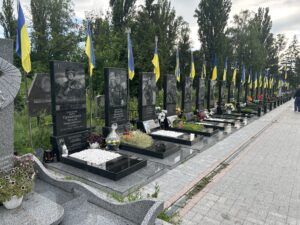
In addition to working with Ukraine on developing indigenous drone capabilities, the Gulf should seek to understand and emulate the sources of Ukrainian strength: resilience, a sense of national responsibility, the willingness to fully use both halves of its population, and a determination to stay with the long fight. The US could do with substantially more of these qualities too.
Fifth, humanitarian assistance has strategic implications. In the past eight months, I have had the opportunity to observe UNHCR relief operations in not only Ukraine but also Lebanon and Syria. These efforts are vital to security and stability in all three countries and serve to strengthen central government authority as well as to meet urgent humanitarian needs. As a result of major decreases in US support, UNHCR is badly underfunded. Restoring that funding, and encouraging others to step forward, is very much in America’s national security interest.
The single, overarching lesson I derive from both the Ukraine and Gulf conflicts is the criticality of sustained, focused US leadership.
We were not a world leader in the period before the first and second world wars. Ukraine paid the price with the Soviets and the Nazis. Since WWII, we have led, and the world and America are safer. What the US does in one theater is closely watched by our allies and adversaries in others. We must show long-term resolve in both.
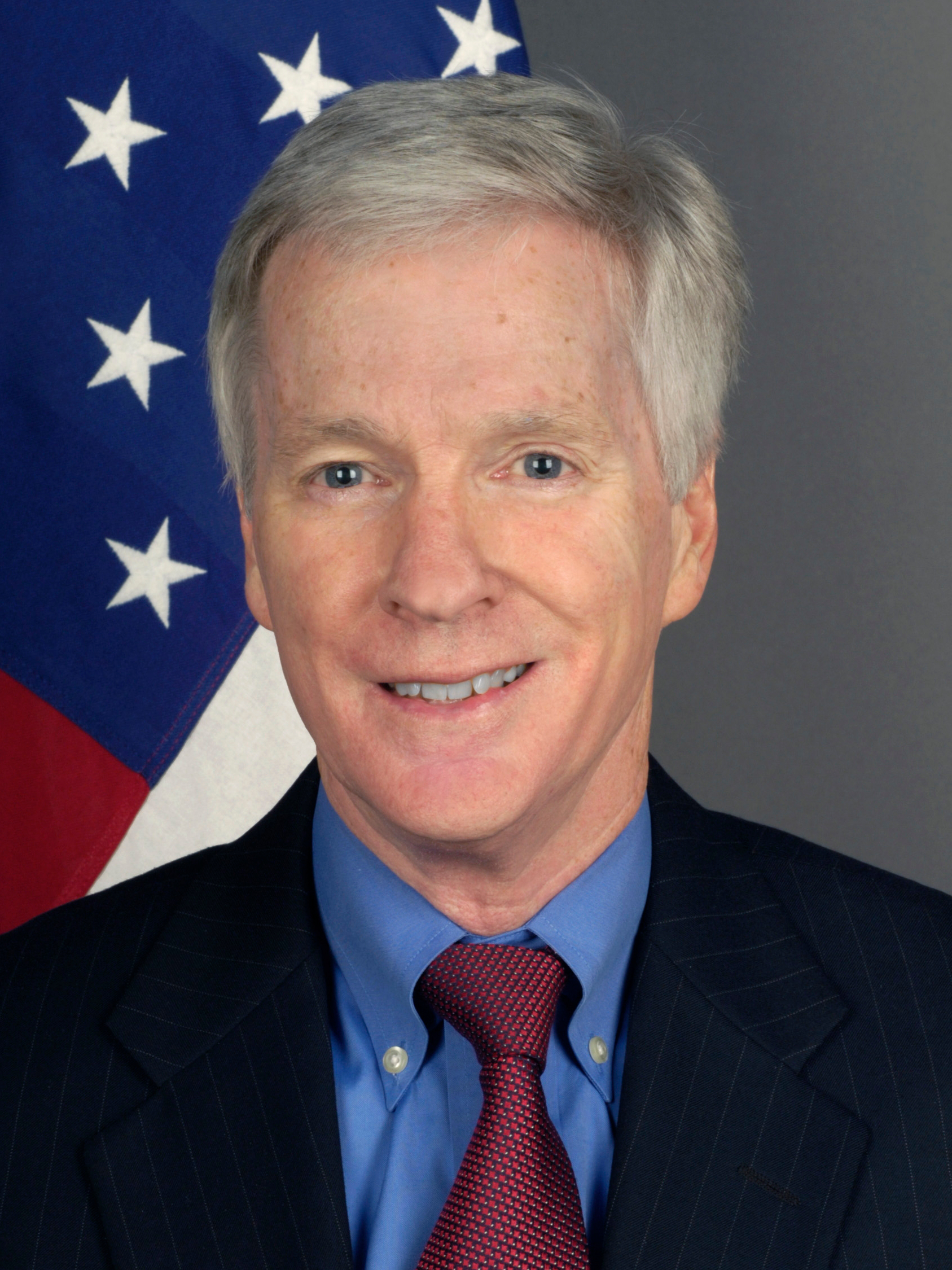
Ambassador Ryan C. Crocker is a Distinguished Diplomatic Fellow with the Middle East Institute.
Top photo by Sergei Supinsky/AFP via Getty Images
The Middle East Institute (MEI) is an independent, non-partisan, not-for-profit, educational organization. It does not engage in advocacy and its scholars’ opinions are their own. MEI welcomes financial donations, but retains sole editorial control over its work and its publications reflect only the authors’ views. For a listing of MEI donors, please click here.

The Americans Are Gone. Will Iraq’s Militias Disarm?