This individual is a guest contributor. MEI is not able to assist with contact requests.
Sara Sadek is an affiliated researcher and coordinator at the Center for Migration and Refugee Studies (CMRS) at the American University in Cairo. She obtained an MA in Refugee Studies from the University of East London. Since 2005, she has worked on various research projects on Iraqi and Sudanese communities in Egypt, contributing to a report on Iraqis in Egypt and recently producing a paper on challenges of integration for Iraqis in Arab states for the Henry L. Stimson Center’s forthcoming volume Transnational Challenges.
Reflections on the Post-Arab Spring Landscape by Sailing in Thoughts to Indonesia
While thick dust largely covers the political landscape of the Arab world, some insights for thinking about its future might be offered by examining the case of Indonesia, which surmounted deep political uncertainty and turmoil during the early years of the post-Suharto era.
Thanks to unprecedented current account surpluses, the Gulf Cooperation Council (GCC) countries are investing billions abroad and looking more toward the East. The GCC’s growing trade ties with China have been accompanied by encouraging development in investment relations. For these countries, investment projects in China promise access not only to large and rapidly growing energy markets, but also to other booming sectors.
Obama’s Legacy in the Middle East: Passing the Baton in 2017
This paper is part of an MEI scholar series, titled “Obama’s Legacy in the Middle East: Passing the Baton in 2017.” Click here to view the full project, or navigate using the table of contents to the right.
Gaza’s Economic Revival to be Addressed at Cairo Conference
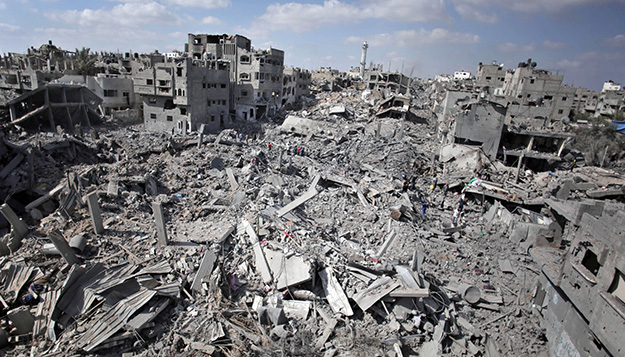
This summer’s war between Israel and Hamas, like the previous rounds — Operation Cast Lead in 2008-2009 and Operation Pillar of Cloud in 2012 — exacted a terrible cost not only in human lives (more than 2,100 Palestinians and 73 Israelis[1]) but also in the wholesale destruction of Gaza’s infrastructure. The Palestinian Authority estimates reconstruction and rehabilitation costs of the recent conflict to exceed $4 billion, more than two times Gaza’s GNP.[2]
The Rise of Gulf Investment in India: Searching for Complementarity and Synergy
This essay sheds light on the pattern of GCC investment in India by identifying India’s major Gulf partners, the size of their investment presence, and key investment sectors, as well as the areas of potential growth in and barriers to greater investment.
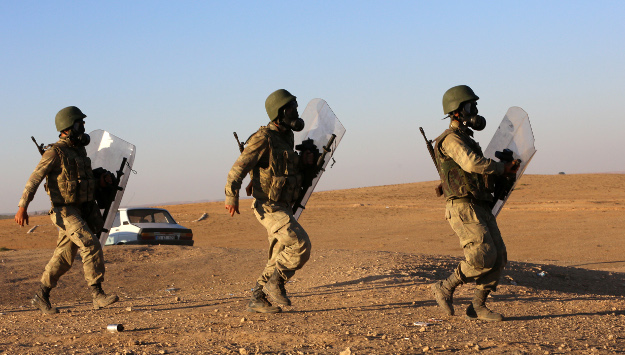
Turkey is in a tough spot. It has ISIS militants threatening the Syrian border town of Kobani, inching ever closer to confronting Turkish security forces. In addition thousands of Syrian Kurds, fleeing ISIS attacks, have massed along its border, adding further to Ankara’s troubles.
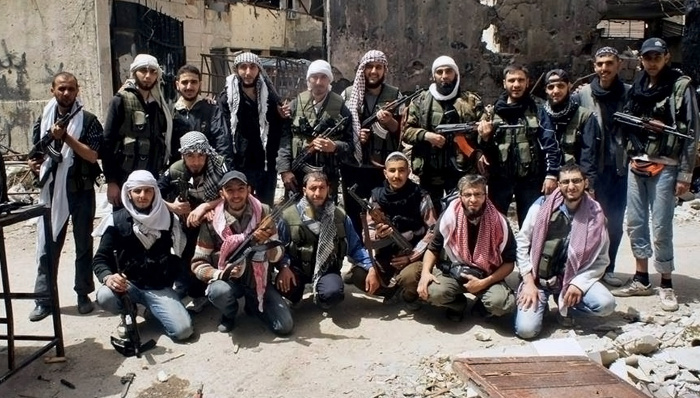
President Obama made the right decision to boost military aid to moderate Syrian rebels last year, but today America’s approach to attacking Islamic State fighters risks undermining the moderate opposition and alienating support among the Syrian public.
Gulf Investment in China: Beyond the Petroleum Sector
This essay explores recent GCC investment in sectors of the Chinese economy other than the petrochemicals industry and examines the challenges confronted by Gulf investors.
Defeating the Islamic State Militarily is Only Half the Battle
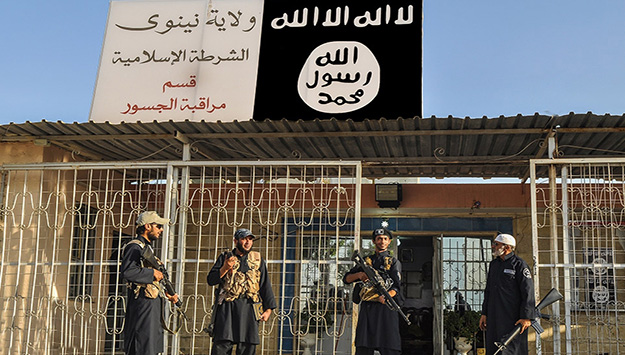
In his speech on September 10 President Obama characterized the Islamic State (ISIS) as a terrorist group.[1] There were clear political benefits to using this label, not the least of which was to facilitate the formation of a broad-based military coalition against the organization.