Jason H. Campbell is senior fellow at the Middle East Institute (MEI), where he focuses on international security, geopolitics, and foreign policy. Prior to joining MEI, he was a senior policy researcher at RAND, covering an array of defense and national security issues. From June 2016 through September 2018, he served as country director for Afghanistan in the Office of the Secretary of Defense for Policy. In this role Campbell managed the NATO portfolio in support of Resolute Support Mission, represented the Department of Defense (DoD) on interagency delegations discussing the prospects of a Taliban peace process with international stakeholders, and helped draft DoD’s contribution to the 2017 South Asia strategy review.
Campbell holds a PhD in War Studies from King’s College London, an MA in International Affairs from Catholic University, and a BA in Political Science from Amherst College.
US Regional Defense Policy: Strategic Prioritization and the Promotion of Collective Defense
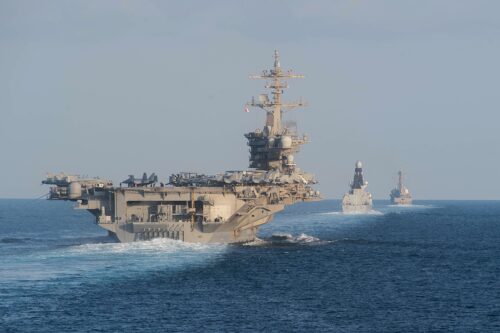
A war that the White House initially hoped would be brief has now dragged on for more than six months, with prospects for a resolution frustratingly remote, and the Trump administration’s credibility among friend and foe alike is nearly exhausted. Focusing on defense and security, there are multiple lessons from the Iran war that should shape US strategic thinking.
Fixing America’s Failed Strategies in the Middle East
The Middle East is both central to key United States interests and prone to instability. Yet US national security and defense strategic guidance has struggled to account for the unique demands of the region. Calls for strategic divestiture from the region have grown in prominence among analysts and policymakers alike in recent years.
Strikes (and Now Boots?) Without Strategy as Iran War Escalates
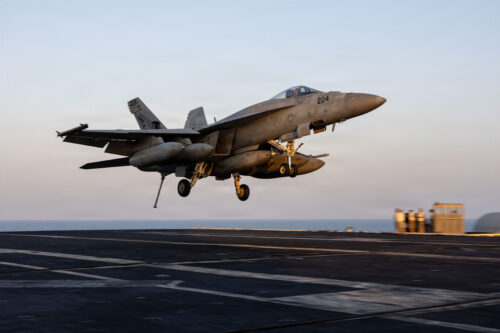
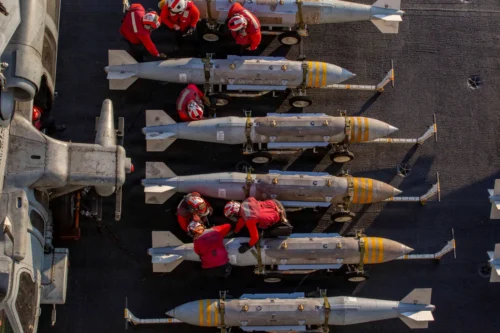
“Tactics without strategy is the noise before defeat” is a well-known axiom attributed to the ancient Chinese military general and strategist, Sun Tzu. With the Iran war now at the one-month mark, it is evident that the Trump administration failed to outline a clear end state or devise a workable war termination strategy before initiating Operation Epic Fury on February 28.
On February 28, the US and Israel launched coordinated military strikes on Iran. MEI defense experts weigh in on the military and regional consequences.
New Questions on the International Stabilization Force for Gaza
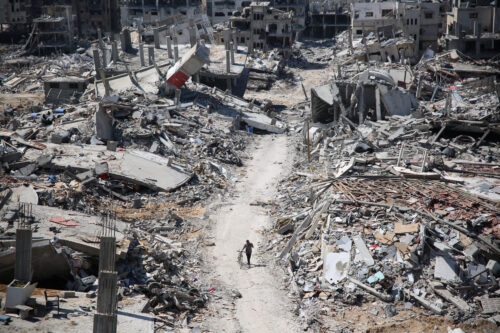
In November 2025, the United States sought and obtained approval for a United Nations Security Council Resolution (UNSCR 2803) endorsing the formation of a Board of Peace (BoP) and International Stabilization Force (ISF) to support the implementation of the 20-point peace plan agreed to by Israel and Hamas the previous month. The ISF’s stated role is to help secure and demilitarize the Gaza Strip, primarily by facilitating the decommissioning of weapons, protecting civilians, and training and advising burgeoning Palestinian police forces. In the intervening months, however, progress on standing up the ISF has stalled, and conflicting messaging from US officials provides more questions than answers.
Potential US military strikes on Iran: This won’t be another 12-Day War
President Donald Trump has sharply warned the Iranian regime to halt its brutal crackdown on protesters. Amid speculation that the US is preparing for military action in Iran, Washington should take the lessons and fundamentally different context of its successful June 2025 operation against the Islamic Republic into account as it plans for how to respond.