This individual is a guest contributor. MEI is not able to assist with contact requests.
Sara Sadek is an affiliated researcher and coordinator at the Center for Migration and Refugee Studies (CMRS) at the American University in Cairo. She obtained an MA in Refugee Studies from the University of East London. Since 2005, she has worked on various research projects on Iraqi and Sudanese communities in Egypt, contributing to a report on Iraqis in Egypt and recently producing a paper on challenges of integration for Iraqis in Arab states for the Henry L. Stimson Center’s forthcoming volume Transnational Challenges.
Collection Spotlight: America's Great Game: The CIA's Secret Arabists and the Shaping of the Modern Middle East
America’s Great Game: The CIA’s Secret Arabists and the Shaping of the Modern Middle East, by Hugh Wilford, 2013
A tale of how the CIA set sail into the Middle East with the best intentions, ran aground on its own failings, and was overwhelmed by forces and events it could not control.
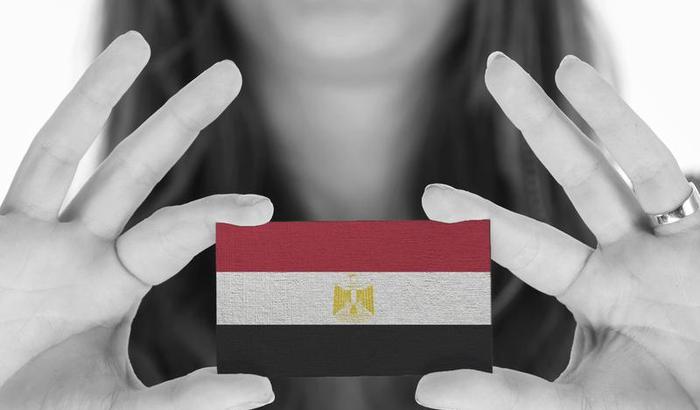
Since the inception of its transitional justice and accountability program in November 2012, the Egyptian Initiative for Personal Rights (EIPR) has faced a number of challenges related to its work. Of these, one of the most arduous has been operating in a context of ongoing political and social upheaval. The period since November 2012 can generally be divided into three distinct phases, each marking a change in EIPR’s organizational and conceptual approaches to transitional justice. Though EIPR sees its work in Egypt less in phases and more as a long and complicated struggle against injustice and impunity that will likely continue for the foreseeable future, the three phases are helpful for documenting its approach to transitional justice since 2012.
“Amal”[1] fled violence in the countryside outside of Damascus with her husband, father, and five children almost two years ago. The family moved to Salamieh, a Syrian town of approximately 100,000 people 33 kilometers southeast of Hama. Salamieh is still under the control of the government armed forces, and many displaced people, mainly Sunnis from Homs, Aleppo, and the Damascus area, have sought refuge there and in surrounding towns.
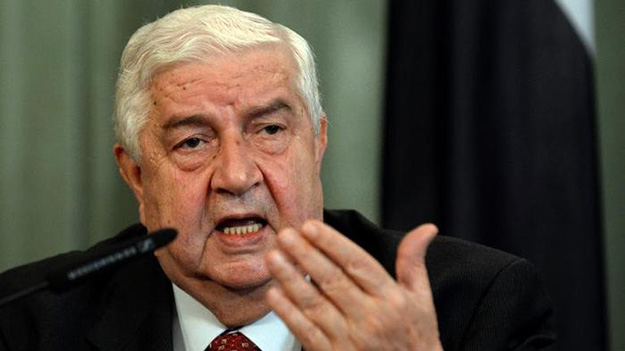
With a major push from the U.S., a new Syrian peace conference opened Wednesday in Switzerland, the first such effort since the middle of 2012. It wasn’t easy getting everyone there, and it will be harder still to achieve a breakthrough.
Qanats and Water Cooperation for a Sustainable Future
This essay is part of the Middle East-Asia Project (MAP) series on “Harvesting Water and Harnessing Cooperation: Qanat Systems in the Middle East and Asia.”
Harvesting Water and Harnessing Cooperation: Qanat Systems in the Middle East and Asia
For centuries, human societies in drylands have overcome the challenge of water scarcity through traditional methods of water harvesting. The utilization of qanat technology is one of them.
Qanat is the generic term for an ancient environmentally sustainable water harvesting and conveyance technique believed to have originated in Persia in the early first millennium B.C.
The Necessity of Karez Water Systems in Balochistan
Land is infinite in Balochistan. It is the one place in South Asia where if you ask someone how much land they have, they will generally have no idea. Instead, it is water that matters. In Balochistan, social station is not determined by landholdings but by the size of one’s share of water in a karez. These manmade underground channels passively tap groundwater and provide the lifeblood of villages at the valley floor.
The water harvesting and underground transmission system called a karez in the Uygur language, or kan er jing in Mandarin, has provided sustainable water supplies in some communities of the Xinjiang Uygur Autonomous Region (Xinjiang), China for over 2,000 years. These water systems have also been used in countries in North Africa and West Asia, as well as other Asian countries, including Afghanistan, Iran, and Pakistan.
The Problem of Transitional Justice in Post-Suharto Indonesia
Transitional justice in Indonesia has largely failed. While exact definitions vary, transitional justice here refers loosely to the righting of past wrongs by holding perpetrators accountable for their actions. In Indonesia, neither Suharto nor any of the high-ranking officials of the New Order era have ever been put on trial or held accountable for human rights abuses during 32 years of authoritarian rule. In fact, no Indonesian has been successfully convicted for past abuses despite numerous attempts to do so.
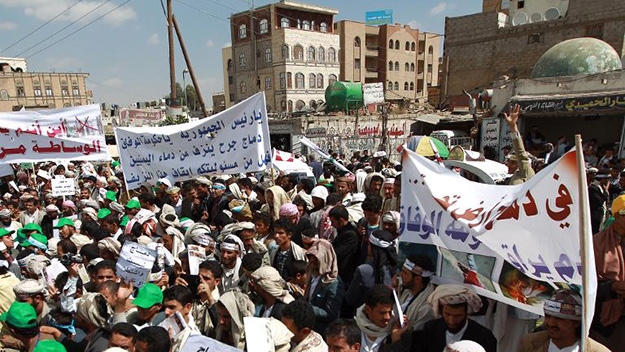
The removal of Yemeni President Ali Abdullah Saleh in 2011 has created an existential crisis for Yemen’s Houthis. Like many other armed political groups in Yemen and elsewhere, the Houthis’ survival depends on the continued existence of an enemy. With Saleh gone, their raison d’être has become difficult to define and their armed opposition hard to defend.
Whereas many observers are lamenting the failure of the “Arab Spring,” Tunisia has proven once again that it is on a march toward democracy. On January 3, the National Constituent Assembly (NCA) began voting on the country’s new constitution. Lawmakers have approved many of the chapters and articles, and the final vote on the entire document should take place within a few days. Surprisingly, many of the controversial articles on state identity, the relationship between religion and politics, and gender equality have passed with a clear majority.
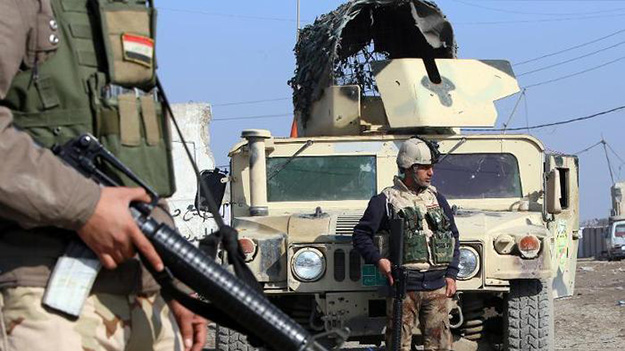
Since the departure of U.S. ground forces from Iraq in 2011 in the wake of failed negotiations to extend the 2008 Status of Forces Agreement, the security situation in Iraq has steadily declined. To many, the situation was predictable, as the absence of a residual U.S. force to mature the Iraqi security forces and moderate long-standing political tensions among the sects led to a security vacuum filled by extremists and terrorists. To others, 10 years of investment and over 4,000 troops lost was enough, and it was time for the Iraqis to resolve their own internal conflicts.