تمت ترجمة هذا النص بواسطة الذكاء الاصطناعي وقد يحتوي على أخطاء.
تخطي إلى المحتوى

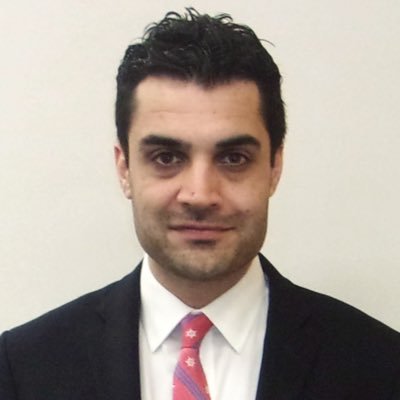
Shahmahmood Miakhel

Country Director, Afghanistan

الخبرة

أفغانستان

This individual is a guest contributor. MEI is not able to assist with contact requests.

Shahmahmood Miakhel is the Country Director in Afghanistan for the US Institute of Peace (USIP). Prior to that he was a Governance Advisor for the United Nations Assistance Mission in Afghanistan (UNAMA), and, from 2003–2005, a Deputy Minister of the Interior in the Government of Afghanistan. In 1994–1995 he worked for the United Nations Development Programme (UNDP) and United Nations Office for Project Services (UNOPS) in South and Southeast Afghanistan helping to establish District Rehabilitation Shuras (DRS). He also worked as a reporter for the Pashto service of the Voice of America from 1985–1990.

The Latest from Shahmahmood Miakhel

تصفية حسب
10003 Results
The Lessons of Benghazi: One Year Later, Never More Urgent
معهد الشرق الأوسط
  • التحليل
  • The Lessons of Benghazi: One Year Later, Never More Urgent

    The situation in Libya one year after the attack on the U.S. Special Mission in Benghazi on September 11, 2012 is chaotic, dysfunctional and disheartening. It remains not as abjectly horrible as it could be—the General National Congress did this summer finally approve a framework (however imperfect) for electing a constitutional assembly, and UN-backed efforts are under way to create an unofficial dialogue of national reconciliation—but these advances paper over ever-deeper failings, many of which were not inevitable.

    September 10, 2013

    Dubai: Trade, Transit, and Cultural Amalgamation
    معهد الشرق الأوسط
  • التحليل
  • Dubai: Trade, Transit, and Cultural Amalgamation

    “Open Doors; Open Minds”—the tagline of the Sheikh Mohammed Center for Cultural Understanding (SMCCU), a non-profit organization advocating awareness and understanding among the various cultures that live in Dubai—epitomizes Dubai’s emergence as an international trade and transit hub as well as a place of cultural symbiosis that hosts diverse nationalities from almost all corners of the globe.

    September 6, 2013

    The Lost Land of Egypt
    معهد الشرق الأوسط
  • التحليل
  • The Lost Land of Egypt

    Egyptians call their desert country “the protected” (al-mahrousa) in homage to its longevity and the idiosyncratic features that have consistently saved it from destitution: a geostrategic location, Nile-fed farmland, and a stunning array of in situ antiquities. While much has remained unchanged in Egypt since the 2011 uprising, including the authoritarian nature of its government, alarming quantities of the country’s precious agricultural and archeological land have been vanishing to make way for cheaply-built homes of low-income citizens.

    September 5, 2013

    Support for el-Sisi: What’s in it for al-Saud?
  • التحليل
  • Support for el-Sisi: What’s in it for al-Saud?

    When King Abdullah of Saudi Arabia and his foreign minister, Prince Saud al-Faisal, issued unequivocal pledges of support for Egypt’s military government and its crackdown on the Muslim Brotherhood, their move was widely depicted in the news media as a logical extension of the kingdom’s opposition to revolutionary movements in the Arab world. This simplistic view overlooks the fact that Saudi Arabia has responded differently to different uprisings—it supports the rebels in Syria, helped to crush them in Bahrain—and that aligning itself with Egypt’s new rulers could be a risky strategy.

    September 3, 2013

    Art Dubai, Abu Dhabi Art, and the Sharjah Biennale: The Emergence of a Global Art Hub
  • التحليل
  • Art Dubai, Abu Dhabi Art, and the Sharjah Biennale: The Emergence of a Global Art Hub

    While visiting Dubai, Sharjah, and Abu Dhabi frequently over the past 20 years, I couldn’t fail to notice that the three cities have increasingly, inexorably become a metropolitan area, ever merging as they build and develop in each other’s direction.

    August 31, 2013

    Egypt: Reconciliation Or Repression?
  • التحليل
  • Egypt: Reconciliation Or Repression?

    This article first appeared in Al-Monitor.

    The ongoing confrontation between Egypt’s military and the Muslim Brotherhood has left the country in deep disarray.

    August 30, 2013

    A Conversation with Amb. Raouf Adly Saad
  • Video
  • A Conversation with Amb. Raouf Adly Saad

    The Middle East Institute is pleased to welcome H.E. Ambassador Raouf Adly Saad, former special envoy to Africa of the interim president of Egypt, for a conversation about Egypt’s political transition and future. In light of Egypt’s many challenges, Ambassador Saad will discuss the transitional government’s goals and priorities and offer his insights about how to get Egypt on a path toward economic stability and democracy.

    August 28, 2013

    How the US Can Use Aid to Nudge Egypt
    معهد الشرق الأوسط
  • التحليل
  • How the US Can Use Aid to Nudge Egypt

    This article originally appeared in The Christian Science Monitor

    The American relationship with Egypt needs to change if Washington wants to have substantive influence in Cairo. America’s recent strategy in Egypt has been focused on buying Egyptian compliance through military and economic aid, but it seems to have had little effect.

    August 27, 2013

    Reasons to Be Optimistic About Egypt
    معهد الشرق الأوسط
  • التحليل
  • Reasons to Be Optimistic About Egypt

    With the dual announcement this week of the completion of a preliminary constitutional draft by a ten-member committee of experts, in addition to appointments to the quasi-governmental National Council on Human Rights, Egyptians finally have reason to be cautiously optimistic.

    August 23, 2013

    A Conversation with Amb. Raouf Adly Saad
    معهد الشرق الأوسط
  • Podcast
  • A Conversation with Amb. Raouf Adly Saad

    Wed, 8/14/2013 12:00 pm to 1:00 pm The Middle East Institute is pleased to welcome H.E. Ambassador Raouf Adly Saad, former special envoy to Africa of the interim president of Egypt, for a conversation about Egypt’s political transition and future.  In light of Egypt’s many challenges, Ambassador Saad will discuss the transitional government’s goals and priorities and offer his insights about how to get Egypt  on a path toward economic stability and democracy.Bios:H.E. Ambassador Raouf Adly Saad served as the special envoy to Africa for Interim Egyptian President Adly Mansour.

    August 21, 2013

    A Conversation with Amb. Raouf Adly Saad
    معهد الشرق الأوسط
  • Podcast
  • A Conversation with Amb. Raouf Adly Saad

    Wed, 8/14/2013 12:00 pm to 1:00 pm The Middle East Institute is pleased to welcome H.E. Ambassador Raouf Adly Saad, former special envoy to Africa of the interim president of Egypt, for a conversation about Egypt’s political transition and future.  In light of Egypt’s many challenges, Ambassador Saad will discuss the transitional government’s goals and priorities and offer his insights about how to get Egypt  on a path toward economic stability and democracy.Bios:H.E. Ambassador Raouf Adly Saad served as the special envoy to Africa for Interim Egyptian President Adly Mansour.

    August 21, 2013

    A Conversation with Amb. Raouf Adly Saad
    معهد الشرق الأوسط
  • Podcast
  • A Conversation with Amb. Raouf Adly Saad

    Wed, 8/14/2013 12:00 pm to 1:00 pm The Middle East Institute is pleased to welcome H.E. Ambassador Raouf Adly Saad, former special envoy to Africa of the interim president of Egypt, for a conversation about Egypt’s political transition and future.  In light of Egypt’s many challenges, Ambassador Saad will discuss the transitional government’s goals and priorities and offer his insights about how to get Egypt  on a path toward economic stability and democracy.Bios:H.E. Ambassador Raouf Adly Saad served as the special envoy to Africa for Interim Egyptian President Adly Mansour.

    August 21, 2013