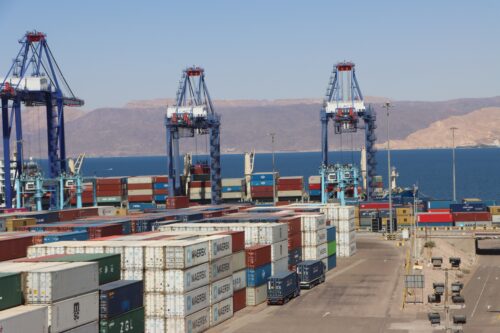
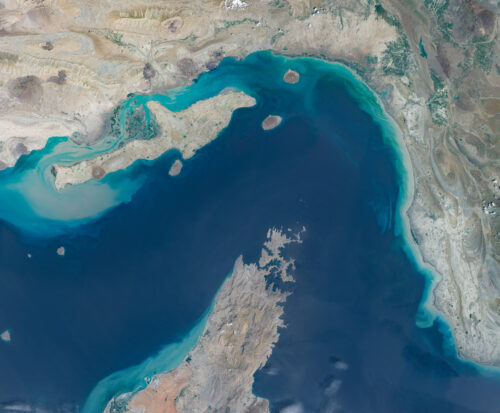
The flow of ideas, people, and commerce across national boundaries has been occurring with breathtaking rapidity in the broader Middle East, as elsewhere. These increasingly dense exchanges have generated new threats and vulnerabilities that have tended to impact women, children, and the poorest members of society disproportionately. At the same time, however, they have given people more resources and opportunities with which to shape their lives and their futures.
This collection of essays is the first of three volumes devoted to Migration and the Arab World. The 19 authors whose essays appear in this first volume address several salient questions: What are the sizes and characteristics of the non-national workforces of the Gulf Cooperation Council (GCC) countries? Which “push” and “pull” factors have driven and continue to drive this phenomenon? What effects has labor migration had on the sending and receiving countries, and on the migrants themselves? What lessons or tentative conclusions can be drawn from the policies and practices of sending and receiving countries? Through the discussion of these and other questions, the contours of the future — and future impact — of labor and migration in the Middle East begin to emerge. Their precise features will decisively shape the region’s unique economic, political, and national destinies.
The Middle East Institute (MEI) is an independent, non-partisan, not-for-profit, educational organization. It does not engage in advocacy and its scholars’ opinions are their own. MEI welcomes financial donations, but retains sole editorial control over its work and its publications reflect only the authors’ views. For a listing of MEI donors, please click here.