Mojtaba Khamenei’s appointment as Iran’s new Supreme Leader marks the most consequential political transition in the Islamic Republic in more than three decades. For the first time since the 1979 revolution, supreme authority has passed directly from father to son. The Assembly of Experts confirmed Mojtaba roughly a week after the killing of his father, Ali Khamenei, in a US–Israeli strike that decapitated much of Iran’s senior leadership. The decision ended days of speculation over whether the Islamic Republic might face a power vacuum just as it entered a major war…
Mojtaba Khamenei must decide whether the Islamic Republic will continue along the strategic trajectory defined by his father or whether the pressures now bearing down on the system will force a more fundamental reconsideration of Iran’s political and foreign-policy orientation.
His appointment settles, at least for now, the issue of who sits at the apex of the state. It does not settle the deeper question of what kind of state he now leads, what resources remain at its disposal, and which assumptions from the Khamenei era are still sustainable after the shock of war.
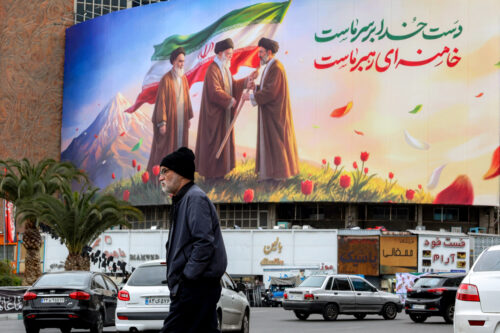
Photo by AFP via Getty Images
The Middle East Institute (MEI) is an independent, non-partisan, not-for-profit, educational organization. It does not engage in advocacy and its scholars’ opinions are their own. MEI welcomes financial donations, but retains sole editorial control over its work and its publications reflect only the authors’ views. For a listing of MEI donors, please click here.