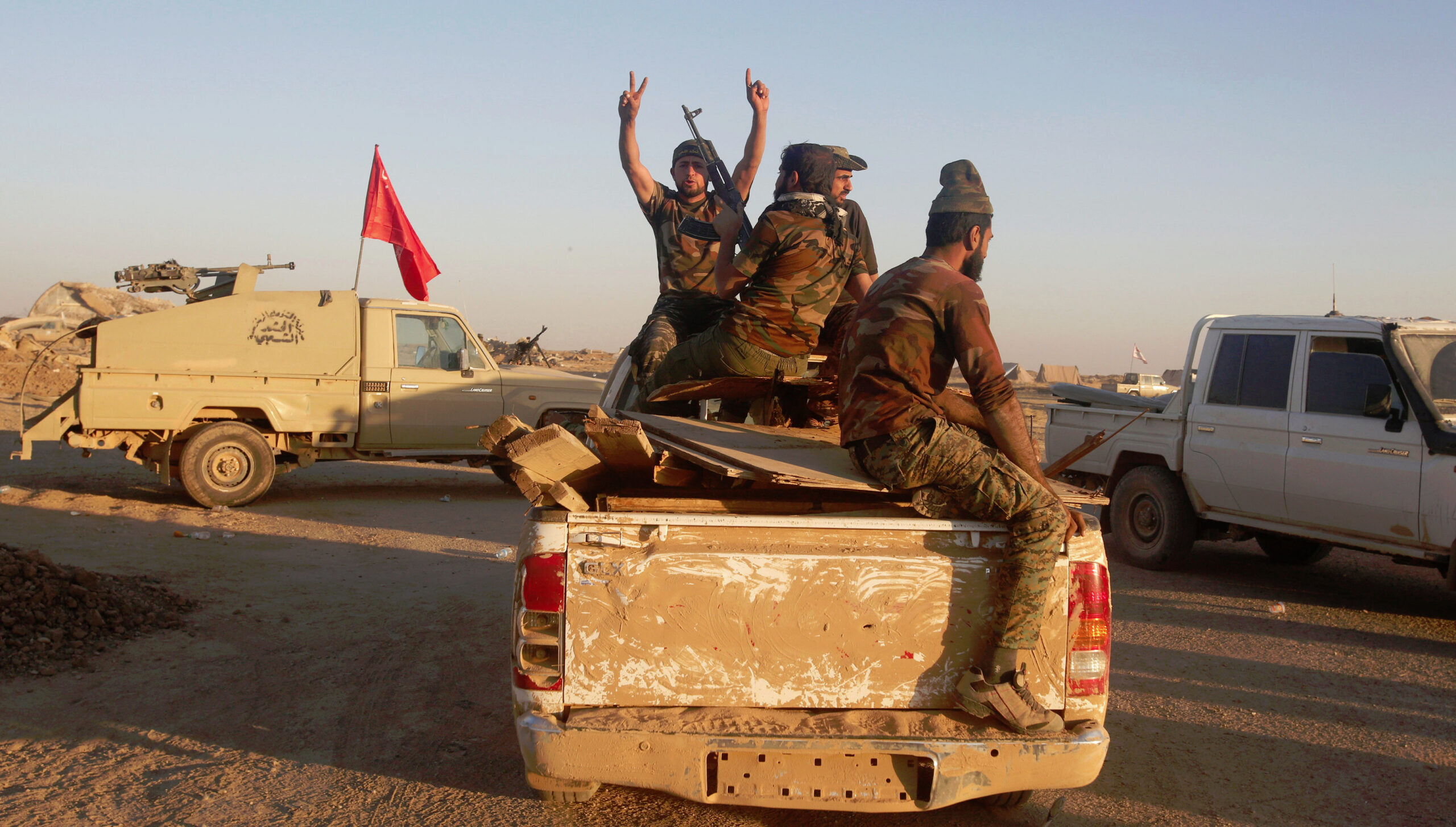
Muhammad al-Hattab, a commander of the Iraqi Popular Mobilization Forces (P.M.F.), has hinted that the paramilitary forces may enter politics and participate in elections after the Islamic State is defeated. “The Population Mobilization [Forces] was created based on a fatwa [religious decree] by Iraq’s supreme religious authority [Grand Ayatollah Ali Sistani]… But if the Iraqi nation thinks that the Popular Mobilization [Forces] are qualified to lead this country through ballot boxes in the elections, there is not obstacle,” he told Fars News Agency, an outlet affiliated with the Islamic Revolution Guards Corps (I.R.G.C.). Hattab accused the United States, Israel and regional countries of “plotting” to marginalize the P.M.F.
Comment: With the fight against the Islamic State in Iraq reaching its final chapter, Iran has stepped up efforts to ensure its militia proxies will continue to play a prominent role in Iraq’s security and politics in the long term. To achieve this, Tehran recently appointed Quds Force official Iraj Masjedi as its new ambassador to Baghdad. With decades of experience in Iraq’s security and political affairs, Masjedi is actively trying to shape up post-Islamic State Iraqi politics. And the future role of Iran-linked P.M.F. units in the political sphere is a top agenda item for Masjedi.
Two weeks ago, Asharq al-Awsat reported that the Quds Force was setting up new offices in Mosul under the guise of P.M.F. and with the help of Iran’s ally and former Iraqi Prime Minister Nouri al-Maliki. Sheikh Muzahim al-Hawyeet, spokesman for a Sunni tribal coalition in Nineveh Province, told the pan-Arab daily that the aim of the new Quds Force offices is to cultivate relationships with Sunni tribes in Mosul and across Nineveh Province. Hawyeet further claimed that tens of I.R.G.C. offices have been set up in Mosul – some of which, he said, function as headquarters for local political parties while others house weapons and are used for military purposes and as detention centers. He also linked the issue with the upcoming elections in Iraq. “They [Iran and its Iraqi allies] are trying to get the largest number of parliamentary seats representing Mosul as well as to get the majority of seats in the city council.”
The Middle East Institute (MEI) is an independent, non-partisan, not-for-profit, educational organization. It does not engage in advocacy and its scholars’ opinions are their own. MEI welcomes financial donations, but retains sole editorial control over its work and its publications reflect only the authors’ views. For a listing of MEI donors, please click here.

The Americans Are Gone. Will Iraq’s Militias Disarm?