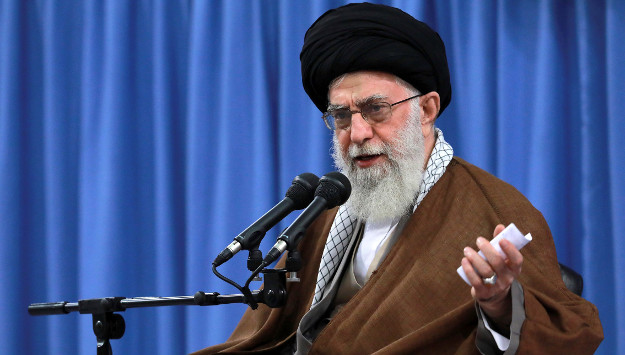
Supreme Leader Ali Khamenei’s latest remarks about Kashmir have triggered reactions in both Pakistan and India. On July 3, Khamenei called on the Iranian Judiciary to “legally intervene” and voice support for “Muslims in Myanmar and Kashmir.” Similarly, in his speech last month marking the end of Ramadan, the supreme leader called on the Muslim world to support the people of Bahrain, Yemen and Kashmir. On Thursday, Pakistan’s Foreign Office welcomed Khamenei’s statement, adding that the Muslim world is worried about “human rights violations” by Indian troops in Kashmir. The Indian media, in contrast, criticized the Iranian leader’s comments and opined that it was a reaction to the Indian government’s latest efforts to cultivate closer ties with Israel and Saudi Arabia. “Probably peeved at the India’s first ever prime-ministerial visit to Israel, Iran’s supreme leader Ayatollah Ali Khamenei has raked up the Kashmir bogey again, second time in two weeks,” wrote India Today. The Times of India also referred to Modi’s Israel trip and added: “Further, with India and Iran squabbling over a gas field, and India’s tilt toward Riyadh, Indo-Iran ties are suddenly not looking too high on New Delhi’s agenda.”
Comment: While Khamenei’s remarks on Kashmir may be related to Prime Minister Narendra Modi’s trip to Israel, it is not the first time that the Iranian leader has displeased New Delhi with his remarks on Kashmir. In 2010, India summoned the Iranian envoy to New Delhi to protest Khamenei’s repeated calls to the Islamic world to support the plight of Muslims in Kashmir. It remains to be seen if Khamenei’s comments would adversely affect improving diplomatic and commercial relations between Iran and India. Modi visited Tehran last year to sign an agreement with the Iranian government on the development of the Chabahar port – a strategic India-Iran initiative that rivals China’s plan to develop Pakistan’s Gwadar port.
The Middle East Institute (MEI) is an independent, non-partisan, not-for-profit, educational organization. It does not engage in advocacy and its scholars’ opinions are their own. MEI welcomes financial donations, but retains sole editorial control over its work and its publications reflect only the authors’ views. For a listing of MEI donors, please click here.
Jordan’s Economy Weathers Iran War’s Shocks and Finds New Opportunities