Read the full article on The New Yorker.
It is said that a picture is worth a thousand words, presumably for what it depicts, but what is the value of what a picture doesn’t show? To some, it is nothing; for others, it is everything.
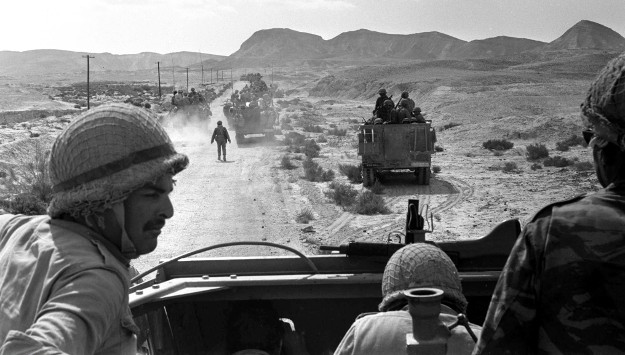
For Israelis and, indeed, much of the Western world, one photograph from the conflict, which Israelis call the Six-Day War, is the most remembered, and immediately recognizable: David Rubinger’s iconic image of three Israeli paratroopers standing next to the Western Wall. In the image, the three soldiers stare up, almost beyond the Wall, as if envisioning what was yet to come after this moment. The image fits squarely within the Zionist narrative, heralding reclamation, triumph, and hope.
But, when one compares the photo with images of the Western Wall today, there is something odd about it. It focusses closely on the paratroopers and not on the massive, wondrous Wall. Perhaps this is because today, the images of the Western Wall that we are familiar with include not only most of the expansive Wall itself but also the spacious plaza in front of it, sometimes filled with worshippers.
The Middle East Institute (MEI) is an independent, non-partisan, not-for-profit, educational organization. It does not engage in advocacy and its scholars’ opinions are their own. MEI welcomes financial donations, but retains sole editorial control over its work and its publications reflect only the authors’ views. For a listing of MEI donors, please click here.