The “Anti-Strategic President” Needs to Revive a Policy Process to Resolve Iran
August 7, 2026
Share
President Donald Trump has consistently shown a preference for unpredictability over a clear strategic vision. This is especially true on Iran, where from the war’s early stages the United States has operated untethered from the guidance it issued just before the fighting began. Less obvious is a related failure at the operational level: widespread staff reductions and a reluctance to heed advice from seasoned national security and Middle East hands have left the interagency policy process dormant. Beyond ensuring complex policy options are thoroughly deliberated, this “working level” of officials is crucial to coordinating the implementation of decisions and engaging directly with allies and partners. If the Trump administration is to minimize the strategic damage of its ill-chosen war with Iran, it should reconsider some of the staffing choices it made earlier in its term and fill key overseas vacancies.
The Importance of the National Security Council in Policymaking
Established by the Truman administration in 1947, the National Security Council (NSC) is the government’s primary mechanism for bringing the relevant agencies together — Defense, State, Energy, Treasury, the intelligence community, and others — to develop and coordinate policy options for the president. Though senior positions often go to political appointees, the NSC is largely staffed by detailees: competitively selected mid-to-senior officials who rank among the most knowledgeable experts on their region or function. As career rather than political personnel, they typically serve one- or two-year terms and remain in place even through a presidential transition. Importantly, these detailees provide connective tissue back to their home organizations and are uniquely qualified to both ensure department equities are represented during policy deliberations and guide the implementation of complex decisions across the interagency once they are made. In short, NSC staff are central to any optimal policymaking process.
The second Trump administration quickly demonstrated its intention to revamp the NSC staff. On January 22, 2025, only three days into the new term, the White House effectively cut 160 NSC detailees in one fell swoop, asking them to be available from home if needed but not to report to work. By its own admission, the administration sought personnel committed to implementing its “America First” agenda and felt this could be accomplished with a smaller, more selectively vetted team. Then, in April 2025, at least four other NSC staffers were among a dozen senior officials abruptly dismissed for alleged disloyalty. In May, National Security Advisor Michael Waltz himself was fired along with his deputy, Alex Wong. Before the end of the month “many dozens” of other NSC officials were let go, including senior directors for the Middle East and North Africa (MENA) and for Israel and Iran, both of whom were hired by Waltz.
Shortly thereafter, in late June 2025, the US carried out Operation Midnight Hammer in coordination with Israel’s Operation Rising Lion, striking military and nuclear targets in Iran. At this point, the NSC was operating with a substantially reduced staff, and while a replacement was eventually named as senior director for MENA, the senior director for Israel and Iran position remains vacant to this day. Caught up in the staff firings and reassignments were multiple officials who supported and participated in negotiations with Iranian officials and mediators in the lead-up to what would be referred to as the 12-Day War. The loss of this expertise and institutional memory became apparent in the run-up to Operation Epic Fury, launched in late February of this year, and has continued to hinder Washington’s pursuit of a viable exit as the Iran war has dragged on with minimal progress.
Gaps in the Current National Security Policy Process
President Trump has long favored assertive rhetoric and bold announcements over process and detail. Some have argued this unpredictability can be an asset in dealing with adversaries. Trump also prefers to rely on a small circle of trusted advisors on major policy matters. On most national security issues key deliberations and decisions have been confined to the upper-most echelons of the national security community. This is compounded by senior leaders operating in multiple roles while having limited experience in the region. For example, Secretary of State Marco Rubio has been “dual-hatted” as national security advisor since Waltz’s dismissal. Likewise, Steve Witkoff and Jared Kushner, President Trump’s confidants charged with leading negotiations with Iran, already have a portfolio that includes Russia-Ukraine and Israel-Gaza. Heavy demands on leadership coupled with significant reductions in highly qualified staff make for a difficult policy process in the best of circumstances. But on vexing issues like Iran and the wider Middle East, the disadvantages of this approach have been more pronounced.
It was under these circumstances that the administration joined Israel in launching a new war against Iran in February. Denied the quick victory it sought, for much of the war the Trump administration has faced a choice between two distasteful options: a major escalation of the conflict almost certainly including ground operations or a diplomatic agreement that would reward Iran massively while leaving unresolved the priority issues Washington shares with its regional partners. The first option would likely require tens if not hundreds of thousands of troops, astronomical costs, and significant casualties, with no guarantee of success. The second would reveal the war as a mistake and sting politically, since any agreement would almost certainly prove worse than the Obama-era Joint Comprehensive Plan of Action (JCPOA) that Trump has derided for a decade.
President Trump has instead chosen a third path, using more limited efforts to persuade or coerce Iran into positions more beneficial to the US. But in this nebulous “neither peace nor war” environment, the lack of a policy process has proven both conspicuous and potentially costly. As the “little excursion,” as Trump initially described the war, drags on with no sign of resolution, the margin for error keeps narrowing. Yet the largely unsung bureaucracy tasked with developing and implementing a coherent plan is sparse, and there is little evidence it is being fully engaged. As the regional picture grows more complex and even dire, the lack of fully fleshed out options tied to clear national security objectives and staffed by professionals to carry them out significantly hinders the prospects of any lasting resolution.
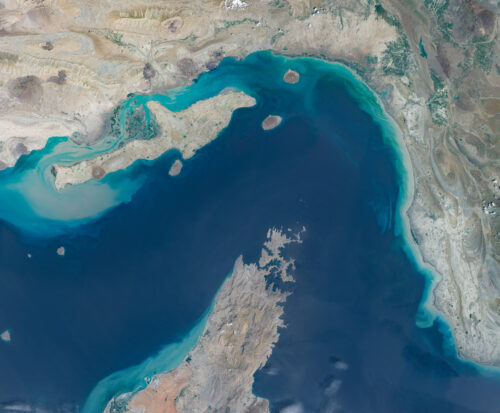
With the war now entering its sixth month following the collapse of the June memorandum of understanding and resumption of hostilities, gaps in the national security deliberation process remain obvious. For example, President Trump recently attempted to pursue a policy option that was both infeasible and damaging to broader US interests. In a social media post on July 13, he declared that the US military would reestablish its naval blockade of Iran, “become the guardian” of the Strait of Hormuz, and be reimbursed through a 20% fee on all shipping passing through it. During a follow-on press briefing, Trump further confused matters by naming the Gulf Cooperation Council (GCC) states, Israel, and “others” that would ostensibly be responsible for paying this fee since the US is “protecting all of them.” This conflation between tolling shipping companies and charging key US regional partners made clear the scheme was less a fully conceived plan than a hasty improvisation by frustrated senior leaders. It also contradicted Trump’s own declarations, echoed by other senior officials, that levying such a toll was unlawful in international waters.
Questions of legality aside, a functional policy process would have highlighted the problems with this proposal and, had some version been approved, a fully staffed bureaucracy could have prepared allies and partners for its implementation. Defense officials would have noted that the US military is neither postured nor funded to sustain such a mission indefinitely. Trade officials would have flagged the difficulty of establishing the bureaucracy to run it, and pointed out that a 20% rate far exceeds the $2 million per tanker fee Iran proposed — which was itself already widely viewed as a non-starter. The State Department would have warned how regional partners might react to the charge and insisted that, at the very least, they be briefed well ahead of time (though this too would be difficult as the US has no confirmed ambassador in key capitals including Riyadh, Abu Dhabi, and Doha).
Instead, the announcement rattled US allies and partners (and likely the interagency itself) and provided Iran a propaganda victory: Foreign Minister Abbas Araghchi agreed that levying tolls in the strait is indeed permissible but noted, “20% is of course too much. We will be fair.” Unsurprisingly, the following day the White House backed down, revising the plan to grant safe passage to vessels from Gulf states that invest in the US. No further details have been provided, nor have questions about the feasibility of such an operation for the US military been answered. Moreover, leaders in the shipping industry remain concerned that a longstanding commitment to freedom of the seas has been irreparably damaged, creating widespread uncertainty and potentially resulting in significant price increases.
Process and Professionalism Can Compensate for Unpredictability
Some would point out that this was just one of many instances in which President Trump made bold claims that later proved overstated or not fully thought through. A well-staffed national security apparatus cannot by itself prevent this, but it can limit the blowback and keep stakeholders focused. In this example, NSC staffers and officials from the relevant departments would have quickly come together to either shape a workable version of the plan or explain in detail why it should be scrapped. They would also have devised a sequenced communications plan to help senior officials quickly deliver a consistent message on the decision. Behind the scenes, staffers would have engaged their counterparts from an array of allied and partner nations to reinforce that messaging and reassure them that other options remained under consideration.
In this and other episodes during the Iran war, however, these steps appear to have been taken minimally, if at all. A recently departed NSC staffer who covered Iran across multiple administrations confirmed that there is currently no working-level process feeding up through the deputies and principals committees. “The room [of advisors] is smaller than anything I’ve seen before,” he said, naming only four or five of the most senior officials advising President Trump on Iran. There are also other signs that the lack of an effective policy process has damaged US interests on Iran. Multiple reports suggest that Witkoff and Kushner were ill-prepared for detailed nuclear talks earlier this year — a problem no doubt exacerbated by the dismissal of US experts described earlier, including members of the team that had engaged Iranian interlocutors before the 12-Day War.
Even more alarming is concern voiced by military officials, even as the US has been sending additional air assets to the region and Trump continues to threaten a resumption of heavy strikes. An anonymous US official cautioned that US operations would be limited by dwindling stockpiles of air defense and long-range munitions as well as battle damage to forward bases that constrains the ability to surge more troops and aircraft into the area. Highlighting the danger as well as the need for some return to a comprehensive policy process, the official concluded, “We do not have enough to safely sustain operations, and I don’t think the White House is aware of that.” In sum, the national security decision-making process this administration has put in place has thus far failed, showing no signs of improvement even as the situation deteriorates. It is time to pursue a new path.
Reviving the Interagency
President Trump’s established pattern of pursuing rapid resolutions to even the most complex challenges, often with little if any regard for second-order or longer-term effects, has earned him the moniker of the “anti-strategic president.” The initial actions taken by this administration combined with its prosecution of the Iran war thus far also demonstrate that this perspective translates to the policymaking process, contributing to a series of miscalculations, missed opportunities, and incorrect assumptions as well as limiting US options to little more than the threat or execution of additional military strikes.
The reality is that the two primary choices confronting the administration, an all-out war including ground forces or a limited diplomatic agreement with benefits for Iran, are now less feasible and more politically costly than they were at the war’s outset. The US strategic demands about Iran’s ballistic missile program and proxy network cited at the beginning of the conflict have all but disappeared from the conversation. Preventing Iran from obtaining a nuclear weapon remains a stated aspiration, though rarely with a plan to achieve it. Instead, the administration must now find a way to address the closure of the Strait of Hormuz, a non-issue prior to the war, without losing sight of those long-standing strategic concerns.
The system now in place, however one characterizes it, is stuck, with little sign of recovery. As the war has persisted and senior officials have been unable to agree on strategy, one official recently underscored the danger of prolonged stasis: “We have had a series of tactical victories but are facing a strategic defeat without clear policy guidance.” As President Trump appears increasingly frustrated at the dearth of options, he should acknowledge the limits of improvisation and reengage those still in government best qualified to provide them. Reviving a deliberative interagency process is key to both addressing the near-term challenges and managing their longer-term ramifications. That will require expanding the NSC staff on the basis of expertise, empowering them to engage the interagency to develop viable policy options, and trusting them to implement the president’s decision. While at this stage even proceeding with this brings no guarantee of success, the alternative is to remain on a path toward strategic defeat.
Jason H. Campbell is a Senior Fellow at the Middle East Institute. As a Department of Defense official from 2016-18, he was involved in the interagency process of deliberating and drafting the 2017 South Asia strategy review during President Trump’s first term.
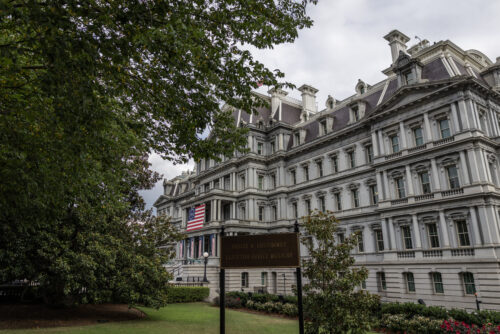
Photo from The Washington Post via Getty Images
The Middle East Institute (MEI) is an independent, non-partisan, not-for-profit, educational organization. It does not engage in advocacy and its scholars’ opinions are their own. MEI welcomes financial donations, but retains sole editorial control over its work and its publications reflect only the authors’ views. For a listing of MEI donors, please click here.