Introduction
The outcome of the Iran war will be shaped not only on the battlefield or around the negotiating table but also hundreds of miles away from the Persian Gulf, in Lebanon, where the architecture of Iranian influence is most vulnerable to disruption and rollback. Whatever the ultimate resolution turns out to be, it will have far-reaching and long-lasting consequences for the security and stability of the wider region, including in the Gulf. While the June 14 US-Iran memorandum of understanding (MoU) and subsequent talks may determine the immediate course of the conflict, their long-term significance will ultimately be measured by their impact on Iran’s regional influence, particularly in Lebanon. The six Gulf states — Bahrain, Kuwait, Oman, Qatar, Saudi Arabia, and the United Arab Emirates — long operated under the assumption that economic prosperity could be decoupled from regional conflict. The Iran war upended that assumption. With Hizballah functioning as Iran’s primary instrument of regional leverage, Lebanon’s political instability no longer registers as a peripheral concern; it is a direct variable in Gulf security calculations. With Western donors stepping back from Lebanon, the Gulf monarchies face an unavoidable choice: spearhead leadership in reconstruction and stabilization efforts or deal with the consequences of the present vacuum. The US-Iran framework has placed Lebanon’s cease-fire architecture at the center of any durable resolution.
Since the 2010s, the Gulf states — specifically Saudi Arabia, the UAE, and Qatar, the region’s leading political and economic powers — have prioritized countering Iranian influence in Lebanon but have struggled to find effective leverage as Tehran’s proxy prototype, Hizballah, has consolidated control over Lebanese political life. Subsequently, they fell into a pattern of frustrated retreat, cutting aid to Lebanon in 2016, withdrawing ambassadors in 2021, and conditioning re-engagement on Hizballah disarmament benchmarks that never materialized. The election of President Joseph Aoun and the formation of Prime Minister Nawaf Salam’s government in early 2025 offered a tentative pathway forward after two years without a president, but Gulf trust in the Lebanese authorities remained low. The 2026 Iran war shattered that calculus, exposing the cost of ignoring regional threats and showing the Gulf states the danger of failing to promote broader regional stability.
Lebanon is not simply another far-off battlefield, nor has it become an ungoverned security vacuum that outside actors have an incentive to exploit; it retains a state apparatus worth investing in, one that has not collapsed but has been deliberately and systematically undermined by Hizballah’s parallel governance structures. Moreover, Hizballah itself is in a weaker position than it was three years ago. The Iran-backed proxy’s military losses since engaging in a war with Israel on the heels of the October 7, 2023, attacks have been accompanied by a significant erosion of its domestic legitimacy because of that decision, which brought war to Lebanon. Together, these have created conditions for a political rebalancing that other conflict theaters in the region cannot offer. The Gulf states, with their financial reach, existing political relationships with Beirut, and stakes in Levantine stability, are uniquely positioned to shape outcomes in Lebanon in ways no other external actor can replicate. Western reengagement has remained largely confined to security brokering; the reconstruction and political investment required to stabilize Lebanese institutions represents a vacuum the Gulf is better positioned to fill.
The Strategic Cost of Withdrawal
Countering Iranian influence in the region, and in Lebanon specifically, has long been a priority for the Gulf states. In Lebanon, this influence primarily reveals itself via proxy groups, mainly Hizballah. The latter’s command structure has been significantly degraded in its cyclical conflicts with Israel, prompting Iran’s Islamic Revolutionary Guard Corps (IRGC) to adopt more direct control, functionally transforming Hizballah into a branch of Iranian security and military sway.
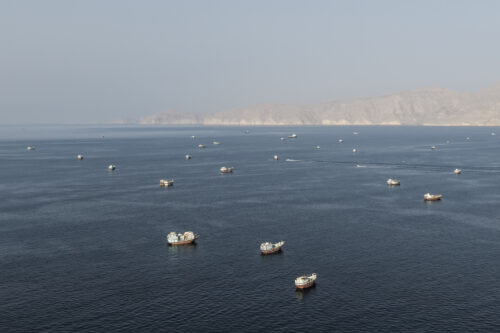
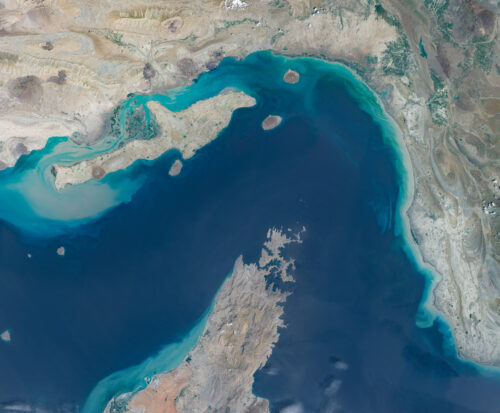
In early 2026, the joint US-Israeli attacks on Iran triggered Iranian counterattacks targeting the Gulf states, and Hizballah almost immediately joined the war on behalf of its patron, demonstrating the group’s continued ability to carry out cross-border strikes as well as maintain illicit networks through Syria for smuggling goods, arms, and cash. At the same time, with the Iranian blockade of the Strait of Hormuz and attacks on Gulf civilian infrastructure, the 2026 conflict dramatically underscored the Gulf states’ vulnerability to economic disruptions by Iran and its non-state partners, a weakness first highlighted soon after October 7 with the Yemeni Houthis’ near-closure of maritime traffic through the Red Sea. Hizballah, meanwhile, has shown itself to pose an even more direct threat to the Gulf. Authorities in Bahrain and Kuwait dismantled Hizballah-affiliated cells on their territory in March 2026, and Emirati security services apprehended IRGC-affiliated operatives. A primary perceived source of regional insecurity for the Gulf states now reaches from their periphery into their core, leaving no part of their economic architecture insulated.
The consequences of years of Gulf withdrawal in Lebanon extend beyond the Iranian proxy issue. Gulf countries are already investing heavily in Syria’s reconstruction and developing long-term frameworks for economic and political engagement with Damascus, while also positioning themselves to play a central role in a potential “day after” in Gaza. A destabilized Lebanon threatens both of these efforts, disrupting trade routes and complicating regional investment strategies. Left unaddressed, the unpredictability of Lebanon risks undermining Gulf-led efforts to promote regionwide economic integration and stability and transforming from a peripheral crisis into a central fault line.
The Gulf states’ domestic economic stakes compound the geostrategic ones. Gulf economic diversification models depend on maintaining an image of long-term stability, low political risk, and reliable integration into global markets. This is particularly critical as they compete to attract foreign direct investment, advanced technology industries, artificial intelligence infrastructure, tourism, and logistics projects that are highly sensitive to regional instability. An unstable Lebanon cannot be neatly contained within its borders; conflict spillover, disruptions to shipping corridors, illicit financial activity, and the expansion of Hizballah’s activities outside Lebanon directly threaten the broader regional environment that Gulf states are attempting to market as secure and investment friendly.
Why the Gulf?
While the Gulf states are particularly exposed to Iran-abetted instability emanating from Lebanon, they are also uniquely positioned to help address it because of their specific development strategies. The Gulf countries seek economic diversification away from hydrocarbon exports toward deeper integration into global systems as critical nodes of investment and transportation in the Middle East. Of the six Gulf monarchies, Saudi Arabia, the UAE, and Qatar have placed the greatest emphasis on these objectives, as laid out in the Saudi Vision 2030 plan, the We Are the UAE 2031 initiative, and the Qatar National Vision 2030 framework. The UAE aims to increase its non-oil exports to over $200 billion a year, and Saudi Arabia seeks to integrate its economy into the Mediterranean and Suez Canal sphere through its NEOM development projects in the country’s northwest. Although elements of NEOM have been scaled back amid rising costs, financing constraints, and efforts to prioritize commercially viable projects, the initiative remains notable for its orientation toward the Levant and Eastern Mediterranean. Its geographic positioning reflects Saudi Arabia’s broader ambition to anchor itself within regional trade, logistics, and investment networks extending well beyond the Arabian Peninsula.
Levantine countries lie along the Gulf’s periphery, and the trajectory of regional crises — such as the Israeli-Palestinian conflict, Syria’s civil war (2011-24), and Lebanon’s polycrisis, notably characterized in part by vulnerable institutions and the persistence of an armed Hizballah — has a direct impact on the ability of the Gulf states to maintain steady sources of investment and flows of economic activity. But crucially, they also lie between the Gulf and Europe, offering a potential future alternative trade network at a time when trade through the Red Sea and the Bab el-Mandeb Strait has become increasingly unstable. The India-Middle East-Europe Economic Corridor (IMEC) framework, conceived to position the Gulf states at the center of trade between South Asia and Europe, was initially planned to flow through Jordan and Israel toward the Mediterranean, and discussions before the 2026 Iran conflict proposed extending the corridor’s network into Syria and Lebanon.
These incentives offer a compelling case for the Gulf states to engage with Lebanon as part of an integrated economic and security framework for the region, particularly while Iran’s proxy network in the Levant is operating under significant strain. Hizballah’s leadership, military assets, and economic backbone have been degraded significantly since 2023, while Iran’s domestic economic and security concerns limit the funds Tehran can send to rearm and resupply its proxy. Yet Hizballah has not been neutralized; its continued capacity to strike the Israel Defense Forces (IDF), deploy advanced drone technology, and provoke Israeli escalation inside Lebanon demonstrates that the organization remains a disruptive force capable of derailing the conditions Gulf engagement depends on. Recent Saudi trade decisions suggest that the Gulf states are already testing the possibility of re-engagement: Riyadh’s decision to resume Lebanese imports, following progress on curbing narcotics smuggling and improving border enforcement, indicates a willingness to reward concrete reforms and strengthen ties when Lebanese authorities demonstrate greater state capacity. The window is real, but it will not be open forever.
In addition, the Bashar al-Assad regime in Syria — closely allied with Hizballah — was toppled in December 2024 and replaced by a new government led by Ahmed al-Sharaa, who has sought to consolidate Damascus’ authority across Syrian territory and restrict Iran’s influence and transportation networks through the country. The extent to which these efforts have succeeded remains contested, but the loss of a friendly regime in Damascus has complicated the movement of Hizballah personnel, weapons, and funding that previously flowed through Syrian territory with far fewer constraints under Assad.
The present opening is significant because Hizballah previously functioned as a critical logistical and operational partner in Iran’s regional network, facilitating weapons transfers through Syria, supporting the Assad regime during the Syrian civil war, and contributing training and technical expertise to Iran-aligned groups, including the Houthis and Iraqi militias. The Gulf states thus recognize Hizballah not as an isolated Lebanese actor but as part of a broader transnational architecture that has directly contributed to regional instability threatening Gulf security and economic interests.
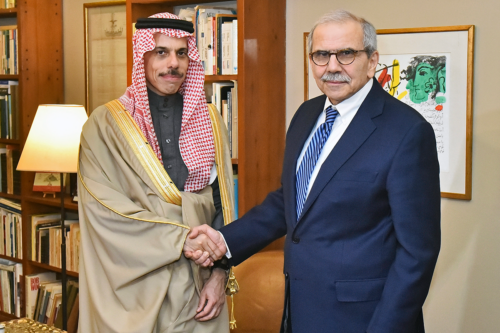
The Gulf states also bring existing political and economic relationships to the table that few external actors can match. Saudi Arabia historically has had close ties with Lebanon’s Sunni population and has strengthened its relations with the Maronite Christian political apparatus. The UAE hosts the largest Lebanese diaspora in the Gulf, which maintains extensive business and personal ties with its home country. Qatar has also emerged as an important actor through its support for the Lebanese Armed Forces (LAF), including salary assistance, military vehicles, and financial backing aimed at sustaining institutional cohesion during Lebanon’s economic collapse. This role was further underscored by Qatar’s involvement in planning the March 2026 Paris conference. Although it was postponed due to the resurgence of conflict, the conference was aimed at mobilizing international support for the LAF and broader Lebanese stabilization efforts, reflecting continued Gulf interest in strengthening Lebanese state institutions amid regional escalation.
Before the 2019 Lebanese financial crisis and their withdrawal from the country’s economic markets, the Gulf states accounted for roughly 85% of foreign direct investment into the country, particularly in the banking, real estate, tourism, and infrastructure sectors. This existing economic footprint reflects the influence and familiarity that Gulf states have with Lebanon’s political economy that few external actors possess. Gulf cooperation would function as a confidence test for Lebanon: if Gulf capital is willing to return, it would suggest that the country has begun to restore the trust lost during years of financial collapse and political paralysis. Together, these factors make it an opportune moment for greater Gulf engagement in shaping Lebanon’s trajectory.
Tools of Influence
The current moment presents a narrow window of opportunity. Hizballah’s relative weakening following its 2024 and 2026 conflicts with Israel is unlikely to persist as long as it maintains its arms. The Gulf states are positioned to capitalize on this opening by investing in Lebanese state capacity prior to Beirut’s full consolidation of sovereignty over its entire territory, to limit Hizballah’s ability to reconstitute.
The Gulf states, backed by US leadership, can play a pivotal role in empowering Lebanon to consolidate its monopoly on force by providing support to the LAF. Greater investment in LAF salaries, training, and operational capacity, tied to phased benchmarks for expanding state control, offers the fastest available mechanism for substituting Hizballah’s presence with legitimate government authority. This means incrementally absorbing roles Hizballah has long filled, particularly in border security, service provision, and internal stabilization, to legitimize state authority where it has been most systematically undermined. Such support would build upon, rather than replace, longstanding assistance from partners such as the United States, which has spent decades providing training, equipment, and military aid to the LAF. Yet the scale of Lebanon’s economic collapse has exposed the limits of security assistance alone. Sustaining a credible state presence requires not only military capabilities but also the financial resources necessary to retain personnel, maintain readiness, and expand government services into areas where Hizballah has traditionally exercised influence. The Gulf states have already demonstrated willingness to pursue this approach, with Saudi Arabia providing major assistance packages and Qatar delivering direct salary support and material assistance to the LAF during periods of acute financial crisis. Their ability to pair security assistance with broader economic support gives the Gulf states a uniquely important role in strengthening Lebanese state institutions and reducing dependence on parallel structures. These precedents confirm that Gulf-backed institutional support is both politically and logistically feasible.
Completing this will necessitate a coordinated Gulf-led crackdown on Hizballah’s financial apparatus. As the major financial hubs for the Middle East, the Gulf states are well-positioned to tighten compliance regimes, enhance monitoring of cross-border flows, and coordinate sanctions enforcement targeting Hizballah-linked nodes in banking, trade-based money laundering, and narcotics trafficking. Constraining the group’s financial resilience is inseparable from constraining its political and military reconstitution. The two must be pursued simultaneously, alongside efforts to strengthen Lebanon’s formal economy, creating legitimate financial pathways that reduce dependence on the illicit networks Hizballah has long exploited.
Lebanon’s sovereign debt crisis represents one of the most consequential areas where the Gulf holds leverage. Following the 2020 default, the country has been effectively locked out of international capital markets, making any meaningful recovery contingent on debt restructuring. Gulf actors, through a combination of historical central bank deposits, private holdings, and potential participation in future refinancing packages, are positioned to shape the terms and sequencing of that restructuring. Critically, this leverage extends beyond financial relief itself: the Gulf states can condition involvement on reforms to banking governance, capital controls, and fiscal transparency, ensuring that any restructuring is paired with structural changes to Lebanon’s political economy. In this sense, debt restructuring becomes not just a financial reset, but a mechanism for enforcing reform and reorienting Lebanon’s economic model away from the unsustainable practices that led to collapse.
The 2025 Lebanese banking secrecy law offers a glimpse into what this will look like, but it is a floor, not a ceiling. Passed only after sustained external pressure from the International Monetary Fund (IMF) and the Gulf states, the law granted regulators and auditors access to banking records and enabled the forensic audits necessary for meaningful sector restructuring. Gulf leverage has been most effective when paired with the IMF’s technical authority and control over access to broader international financing. It remains unclear whether the Gulf states could compel comparable reforms independently, especially in a fragmented political system where Lebanese elites have repeatedly delayed or diluted financial-sector reforms. What the banking secrecy case reveals is that Gulf influence is strongest when coordinated with multilateral institutions and other major financial actors, allowing the Gulf states to reinforce reform benchmarks while the IMF provides the technical framework and external credibility Lebanon needs to regain investor confidence.
But the broader lesson is more demanding: partial reform will not unlock meaningful Gulf investment if it does not restore trust. The Gulf states are unlikely to deepen engagement while concerns persist that funds could be trapped in an unrestructured banking system, or diverted through Hizballah-affiliated networks. Financial transparency, enforceable capital controls, credible bank restructuring, and clear protections for investors are therefore not technical add-ons; they are prerequisites for re-entry into Lebanon’s economy. For Gulf capital to return at scale, Lebanese reforms must convince donors and investors that the state can protect funds, enforce rules, and prevent political or militia-linked capture. Without that confidence, Gulf engagement will remain limited to symbolic gestures, humanitarian assistance, or tightly ring-fenced projects rather than the sustained investment Lebanon needs.
The Gulf states wield the tools to influence Lebanon’s trajectory, but if they miss this current window of opportunity, they risk being shut out entirely. Withdrawal and hesitancy during this period could create a vacuum filled by actors working against Gulf interests and further degrading Lebanese institutions. Those institutions remain overlaid and undercut by Hizballah’s military, social, and economic networks — supported by Iranian funding — which will reconstitute if left unaddressed.
The Syria Parallel
Gulf engagement with Syria provides a useful parallel for understanding how a coordinated leverage toolkit can be applied to Lebanon. In Syria, the Gulf states shifted from isolation to conditional reintegration even before Assad’s fall, using diplomatic and economic tools to assert their influence and strengthen ties to compete with and supersede local Iran-backed frameworks. Since then, Gulf actors have supported efforts tied to Syria’s financial obligations with institutions such as the World Bank, while also investing heavily in reconstruction. Saudi Arabia committed roughly $2 billion toward infrastructure such as airports, while Qatar has pledged up to $7 billion for energy development. The UAE has emerged as an equally significant player: Emirati conglomerate Emaar Properties recently announced plans to invest approximately $11 billion in Damascus and surrounding areas, alongside up to $7 billion in projects along Syria’s Mediterranean coast, while DP World — an Emirati multinational logistics company — committed $800 million to expand the port of Tartus. These investments are not purely economic; they are designed to create long-term economic inter-dependence and incentives that can gradually reshape Syria’s regional alignment.
This model has clear implications for Lebanon. The Gulf states can similarly combine diplomatic engagement, financial conditionality, and targeted investment to strengthen state institutions and shift political incentives in an environment recovering from a prolonged crisis and fragmentation. However, unlike Syria’s more centralized system, Lebanon’s splintered political landscape, hampered by the entrenched role of Hizballah, requires a more incremental approach focused on state substitution rather than direct realignment.
Success in Syria and Lebanon is interconnected. Increased Gulf influence and state stabilization in Syria can reinforce similar efforts in Lebanon by reducing cross-border instability, limiting avenues for Iranian influence, and strengthening broader regional economic integration. Likewise, a more stable and institutionally capable Lebanon would complement Gulf objectives in Syria by contributing to a more secure and interconnected Levant.
Conclusion
A rare alignment of conditions presents the Gulf states with an opportunity to advance Lebanese stability in ways that serve their broader regional interests. The first step is already in motion. Saudi Arabia’s recent willingness to economically re-engage Lebanon through trade —
made possible by Hizballah’s degradation and renewed US engagement through negotiations with Iran — has opened a window to reverse Lebanon’s years-long polycrisis, one that the Gulf is uniquely positioned to seize. The Gulf states can use this momentum, pairing their financial and political leverage with US-backed pressure, to promote conditions favorable to Lebanese state consolidation. They have demonstrated in Syria that conditional economic engagement can reshape political outcomes in previously Iran-aligned states. The tools exist, the precedent exists, and the strategic rationale is undeniable. The only remaining question is whether the Gulf states will help shape Lebanon’s recovery or be left to deal with the consequences of their inaction.
Zeinab Aly, Jeremy Brecher, and Ayn Wilson are recent graduates of the International Affairs and Security Policy Studies master’s programs at The George Washington University, in Washington, DC. MEI Senior Fellow Fadi Nicholas Nassar provided support and advice in the writing of this article, which was produced as part of a capstone project.
Photo by FADEL ITANI/AFP via Getty Images
The Middle East Institute (MEI) is an independent, non-partisan, not-for-profit, educational organization. It does not engage in advocacy and its scholars’ opinions are their own. MEI welcomes financial donations, but retains sole editorial control over its work and its publications reflect only the authors’ views. For a listing of MEI donors, please click here.