The Gulf’s Strategic Paradox: Lost Confidence in the US Security Umbrella, Enduring Trust in the Dollar
External Publication
June 12, 2026
Share
This essay argues that the current debate about the future of the international monetary system is not really about Gulf currencies, oil pricing, or de-dollarization in the narrow technical sense. It is about something deeper and more important: whether institutional trust can survive when geopolitical certainty is eroding.
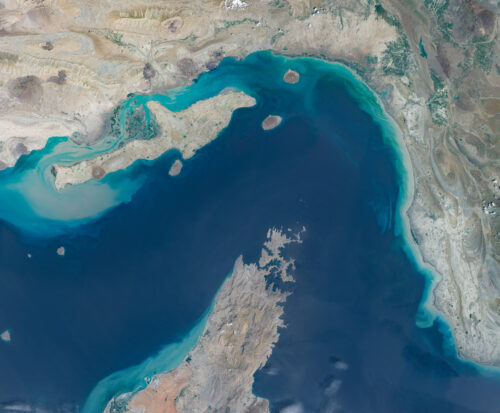
The Gulf monarchies—Saudi Arabia, the United Arab Emirates, Qatar, Kuwait, Bahrain, and Oman—increasingly exist in a world where the United States no longer looks like the unquestioned guarantor of regional stability. Repeated tensions with Iran, the vulnerability of the Strait of Hormuz, attacks on Gulf infrastructure, and Washington’s cautious and calculated responses have all raised serious doubts about how far the United States would actually go to protect its Gulf partners. And yet, despite these growing doubts, the Gulf states continue to anchor their currencies overwhelmingly to the US dollar and keep the vast majority of their sovereign wealth inside American-centered financial markets.
The Middle East Institute (MEI) is an independent, non-partisan, not-for-profit, educational organization. It does not engage in advocacy and its scholars’ opinions are their own. MEI welcomes financial donations, but retains sole editorial control over its work and its publications reflect only the authors’ views. For a listing of MEI donors, please click here.