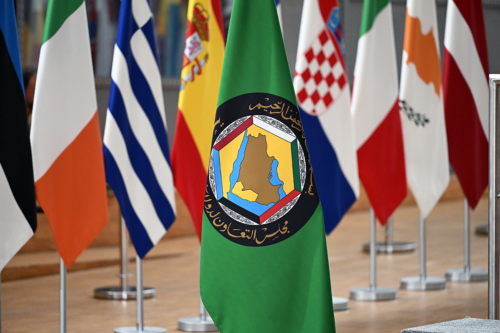
The Islamabad Memorandum of Understanding (MoU) between the United States and Iran may have ended one of the most consequential Middle Eastern crises in decades, but it has not resolved the strategic problem it exposed. Whether the 60-day talks it set in motion will produce a final agreement remains far from certain. Yet the central lessons are already clear: Iran has preserved significant leverage, Washington has had to scale back its ambitions, and Europe and the Gulf face the prospect of protracted regional tension.
It may be too early to call this a “Hormuz moment” comparable to Suez in 1956. But historians may one day see it as a turning point in the long recalibration of American power in the Middle East. The United States remains indispensable, but it is no longer sufficient. The regional security equation will likely have to change, even with Washington remaining central to it.
For the Gulf states, the conflict made clear that even immense wealth, advanced weapons, and close US ties cannot fully shield their critical infrastructure, energy assets, ports, cities, and investment hubs from missiles, drones, or maritime coercion. Both their economic model and their security posture now require a radical reassessment. For Europe, the conflict was a sudden shock that added to its existing challenges with Russia’s unrelenting war against Ukraine. It exacerbated Europe’s energy insecurity and disrupted crucial trade routes, further dimming the prospects of economies already struggling with anemic growth. The war also exposed the limits of Europe’s practical influence when crises erupt in its extended neighborhood.
The conclusion from all of this should not be a drift away from Washington. It should be a more serious effort by America’s allies and partners to share burdens, harden societies, and build new forms of strategic resilience together. The crisis served as yet another powerful reminder that the more Europe shares the burden with the United States, the more it can gain a say, and that, equally, the more it can stand on its own, the less it has to accede to Washington’s specific wishes. In their own different ways, Arab Gulf countries are coming to a similar realization.
Europe and the Gulf should therefore use the aftermath of the US-Iran deal to articulate their own “other MoU”: a Europe-Gulf Resilience Initiative.
From Economic Advantage to Strategic Resilience
The Europe-Gulf Resilience Initiative should go beyond the traditional pillars of Europe-Gulf economic engagement, such as investment, luxury real estate, hydrocarbons, and trade. It should be increasingly built — with deliberate strategic intent — around military and economic security, critical infrastructure, and crisis management. Properly articulated, it would strengthen the collective capacity of Europe, the Gulf, and the US to preserve order across the wider “Indo-Mediterranean” at a time of intensifying global geopolitical competition and changing power balances.
The first pillar should be security. During the crisis, several European countries demonstrated that they could provide practical, if limited, support. The UK reinforced its regional military posture and has deepened its defense cooperation with Qatar through joint Typhoon operations and counter-drone deployments. France intensified cooperation, particularly with the United Arab Emirates, as a defense partner for the Gulf, one with a permanent military presence and significant air power capabilities. Italy, through Leonardo’s expanding defense-industrial links in the region, is moving from arms sales to co-development and local industrial partnership. These are not yet a strategic architecture, but they are the raw material for one.
The most urgent issue is integrated air, missile, and drone defense. For the Gulf, the threat is no longer theoretical. Europe brings advanced radar, electronic-warfare, command-and-control, naval, missile-defense, and counter-drone capabilities, even as it reassesses its own defense requirements in light of Russia’s war against Ukraine. The Gulf, for its part, has significant capital, operational urgency, and strong incentives to move quickly. A serious Europe-Gulf compact should therefore include joint air-defense exercises, shared early warning systems, maritime surveillance, counter-drone cooperation, and over time the co-production of selected technologies. Ukraine is already becoming an unexpected bridge in this effort, offering Gulf countries practical cooperation during the war. Kyiv has gained extensive battlefield experience in countering missile and drone attacks, including from Iranian-made systems also used to target Arab Gulf countries. As European companies deepen cooperation with Ukraine’s defense-industrial sector, they could help channel lessons, training, and technologies into future Gulf partnerships, completing a promising triangulation. The active involvement of Ukraine in the Europe-Gulf compact process would create synergies at various levels, while relieving Europe of the need to treat its eastern and southern engagements as zero-sum trade-offs.
Protecting the Arteries of Regional Connectivity
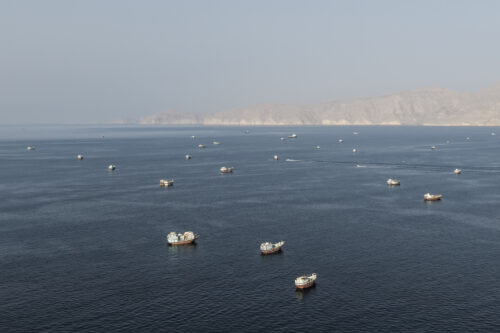
The second pillar should be the Strait of Hormuz and maritime resilience. The Islamabad MoU contains ambiguous and possibly controversial language on future arrangements for the strait. Iran will undoubtedly seek to preserve the leverage it has demonstrated, and its propaganda machine is already trying to normalize payments for future “services,” if not outright tolls. Irrespective of what US-Iran talks deliver on this critical issue — this track of negotiations is currently mediated by Pakistan without any of the directly affected countries, including co-mediator Qatar, at the table — Europe and the Gulf should not accept any de facto condominium of Iran and possibly Oman over one of the world’s most important waterways. While guaranteeing freedom of navigation in the strait by military means will remain a tall order — even the United States did not choose this challenging option during the hot phase of the conflict — they can combine diplomacy, commercial strength, maritime insurance tools, naval presence, mine-clearance capacity, and alternative routing when needed. The EU and individual European navies have a wealth of experience in maritime security operations, including in challenging theaters. The EU’s Aspides freedom-of-navigation mission in the Red Sea and Gulf of Aden provides a precedent to build on, and potentially to replicate with greater capabilities.
The third pillar should be energy resilience. Europe-Gulf energy cooperation is no longer simply about buying and selling hydrocarbons. It is becoming a mutual strategic insurance policy. Germany’s long-term liquefied natural gas (LNG) arrangements with Qatar, its energy-security cooperation with the UAE, and emerging LNG and battery-storage discussions involving ADNOC, Masdar, and German utilities show how diversification is moving from rhetoric to practice. Italy’s energy diplomacy with the Gulf, notably Eni’s expanding cooperation with Gulf counterparts in both conventional and renewable-energy interconnections, points toward a wider Mediterranean energy architecture. France and the UAE are expanding cooperation in nuclear energy. The task now is to approach these initiatives as part of a broader energy resilience agenda built around LNG flexibility, hydrogen corridors, grid interconnectors, cyber-secure energy systems, and an even stronger focus on renewables in the future energy mix.
Technology, Connectivity, and the Future Regional Order
A fourth pillar should focus on technology and economic connectivity. Several developments already point in this direction: the UK-Gulf Cooperation Council (GCC) free trade agreement and its digital provisions; France-UAE cooperation on a major artificial intelligence (AI) data-center project; and the growing flow of Gulf investment into European technology ecosystems. The strategic logic is clear. Europe needs capital, energy, and scale, while the Gulf states need trusted technology partners, sovereign digital capacity, and access to advanced industrial know-how. Together, they can develop cloud infrastructure, AI governance frameworks, cyber-resilience platforms, smart logistics systems, and secure data corridors.
Technology could also give practical substance to the Indo-Mediterranean concept. Rather than treating connectivity as a matter of trade routes alone, Europe, the Gulf, India, and eventually Israel could be linked through a wider architecture of digital infrastructure, clean energy solutions, industrial cooperation, and strategic logistics. In this sense, the India-Middle East-Europe Economic Corridor (IMEC) should not be abandoned because of the conflict. It should instead be reimagined — less as a linear corridor and more as a resilience network, connected to other strategic regional routes, integrating trade, energy, data, logistics, and strategic infrastructure.
The war exposed IMEC’s most vulnerable points: the Strait of Hormuz, but also the fragility of Arab-Israeli normalization and the political sensitivity of Israel’s central role in the project. Yet any credible long-term vision for a prosperous and stable Middle East must find a place for Israel, without equating this with support for any particular Israeli government. A future regional order cannot rest on exclusion. It will have to be built on political realism, conditional connectivity, and practical interdependence.
Europe’s Offer
Europe is not the Gulf’s primary strategic partner and cannot compete with the resources and assets that heavyweights like the US and China provide. Gulf governments will continue coordinating closely with Washington, deepening economic ties with Delhi, and intensifying their already significant engagement with Beijing when useful. But Europe has important cards to play, including substantial economic power and diplomatic credibility, particularly on the nuclear file, maritime security, and the Palestinian question. It also has a political advantage in this moment: it was not a direct belligerent in the war.
There is, therefore, a strong rationale for a realistic but nonetheless ambitious and practical Europe-Gulf Resilience Initiative to serve the needs and interests of both regions in the new crucial phase that the end of fighting has opened. Building on the EU’s 2022 Strategic Partnership with the Gulf, the next phase of cooperation should be shaped around this resilience agenda, with Brussels facilitating the process and keeping concrete actions coherent across both multilateral and bilateral formats.
The new initiative does not need to be formalized into international agreements, nor, given the many sensitivities involved, would it have to include every country in both regions at once from the start. Rather, it could be operationalized as an open and flexible platform — facilitated by the EU as part of its ongoing dialogue with the GCC but possibly featuring rotating national hosts — loosely modeled on, in a different context, the Ukraine Recovery Conference. A strong role in this process would have to be proactively played by individual European and Gulf countries, starting with Italy, France, and Germany on the European side, leveraging the specific added value of individual bilateral relationships. Equally important, in order to succeed, the initiative will require the organic participation of relevant corporate actors in key strategic economic sectors. It is in this particular area that large US-based companies already vested in the region, tech leaders in particular, could help anchor the process in a larger Western cooperative framework.
The Islamabad MoU may have ended the immediate crisis. It has not ended the age of vulnerability it revealed. Europe and the Gulf should not wait for the next shock to relearn that their security, energy, trade, and technology futures are deeply intertwined. The other MoU should begin now.
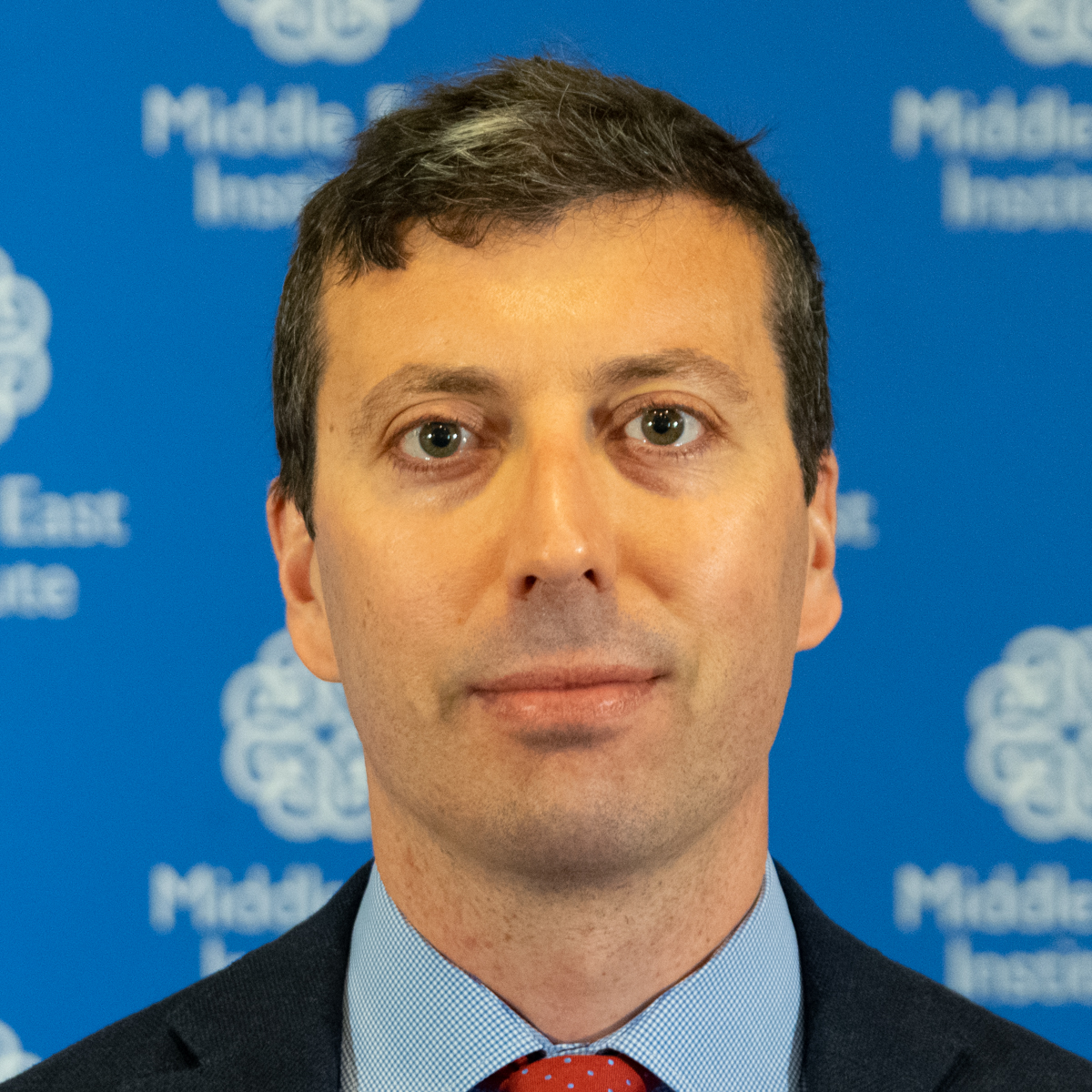
Emiliano Alessandri is an Associate Fellow with MEI and an international affairs expert with a focus on Euro-Atlantic security and the interplay between security dynamics in Europe and the Middle East and North Africa.
Photo by Dursun Aydemir/Anadolu via Getty Images
The Middle East Institute (MEI) is an independent, non-partisan, not-for-profit, educational organization. It does not engage in advocacy and its scholars’ opinions are their own. MEI welcomes financial donations, but retains sole editorial control over its work and its publications reflect only the authors’ views. For a listing of MEI donors, please click here.