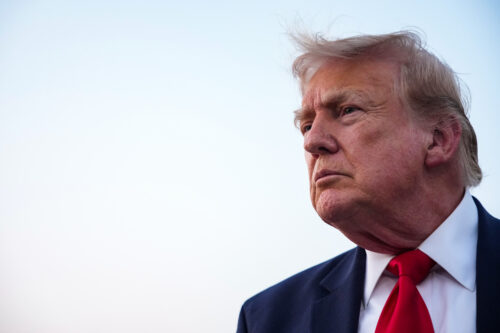
A year and a half into Donald Trump’s second administration, the Middle East is far from where the president had hoped or expected it would be.
The Iran war looms large over the region and the global economy. At this moment of uncertainty, it is important to step back and examine the broader trajectory of Trump’s approach to the Middle East and the lasting effects his first 18 months may have on US foreign policy.
Trump returned to office in January 2025 with a vision of transforming the region in his second term — he spoke regularly about expanding the 2020 Abraham Accords to include countries like Saudi Arabia and promoted the idea of creating a “Gaza Riviera.” Just months into his term, he visited three key Arab Gulf countries on a trip that emphasized dealmaking as a new form of economic engagement in the Middle East. The administration sought to strengthen regional ties and attract investment from the Gulf’s wealthy economies to the United States.
Last October’s US-brokered cease-fire and hostage release deal to end the Gaza war was a significant diplomatic coup that offered the still-unrealized potential of greater peace and prosperity for Palestinians and the broader region. Trump also prioritized Syria’s transition after the fall of Bashar al-Assad and the potential for progress in negotiations between Lebanon and Israel. Trump’s campaign against Iran, conducted in close cooperation with Israel in the 12-day war in June 2025 and now this year’s ongoing conflict, has diverted considerable resources away from his stated national security and defense priorities of shifting the focus closer to home in the Western Hemisphere and getting other countries to share the burden of maintaining security.
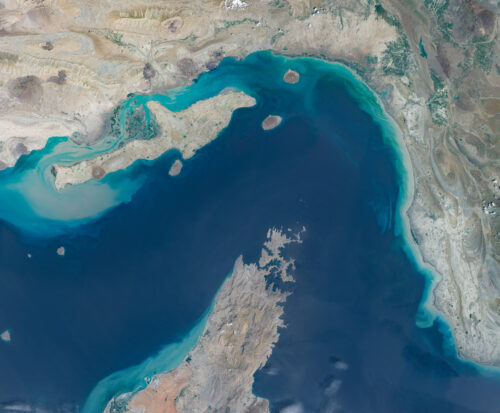
Overall, Trump has expended more time and energy on the region in the first year and a half of his second term than any other president since Barack Obama in 2009 and the first half of 2010, but for much different reasons. Despite all the effort, the administration has little to show for it. Much will depend on how the Iran war ends. Right now it looks like the Trump administration has found itself trapped in a quagmire of its own making: the June US-Iran memorandum of understanding (MoU) has collapsed, hostilities have resumed, and traffic in the Strait of Hormuz is once again at a standstill. The US is ramping up military and economic pressure to reopen the strait after nearly five months of uncertainty and economic pain — damage that has hit Trump’s domestic political support and America’s international standing alike.
Three Dynamics Resulting from Trump 2.0’s Middle East Approach Thus Far
Though it is too early to draw final conclusions less than halfway through his term, Trump has conducted foreign policy in a manner that will have a lasting impact on US relations with the region. His idiosyncratic and unconventional national security policy approach in the Middle East appears to have set into motion new trends or accelerated existing dynamics in three important areas relevant for US foreign policy in the long run.
1. Close US regional partners, especially in the Gulf, will continue subtly hedging against perceptions of America’s unreliability by diversifying their relationships globally.
The United States remains the unrivaled external military power in the Middle East. But in the Iran war, the second Trump administration has wielded that advantage in ways that erode trust in America’s leadership and cause long-term damage to US ties in the region.
By failing to consult regularly and closely with key Middle East partners on its military and diplomatic moves on Iran, the Trump administration is incentivizing many of them to develop their own defense capabilities as part of a trend toward greater strategic autonomy and to deepen their ties with other global and regional players, including China, South Korea, India, Pakistan, and Turkey. This regional defense diversification is not a new dynamic as several Gulf countries had already started to turn to non-US sources for air defense systems and state-of-the-art warfighting technologies. One of the more prominent recent examples of this is the deal Saudi Arabia signed with Ukraine to share drone defense technology less than a month after the 2026 Iran war began.
In many ways, these moves by Middle East countries to reduce their reliance on the US security umbrella were underway long before President Trump returned to office. As several analysts have noted, the Carter Doctrine, the guiding principle that the US would use military force to protect its vital interests in the Gulf, effectively ended in the wake of several administrations’ unsteady approaches to the Middle East in the first two decades of this century. America is unlikely to embark on a full military retreat from the Middle East anytime soon. But the outcome of the current Iran war is likely to accelerate the trend among US partners to diversify their security and diplomatic relationships away from the uncertainty and unpredictability of US policy.
2. The US-Israel relationship is heading for significant change.
Bilateral ties between Israel and the US have faced growing strains over the past decade. These tensions have been driven by emerging gaps in the strategic perspectives within both countries, as well as increasingly complicated domestic political disputes in America and Israel about the nature of the relationship.
President Trump and Israeli Prime Minister Benjamin Netanyahu have been closely aligned on most strategic questions in the Middle East since Trump returned to office, but some gaps have emerged in recent months about how best to proceed on Iran and other key issues like Syria and Lebanon. The June 2026 US-Iran MoU brokered by Pakistan raised concerns in Israel that the framework did not provide sufficient security guarantees. At the same time, President Trump voiced strong criticisms of Prime Minister Netanyahu this spring as the president was pursuing diplomacy with Iran. Notably, Trump said in June that Israel’s military tactics were undercutting efforts to facilitate a deal between Lebanon and Israel. Moreover, Vice President JD Vance recently accused members of the Israeli government of trying to manipulate US public opinion on Iran “to keep war going on indefinitely.”
On their own, these gaps between the Trump administration and Netanyahu government might appear to be differences over tactics, as the two countries remain largely aligned on strategic objectives on key regional issues, like Iran and the Palestinians. But these splits are taking place against the backdrop of an increasingly tense domestic debate over Israel’s foreign policy and influence in the US — one that runs from progressive and centrist Democrats to Make America Great Again (MAGA) neo-isolationists and young Republicans. The Democratic Party in particular seems to be shifting toward a much more critical stance on Israel, with growing numbers of Democrats voting in the US Senate and House for resolutions calling to cut off military aid to Israel.
This push reflects shifting attitudes among the American public toward Israel over the past several years — a trend that pre-dates Trump’s return to office. According to a Pew Research Center poll, from 2022 to 2026, the percentage of Americans viewing the Israeli government as “unfavorable” has increased from 43 percent to 62 percent.
Key factions within the Democratic Party appear poised to make support for Israel a litmus test in the presidential primaries ahead of the 2028 elections, in much the same way that discontent with the Iraq war helped shape the debates in the runup to the 2008 elections. The difference this time is that the question of Israel is mostly an elite phenomenon and lacks the popular resonance the Iraq war had when it topped most ordinary voters’ priorities nearly two decades ago.
Add to this mix the growing voices in Israel calling for greater strategic autonomy and less dependence on the United States — an echo of the first trend seen among several Gulf Arab states described above. Prime Minister Netanyahu recently reasserted the importance of making his country “free” of its military reliance on the US by creating its own independent weapons-production capabilities. Netanyahu’s vision for this new security relationship includes a gradual transition from military aid to a “reciprocal partnership,” through the expansion of joint research, development, and co-production investment.
What this likely means is that major changes are coming for the structure of the bilateral security relationship. In June 2026, US and Israeli officials began discussions on a new security cooperation framework as the previous 10-year US-Israel MoU, signed in 2016, nears its expiry date. Israel’s most recent defense budget, approved in March of this year, was close to $45 billion. The US provides an annual security assistance package of $3.8 billion to Israel — along with other supplemental funding mechanisms and joint security initiatives that enmesh the two countries’ defense relations.
As the US reflects on the lessons learned from the last three years of turmoil and war in the Middle East, the best path forward in reshaping bilateral relations will involve strategic discussions that assess the interests of both countries — but the raucous democratic debates in the US and Israel will have an impact on the future of the relationship in ways that will be difficult to predict.
3. Incentives for regional integration and normalization will remain present and will likely evolve in unexpected ways.
Although President Trump has not gotten much closer to realizing his dream of shepherding new accords between Israel and its neighbors like Saudi Arabia, the impulse that has existed for the past six years to expand regional cooperation and seek pathways to normalization will persist — despite the inconclusive Iran war and an unsettled security environment.
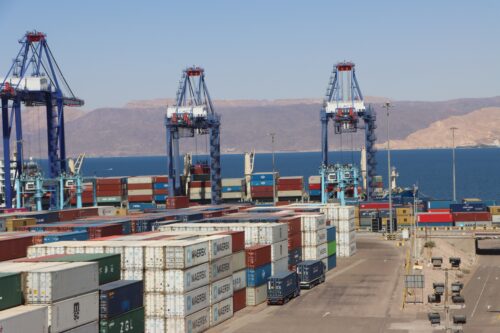
In general, one effect of the wars that have erupted across the region has been a decrease in incentives for Arab countries to normalize ties with Israel for the current period — in large part because of the public outcry about Israel’s military actions in Gaza, Lebanon, and Syria, among other places. But countries that were part of the 2020 Abraham Accords remain in those deals, and those that do not have formal ties with Israel, like Lebanon and Qatar, continue to take part in diplomatic initiatives involving it aimed at stabilizing the region. Furthermore, a number of countries interested in regional integration projects like the India-Middle East-Europe Economic Corridor (IMEC) remain engaged in attempts to strengthen and diversify regional connectivity — efforts that have become even more of a priority for some countries because of Iran war outcomes like the closure of the Strait of Hormuz.
Another dynamic to watch is how countries of the region reconfigure their relations with Iran. Before the United States and Israel launched the war against Iran, many Gulf Arab countries had embarked on a pathway of deescalation and sought to reach some sort of accommodation with Tehran. The impulse to achieve a semblance of normal relations remains present, even among countries that have suffered attacks from the Islamic Republic during the current hostilities — and it will be important to watch how Persian-Arab relations evolve in a post-war period, whenever that occurs.
The forecast for US policy in the Middle East remains uncertain in the short run. We should all expect the unexpected as one of the most volatile regions of the world reacts to the moves of the most unpredictable president America has ever had. But these three longer-term impacts of Trump’s actions in the Middle East since his return to office will shape the broader regional strategic context in which America operates for years to come.
Brian Katulis is a Senior Fellow at the Middle East Institute.
Athena Masthoff serves as the Senior Research Assistant in the Policy Center.
Photo by Andrew Harnik/Getty Images
The Middle East Institute (MEI) is an independent, non-partisan, not-for-profit, educational organization. It does not engage in advocacy and its scholars’ opinions are their own. MEI welcomes financial donations, but retains sole editorial control over its work and its publications reflect only the authors’ views. For a listing of MEI donors, please click here.

The Americans Are Gone. Will Iraq’s Militias Disarm?