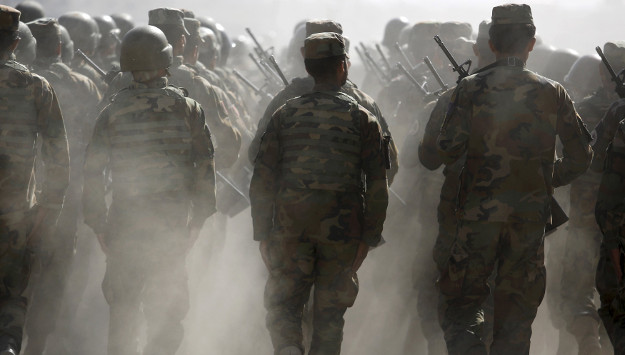
On June 6, Khorasan Province of Islamic State claimed credit for the killing of Sher Wali Wardak, an Afghan parliamentarian. If confirmed, the killing will represent a new chapter in ISIS’s capacity to operate in Afghanistan. The attack happened as professors from Ghazni University in the eastern part of the country are warning of ISIS infiltration of the university, another sign that the group seeks to expand its base of support in the country. Elsewhere, Afghan media have reported that Al Qaeda is making efforts to strengthen its relations with the Taliban, which has been confirmed by Gen. Charles Cleveland, spokesman for NATO and U.S. forces in Afghanistan. While radical Islamists of various shades continue to conspire and thrive on Afghan soil, the necessary pushback by regional states and the international community is still not in place. Fighting radical Islamists in Afghanistan represents a golden opportunity for international cooperation, including the United States, Iran and Pakistan. History shows it can be done.
Cursed to Be a Battleground
The idea of securing peace in Afghanistan in the foreseeable future might seem to be a pipe dream today. A decade and half after the toppling of the Taliban in late 2001 and many billions of dollars in foreign aid, the country still faces an array of calamitous challenges. From political gridlock and petty competition for power among the country’s small elite, to prevalent corruption, to a widespread sense of hopelessness within the general population, Afghanistan sits in a hard place. In the midst of all its domestic struggles, Afghanistan also needs to contend with the rivaling agendas of foreign powers, including those states—such as the United States—that are still engaged in stabilization efforts in the country, and neighboring states—such as Iran and Pakistan—that continue to view Afghan soil as battleground for geopolitical rivalry through support for local proxies. This state of affairs is hardly a new development. History shows that for decades Afghanistan has been a stage for turf wars among regional actors.
The Middle East Institute (MEI) is an independent, non-partisan, not-for-profit, educational organization. It does not engage in advocacy and its scholars’ opinions are their own. MEI welcomes financial donations, but retains sole editorial control over its work and its publications reflect only the authors’ views. For a listing of MEI donors, please click here.